



-
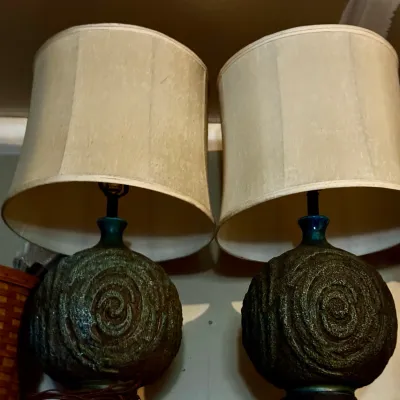
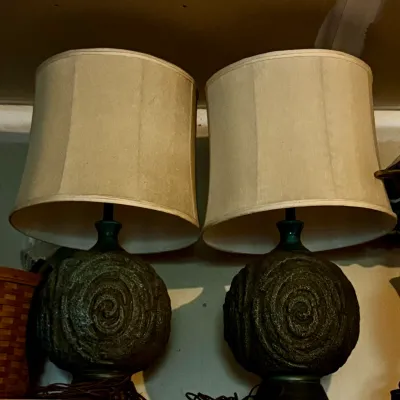
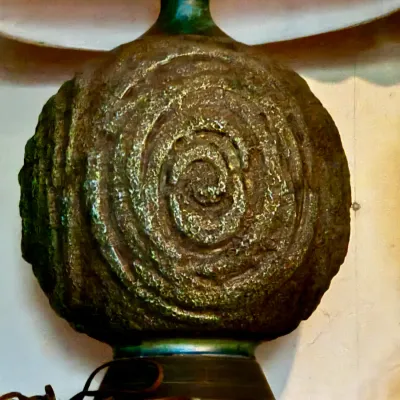
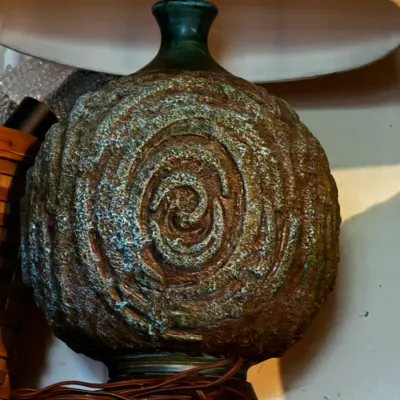
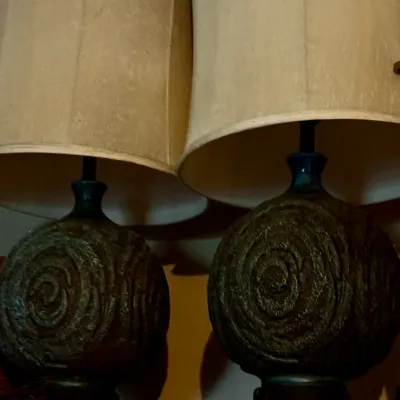
Mid-Century Modern Italian ceramic table lamps, heavily stylized by iconic Florentine ceramicist Marcello Fantoni. Characteristics & OriginsDesign & Style: These lamps showcase a characteristic 1950s–1960s Brutalist aesthetic. They feature a heavily textured, volcanic "lava" glaze with deep concentric spiral reliefs carved into the round pottery bases. Artistic Attributions: This specific spiral motif and rich turquoise-to-moss green glaze are frequently associated with Italian art pottery imported during the mid-century era by Fantoni 106 / 243 -
Mid-Century Modern Italian ceramic table lamps, heavily stylized by iconic Florentine ceramicist Marcello Fantoni. Characteristics & OriginsDesign & Style: These lamps showcase a characteristic 1950s–1960s Brutalist aesthetic. They feature a heavily textured, volcanic "lava" glaze with deep concentric spiral reliefs carved into the round pottery bases. Artistic Attributions: This specific spiral motif and rich turquoise-to-moss green glaze are frequently associated with Italian art pottery imported during the mid-century era by Fantoni 107 / 243 -
Mid-Century Modern Italian ceramic table lamps, heavily stylized by iconic Florentine ceramicist Marcello Fantoni. Characteristics & OriginsDesign & Style: These lamps showcase a characteristic 1950s–1960s Brutalist aesthetic. They feature a heavily textured, volcanic "lava" glaze with deep concentric spiral reliefs carved into the round pottery bases. Artistic Attributions: This specific spiral motif and rich turquoise-to-moss green glaze are frequently associated with Italian art pottery imported during the mid-century era by Fantoni 108 / 243 -
Mid-Century Modern Italian ceramic table lamps, heavily stylized by iconic Florentine ceramicist Marcello Fantoni. Characteristics & OriginsDesign & Style: These lamps showcase a characteristic 1950s–1960s Brutalist aesthetic. They feature a heavily textured, volcanic "lava" glaze with deep concentric spiral reliefs carved into the round pottery bases. Artistic Attributions: This specific spiral motif and rich turquoise-to-moss green glaze are frequently associated with Italian art pottery imported during the mid-century era by Fantoni 109 / 243 -
Mid-Century Modern Italian ceramic table lamps, heavily stylized by iconic Florentine ceramicist Marcello Fantoni. Characteristics & OriginsDesign & Style: These lamps showcase a characteristic 1950s–1960s Brutalist aesthetic. They feature a heavily textured, volcanic "lava" glaze with deep concentric spiral reliefs carved into the round pottery bases. Artistic Attributions: This specific spiral motif and rich turquoise-to-moss green glaze are frequently associated with Italian art pottery imported during the mid-century era by Fantoni 110 / 243 -
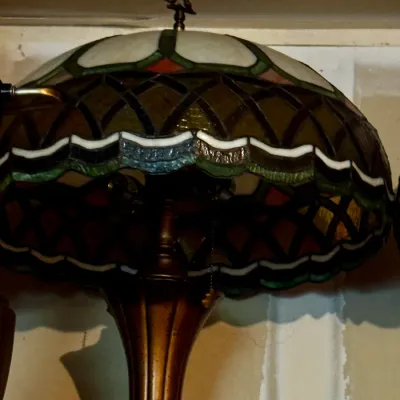
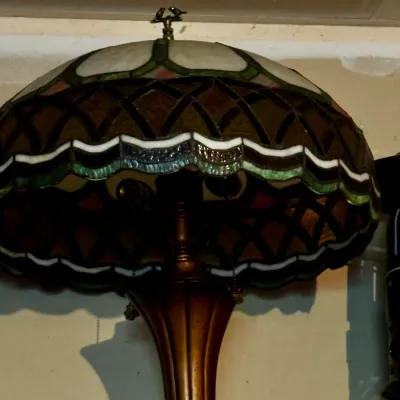
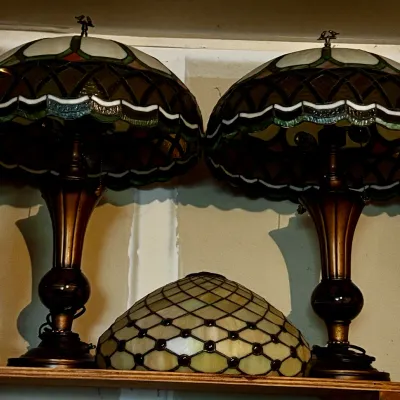
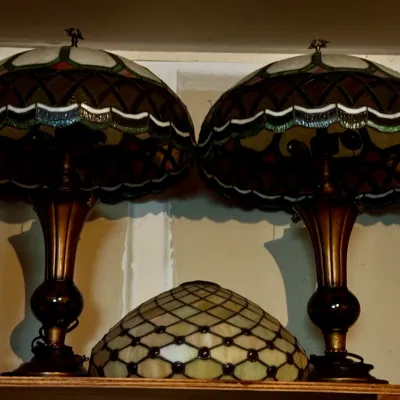
Tiffany-style stained glass table lamp. It features an artfully crafted, scalloped glass lampshade showcasing geometric geometric pattering with colored glass accents. The shade is supported by an ornate, column-style fluted metal base finished in an antique bronze tone.Notable FeaturesMaterial: Hand-cut stained glass panels assembled via the copper foil technique.Design Vibe: Classic vintage Art Nouveau or traditional Victorian aesthetic.Base Details: Dual chain-pull switches emerging from the socket assembly under the shade. 111 / 243 -
Tiffany-style stained glass table lamp. It features an artfully crafted, scalloped glass lampshade showcasing geometric geometric pattering with colored glass accents. The shade is supported by an ornate, column-style fluted metal base finished in an antique bronze tone.Notable FeaturesMaterial: Hand-cut stained glass panels assembled via the copper foil technique.Design Vibe: Classic vintage Art Nouveau or traditional Victorian aesthetic.Base Details: Dual chain-pull switches emerging from the socket assembly under the shade. 112 / 243 -
Tiffany-style stained glass table lamp. It features an artfully crafted, scalloped glass lampshade showcasing geometric geometric pattering with colored glass accents. The shade is supported by an ornate, column-style fluted metal base finished in an antique bronze tone.Notable FeaturesMaterial: Hand-cut stained glass panels assembled via the copper foil technique.Design Vibe: Classic vintage Art Nouveau or traditional Victorian aesthetic.Base Details: Dual chain-pull switches emerging from the socket assembly under the shade. 113 / 243 -
Tiffany-style stained glass table lamp. It features an artfully crafted, scalloped glass lampshade showcasing geometric geometric pattering with colored glass accents. The shade is supported by an ornate, column-style fluted metal base finished in an antique bronze tone.Notable FeaturesMaterial: Hand-cut stained glass panels assembled via the copper foil technique.Design Vibe: Classic vintage Art Nouveau or traditional Victorian aesthetic.Base Details: Dual chain-pull switches emerging from the socket assembly under the shade. 114 / 243 -
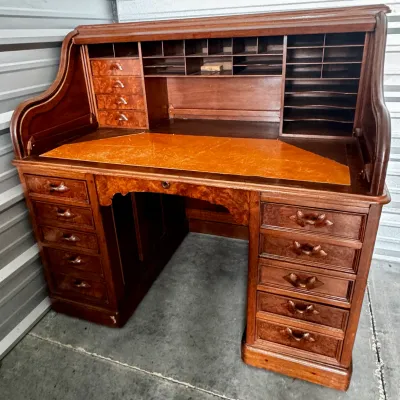
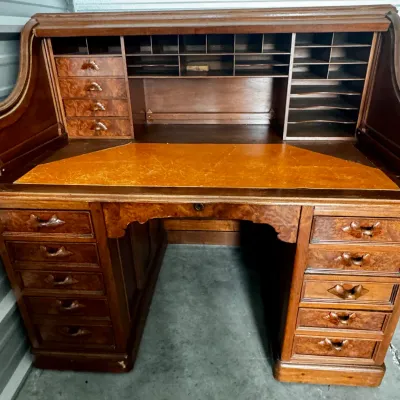
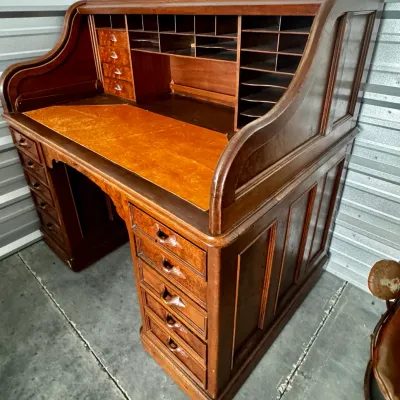
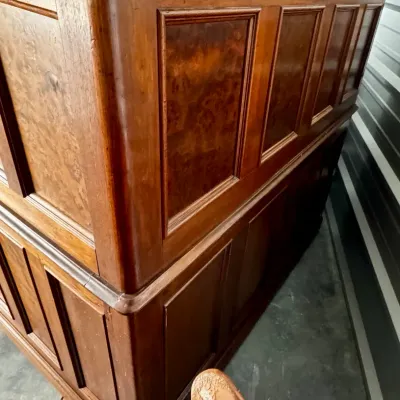
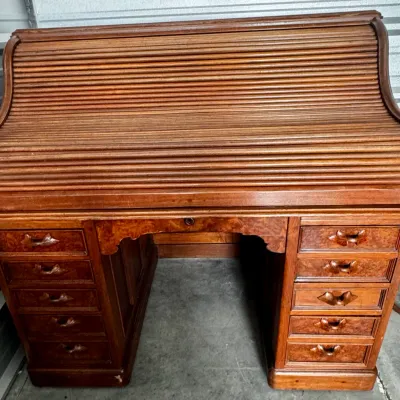
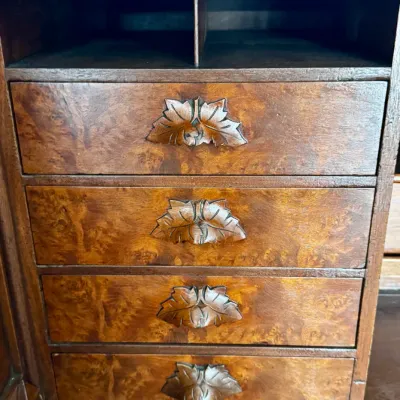
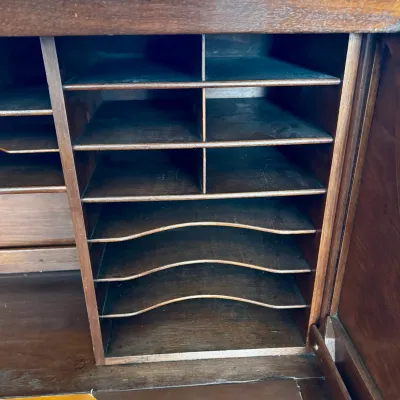
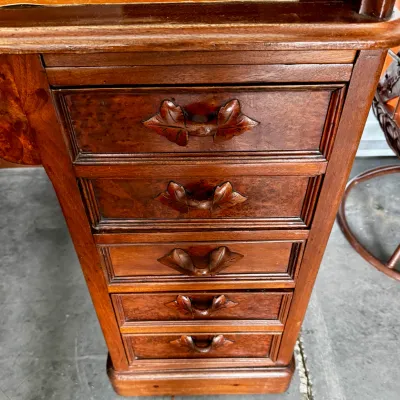
Dimensions 68.25ʺW × 33.25ʺD × 50.5ʺH Classic antique rolltop desk, a prominent style of workspace furniture from the late 19th century through the early 20th century. Features Tambour Hood the curved, slatted wood top (the "rolltop" or tambour) pulls down over the desktop to hide papers and lock the workspace. Detailed Interior: The upper cabinetry features multiple built-in wooden pigeonholes, small organizer drawers, and a built-in writing surface. Double-Pedestal Design: The base consists of two large banks of deep drawers flanked around a central kneehole opening, offering extensive storage space. Premium Materials: The distinctive, swirling wood grain pattern visible on the drawer faces indicates the use of high-quality burl wood, a decorative feature on this high-end Victorian desk. These massive, solid-wood desks typically command values ranging from $3,500 to over $12.500 115 / 243 -
Dimensions 68.25ʺW × 33.25ʺD × 50.5ʺH Classic antique rolltop desk, a prominent style of workspace furniture from the late 19th century through the early 20th century. Features Tambour Hood the curved, slatted wood top (the "rolltop" or tambour) pulls down over the desktop to hide papers and lock the workspace. Detailed Interior: The upper cabinetry features multiple built-in wooden pigeonholes, small organizer drawers, and a built-in writing surface. Double-Pedestal Design: The base consists of two large banks of deep drawers flanked around a central kneehole opening, offering extensive storage space. Premium Materials: The distinctive, swirling wood grain pattern visible on the drawer faces indicates the use of high-quality burl wood, a decorative feature on this high-end Victorian desk. These massive, solid-wood desks typically command values ranging from $3,500 to over $12.500 116 / 243 -
Dimensions 68.25ʺW × 33.25ʺD × 50.5ʺH Classic antique rolltop desk, a prominent style of workspace furniture from the late 19th century through the early 20th century. Features Tambour Hood the curved, slatted wood top (the "rolltop" or tambour) pulls down over the desktop to hide papers and lock the workspace. Detailed Interior: The upper cabinetry features multiple built-in wooden pigeonholes, small organizer drawers, and a built-in writing surface. Double-Pedestal Design: The base consists of two large banks of deep drawers flanked around a central kneehole opening, offering extensive storage space. Premium Materials: The distinctive, swirling wood grain pattern visible on the drawer faces indicates the use of high-quality burl wood, a decorative feature on this high-end Victorian desk. These massive, solid-wood desks typically command values ranging from $3,500 to over $12.500 117 / 243 -
Dimensions 68.25ʺW × 33.25ʺD × 50.5ʺH Classic antique rolltop desk, a prominent style of workspace furniture from the late 19th century through the early 20th century. Features Tambour Hood the curved, slatted wood top (the "rolltop" or tambour) pulls down over the desktop to hide papers and lock the workspace. Detailed Interior: The upper cabinetry features multiple built-in wooden pigeonholes, small organizer drawers, and a built-in writing surface. Double-Pedestal Design: The base consists of two large banks of deep drawers flanked around a central kneehole opening, offering extensive storage space. Premium Materials: The distinctive, swirling wood grain pattern visible on the drawer faces indicates the use of high-quality burl wood, a decorative feature on this high-end Victorian desk. These massive, solid-wood desks typically command values ranging from $3,500 to over $12.500 118 / 243 -
Dimensions 68.25ʺW × 33.25ʺD × 50.5ʺH Classic antique rolltop desk, a prominent style of workspace furniture from the late 19th century through the early 20th century. Features Tambour Hood the curved, slatted wood top (the "rolltop" or tambour) pulls down over the desktop to hide papers and lock the workspace. Detailed Interior: The upper cabinetry features multiple built-in wooden pigeonholes, small organizer drawers, and a built-in writing surface. Double-Pedestal Design: The base consists of two large banks of deep drawers flanked around a central kneehole opening, offering extensive storage space. Premium Materials: The distinctive, swirling wood grain pattern visible on the drawer faces indicates the use of high-quality burl wood, a decorative feature on this high-end Victorian desk. These massive, solid-wood desks typically command values ranging from $3,500 to over $12.500 119 / 243 -
Dimensions 68.25ʺW × 33.25ʺD × 50.5ʺH Classic antique rolltop desk, a prominent style of workspace furniture from the late 19th century through the early 20th century. Features Tambour Hood the curved, slatted wood top (the "rolltop" or tambour) pulls down over the desktop to hide papers and lock the workspace. Detailed Interior: The upper cabinetry features multiple built-in wooden pigeonholes, small organizer drawers, and a built-in writing surface. Double-Pedestal Design: The base consists of two large banks of deep drawers flanked around a central kneehole opening, offering extensive storage space. Premium Materials: The distinctive, swirling wood grain pattern visible on the drawer faces indicates the use of high-quality burl wood, a decorative feature on this high-end Victorian desk. These massive, solid-wood desks typically command values ranging from $3,500 to over $12.500 120 / 243 -
Dimensions 68.25ʺW × 33.25ʺD × 50.5ʺH Classic antique rolltop desk, a prominent style of workspace furniture from the late 19th century through the early 20th century. Features Tambour Hood the curved, slatted wood top (the "rolltop" or tambour) pulls down over the desktop to hide papers and lock the workspace. Detailed Interior: The upper cabinetry features multiple built-in wooden pigeonholes, small organizer drawers, and a built-in writing surface. Double-Pedestal Design: The base consists of two large banks of deep drawers flanked around a central kneehole opening, offering extensive storage space. Premium Materials: The distinctive, swirling wood grain pattern visible on the drawer faces indicates the use of high-quality burl wood, a decorative feature on this high-end Victorian desk. These massive, solid-wood desks typically command values ranging from $3,500 to over $12.500 121 / 243 -
Dimensions 68.25ʺW × 33.25ʺD × 50.5ʺH Classic antique rolltop desk, a prominent style of workspace furniture from the late 19th century through the early 20th century. Features Tambour Hood the curved, slatted wood top (the "rolltop" or tambour) pulls down over the desktop to hide papers and lock the workspace. Detailed Interior: The upper cabinetry features multiple built-in wooden pigeonholes, small organizer drawers, and a built-in writing surface. Double-Pedestal Design: The base consists of two large banks of deep drawers flanked around a central kneehole opening, offering extensive storage space. Premium Materials: The distinctive, swirling wood grain pattern visible on the drawer faces indicates the use of high-quality burl wood, a decorative feature on this high-end Victorian desk. These massive, solid-wood desks typically command values ranging from $3,500 to over $12.500 122 / 243 -
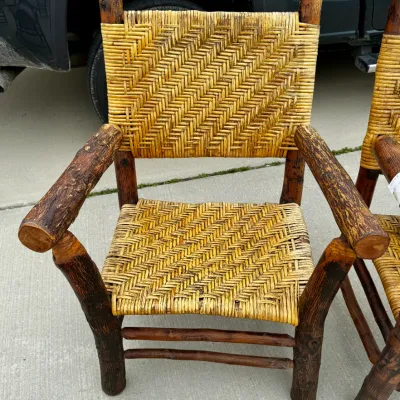
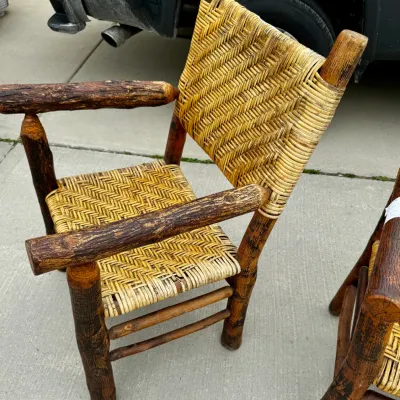
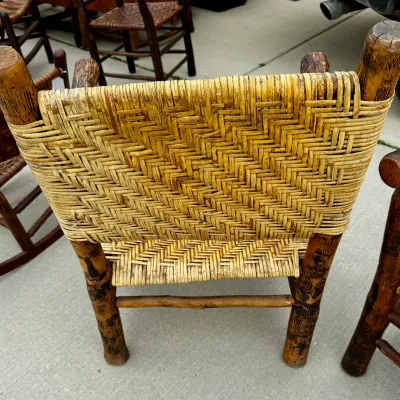
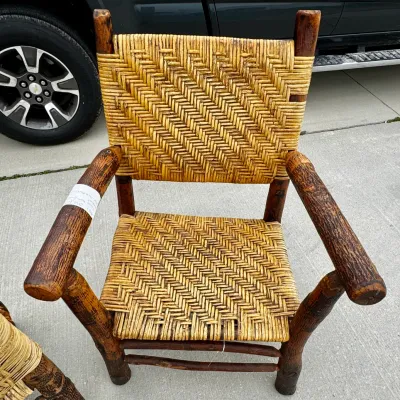
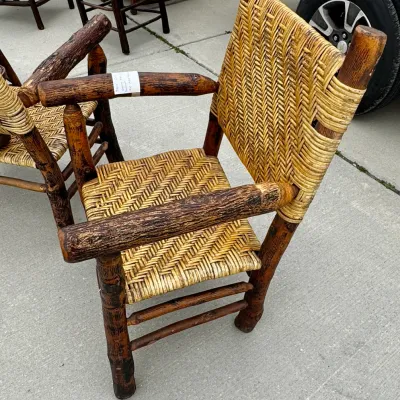
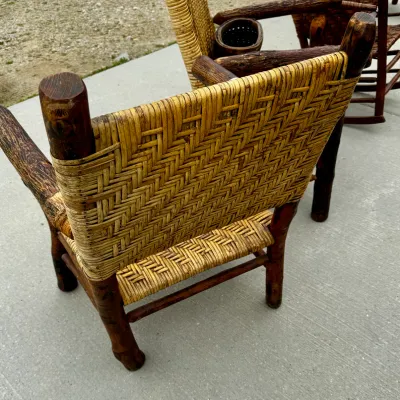
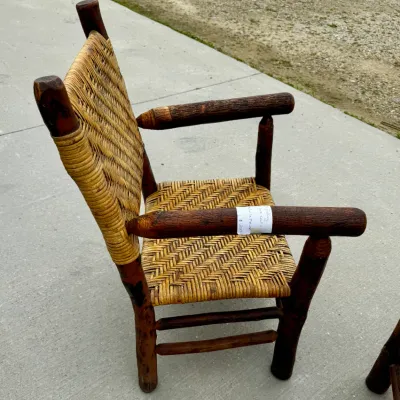
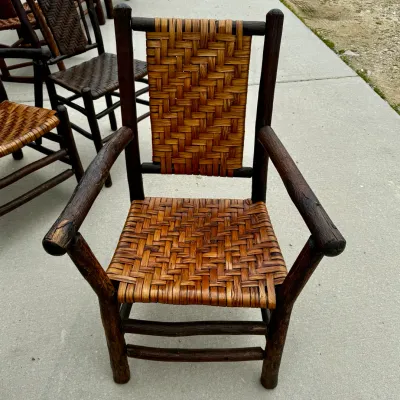
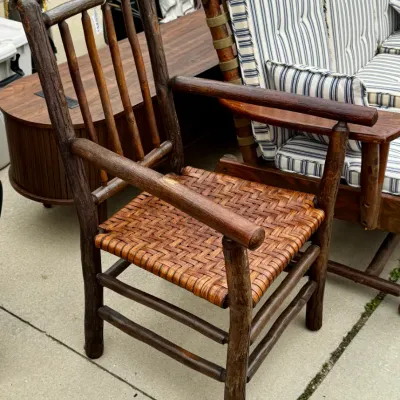
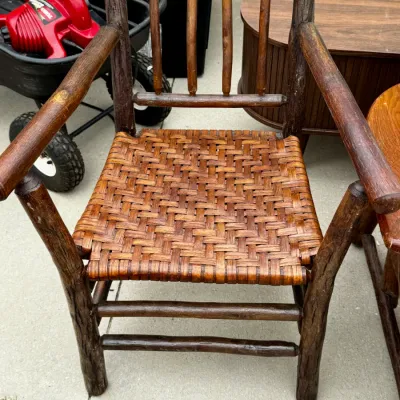
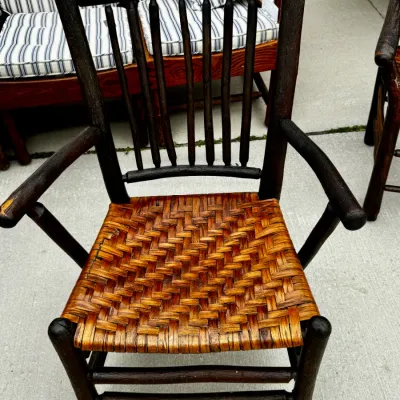
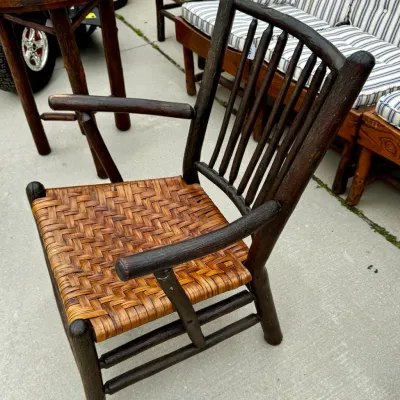
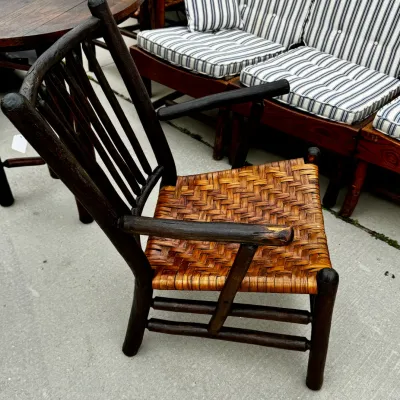
Old Hickory woven arm chair, a classic style of American rustic furniture.Key Characteristics & History Manufacturer: Old Hickory Furniture Company of Indiana, which popularized this distinct style starting in the late 1890s.Materials: Built using natural hickory saplings with the bark left intact, combined with a distinct herringbone-pattern woven splint, rattan, or cane seat and backrest.Era: These open-arm, double-stretcher styles were heavily produced from the 1930s to the 1950s and became iconic staples of Adirondack great camps, hunting lodges, and rustic porches. 123 / 243 -
Old Hickory woven arm chair, a classic style of American rustic furniture.Key Characteristics & History Manufacturer: Old Hickory Furniture Company of Indiana, which popularized this distinct style starting in the late 1890s.Materials: Built using natural hickory saplings with the bark left intact, combined with a distinct herringbone-pattern woven splint, rattan, or cane seat and backrest.Era: These open-arm, double-stretcher styles were heavily produced from the 1930s to the 1950s and became iconic staples of Adirondack great camps, hunting lodges, and rustic porches. 124 / 243 -
Old Hickory woven arm chair, a classic style of American rustic furniture.Key Characteristics & History Manufacturer: Old Hickory Furniture Company of Indiana, which popularized this distinct style starting in the late 1890s.Materials: Built using natural hickory saplings with the bark left intact, combined with a distinct herringbone-pattern woven splint, rattan, or cane seat and backrest.Era: These open-arm, double-stretcher styles were heavily produced from the 1930s to the 1950s and became iconic staples of Adirondack great camps, hunting lodges, and rustic porches. 125 / 243 -
Old Hickory woven arm chair, a classic style of American rustic furniture.Key Characteristics & HistoryManufacturer: Likely made by the Old Hickory Furniture Company of Indiana, which popularized this distinct style starting in the late 1890s.Materials: Built using natural hickory saplings with the bark left intact, combined with a distinct herringbone-pattern woven splint, rattan, or cane seat and backrest.Era: These open-arm, double-stretcher styles were heavily produced from the 1930s to the 1950s and became iconic staples of Adirondack great camps, hunting lodges, and rustic porches. 126 / 243 -
Old Hickory woven arm chair, a classic style of American rustic furniture.Key Characteristics & HistoryManufacturer: Likely made by the Old Hickory Furniture Company of Indiana, which popularized this distinct style starting in the late 1890s.Materials: Built using natural hickory saplings with the bark left intact, combined with a distinct herringbone-pattern woven splint, rattan, or cane seat and backrest.Era: These open-arm, double-stretcher styles were heavily produced from the 1930s to the 1950s and became iconic staples of Adirondack great camps, hunting lodges, and rustic porches. 127 / 243 -
Old Hickory woven arm chair, a classic style of American rustic furniture.Key Characteristics & HistoryManufacturer: Likely made by the Old Hickory Furniture Company of Indiana, which popularized this distinct style starting in the late 1890s.Materials: Built using natural hickory saplings with the bark left intact, combined with a distinct herringbone-pattern woven splint, rattan, or cane seat and backrest.Era: These open-arm, double-stretcher styles were heavily produced from the 1930s to the 1950s and became iconic staples of Adirondack great camps, hunting lodges, and rustic porches. 128 / 243 -
Old Hickory woven arm chair, a classic style of American rustic furniture.Key Characteristics & HistoryManufacturer: Likely made by the Old Hickory Furniture Company of Indiana, which popularized this distinct style starting in the late 1890s.Materials: Built using natural hickory saplings with the bark left intact, combined with a distinct herringbone-pattern woven splint, rattan, or cane seat and backrest.Era: These open-arm, double-stretcher styles were heavily produced from the 1930s to the 1950s and became iconic staples of Adirondack great camps, hunting lodges, and rustic porches. 129 / 243 -
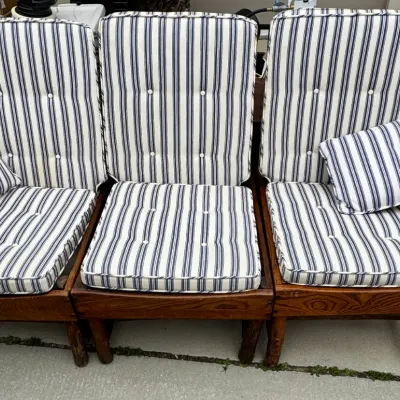
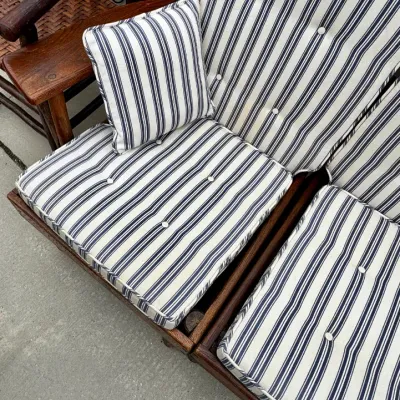
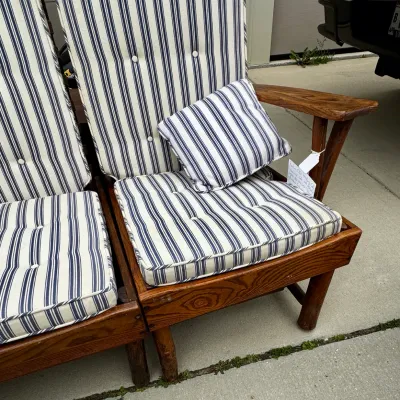
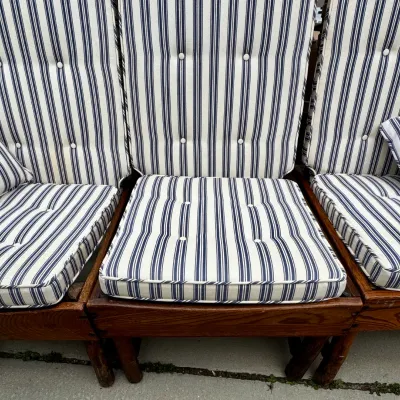
Highly collectible piece from the iconic Old Hickory Furniture Martinsville, Indiana. This Design Style with Vintage Paddle-Arm Construction is 1930's-50's: This specific flat-plank, broad-arm profile is historically referred to as the "Paddle Arm" sofa. Old Hickory famously began producing variations of this heavy, squared timber look between the 1930s and 1950s to complement their traditional round-log bark furniture.Modular Versatility: Old Hickory produced these modular three-piece sets so that owners of rustic Great Rooms, hunting lodges, and summer cabins could split them apart into independent lounge chairs or clamp them together into a long couch. 130 / 243 -
Highly collectible piece from the iconic Old Hickory Furniture Martinsville, Indiana. This Design Style with Vintage Paddle-Arm Construction is 1930's-50's: This specific flat-plank, broad-arm profile is historically referred to as the "Paddle Arm" sofa. Old Hickory famously began producing variations of this heavy, squared timber look between the 1930s and 1950s to complement their traditional round-log bark furniture.Modular Versatility: Old Hickory produced these modular three-piece sets so that owners of rustic Great Rooms, hunting lodges, and summer cabins could split them apart into independent lounge chairs or clamp them together into a long couch. 131 / 243 -
Highly collectible piece from the iconic Old Hickory Furniture Martinsville, Indiana. This Design Style with Vintage Paddle-Arm Construction is 1930's-50's: This specific flat-plank, broad-arm profile is historically referred to as the "Paddle Arm" sofa. Old Hickory famously began producing variations of this heavy, squared timber look between the 1930s and 1950s to complement their traditional round-log bark furniture.Modular Versatility: Old Hickory produced these modular three-piece sets so that owners of rustic Great Rooms, hunting lodges, and summer cabins could split them apart into independent lounge chairs or clamp them together into a long couch. 132 / 243 -
Highly collectible piece from the iconic Old Hickory Furniture Martinsville, Indiana. This Design Style with Vintage Paddle-Arm Construction is 1930's-50's: This specific flat-plank, broad-arm profile is historically referred to as the "Paddle Arm" sofa. Old Hickory famously began producing variations of this heavy, squared timber look between the 1930s and 1950s to complement their traditional round-log bark furniture.Modular Versatility: Old Hickory produced these modular three-piece sets so that owners of rustic Great Rooms, hunting lodges, and summer cabins could split them apart into independent lounge chairs or clamp them together into a long couch. 133 / 243 -
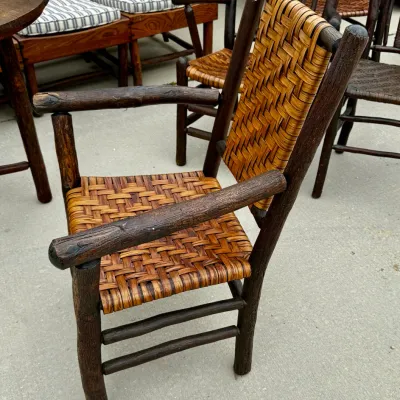
This is an antique or vintage "Old Hickory" rustic lodge arm chair, a classic style popularized by the Old Hickory Furniture Company of Indiana starting in the late 19th and early 20th centuries.Key Design CharacteristicsFrame construction: Built using natural hickory poles with the original bark left intact, giving it a distinctive cabin or lodge aesthetic.Weave design: The seat and backrest feature a tight herringbone cane or wood splint woven pattern.Historical context: This style became a definitive staple of American rustic design, prominently featured in Adirondack Great Camps and national park lodges like Yellowstone's Old Faithful Inn. 134 / 243 -
This is an antique or vintage "Old Hickory" rustic lodge arm chair, a classic style popularized by the Old Hickory Furniture Company of Indiana starting in the late 19th and early 20th centuries.Key Design CharacteristicsFrame construction: Built using natural hickory poles with the original bark left intact, giving it a distinctive cabin or lodge aesthetic.Weave design: The seat and backrest feature a tight herringbone cane or wood splint woven pattern.Historical context: This style became a definitive staple of American rustic design, prominently featured in Adirondack Great Camps and national park lodges like Yellowstone's Old Faithful Inn. 135 / 243 -
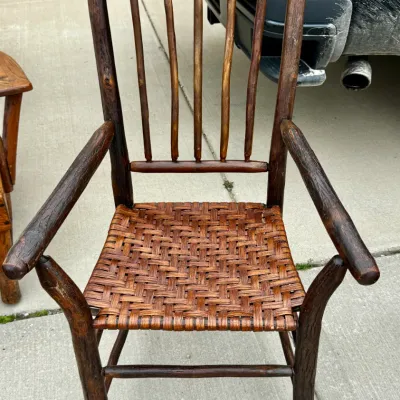
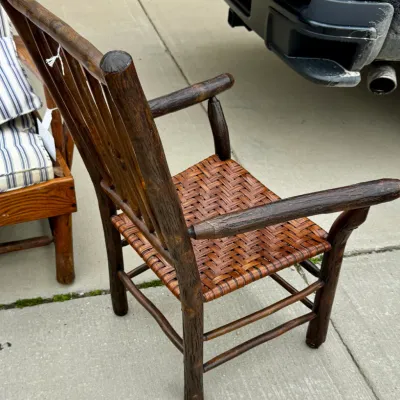
Old Hickory Furniture Company arm chair with a woven cane seat and a rustic spindle back, typically dating from the 1910s to the 1940s. Old Hickory Furniture Company (originally out of Martinsville, Indiana).Design Era: Early-to-mid 20th century American Arts & Crafts / Adirondack cabin style.Materials: Natural unpeeled hickory sapling frames combined with a woven herringbone cane or splint seat. 136 / 243 -
Old Hickory Furniture Company arm chair with a woven cane seat and a rustic spindle back, typically dating from the 1910s to the 1940s. Old Hickory Furniture Company (originally out of Martinsville, Indiana).Design Era: Early-to-mid 20th century American Arts & Crafts / Adirondack cabin style.Materials: Natural unpeeled hickory sapling frames combined with a woven herringbone cane or splint seat. 137 / 243 -
Old Hickory Furniture Company arm chair with a woven cane seat and a rustic spindle back, typically dating from the 1910s to the 1940s. Old Hickory Furniture Company (originally out of Martinsville, Indiana).Design Era: Early-to-mid 20th century American Arts & Crafts / Adirondack cabin style.Materials: Natural unpeeled hickory sapling frames combined with a woven herringbone cane or splint seat. 138 / 243 -
Old Hickory Furniture Company arm chair with a woven cane seat and a rustic spindle back, typically dating from the 1910s to the 1940s. Old Hickory Furniture Company (originally out of Martinsville, Indiana).Design Era: Early-to-mid 20th century American Arts & Crafts / Adirondack cabin style.Materials: Natural unpeeled hickory sapling frames combined with a woven herringbone cane or splint seat. 139 / 243 -
Old Hickory Furniture Company arm chair with a woven cane seat and a rustic spindle back, typically dating from the 1910s to the 1940s. Old Hickory Furniture Company (originally out of Martinsville, Indiana).Design Era: Early-to-mid 20th century American Arts & Crafts / Adirondack cabin style.Materials: Natural unpeeled hickory sapling frames combined with a woven herringbone cane or splint seat. 140 / 243 -
Old Hickory Furniture Company arm chair with a woven cane seat and a rustic spindle back, typically dating from the 1910s to the 1940s. Old Hickory Furniture Company (originally out of Martinsville, Indiana).Design Era: Early-to-mid 20th century American Arts & Crafts / Adirondack cabin style.Materials: Natural unpeeled hickory sapling frames combined with a woven herringbone cane or splint seat. 141 / 243 -
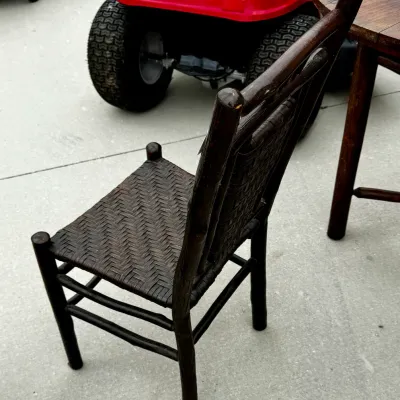
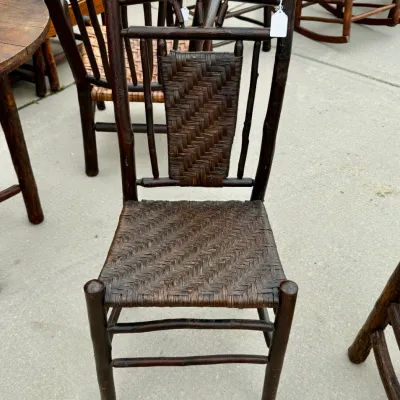
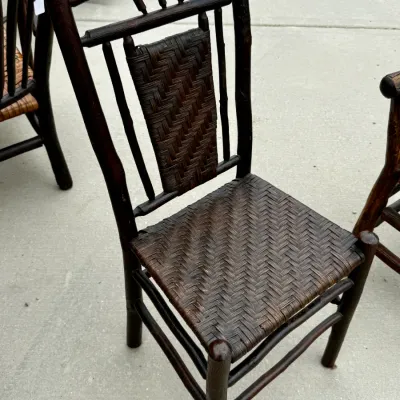
vintage or antique rustic side chair manufactured by the famous Old Hickory Furniture Company.Key Characteristics & ValuationMaterials: It features an authentic hickory sapling frame with the bark intact, paired with a distinctive hand-woven herringbone rattan or wood splint seat and back insert.Origin: These pieces were popularized during the Arts & Crafts movement in the early 20th century and became iconic staples of Adirondack great camps and rustic lodges. 142 / 243 -
vintage or antique rustic side chair manufactured by the famous Old Hickory Furniture Company.Key Characteristics & ValuationMaterials: It features an authentic hickory sapling frame with the bark intact, paired with a distinctive hand-woven herringbone rattan or wood splint seat and back insert.Origin: These pieces were popularized during the Arts & Crafts movement in the early 20th century and became iconic staples of Adirondack great camps and rustic lodges. 143 / 243 -
vintage or antique rustic side chair manufactured by the famous Old Hickory Furniture Company.Key Characteristics & ValuationMaterials: It features an authentic hickory sapling frame with the bark intact, paired with a distinctive hand-woven herringbone rattan or wood splint seat and back insert.Origin: These pieces were popularized during the Arts & Crafts movement in the early 20th century and became iconic staples of Adirondack great camps and rustic lodges. 144 / 243 -
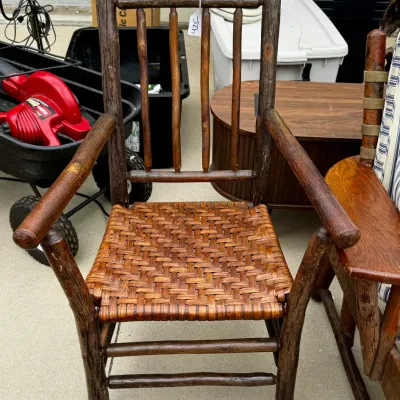
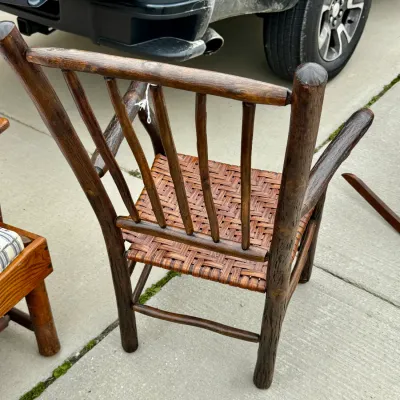
This piece is a classic antique Old Hickory rustic armchair, a staple of American Arts and Crafts movement and Adirondack cabin lodge style.Key Design FeaturesFrame: Crafted from natural, unpeeled sapling logs with the bark left intact, typical of historical Old Hickory Furniture Company designs.Backrest: Features a series of slim, vertical wooden round spindles set between stout log posts.Seating: Outfitted with a hand-woven reed splint cane seat woven into a durable, tight herringbone/twill pattern.Era: Chairs matching this exact spindle-back, open-arm configuration were popularized during the early 1900s through the 1940s. 145 / 243 -
This piece is a classic antique Old Hickory rustic armchair, a staple of American Arts and Crafts movement and Adirondack cabin lodge style.Key Design FeaturesFrame: Crafted from natural, unpeeled sapling logs with the bark left intact, typical of historical Old Hickory Furniture Company designs.Backrest: Features a series of slim, vertical wooden round spindles set between stout log posts.Seating: Outfitted with a hand-woven reed splint cane seat woven into a durable, tight herringbone/twill pattern.Era: Chairs matching this exact spindle-back, open-arm configuration were popularized during the early 1900s through the 1940s. 146 / 243 -
This piece is a classic antique Old Hickory rustic armchair, a staple of American Arts and Crafts movement and Adirondack cabin lodge style.Key Design FeaturesFrame: Crafted from natural, unpeeled sapling logs with the bark left intact, typical of historical Old Hickory Furniture Company designs.Backrest: Features a series of slim, vertical wooden round spindles set between stout log posts.Seating: Outfitted with a hand-woven reed splint cane seat woven into a durable, tight herringbone/twill pattern.Era: Chairs matching this exact spindle-back, open-arm configuration were popularized during the early 1900s through the 1940s. 147 / 243 -
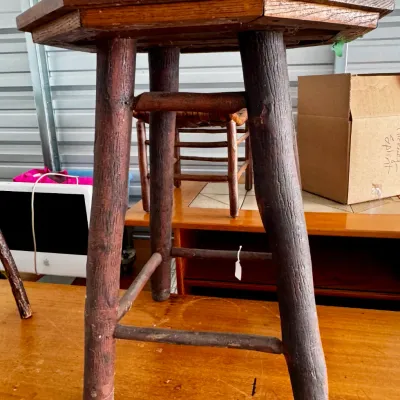
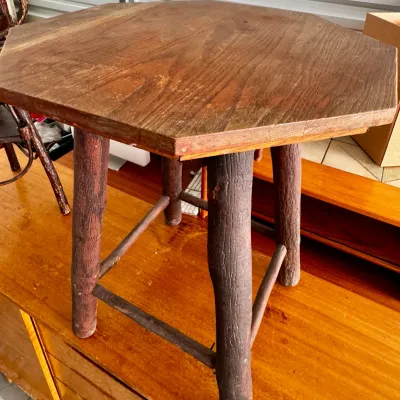
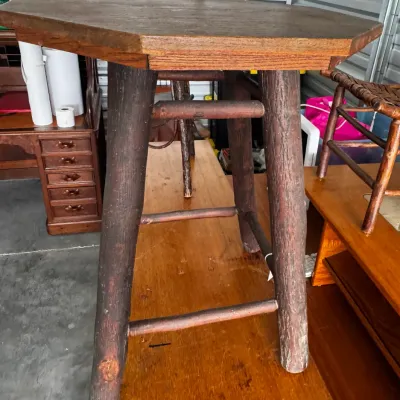
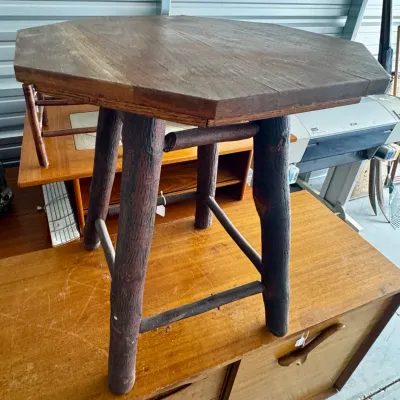
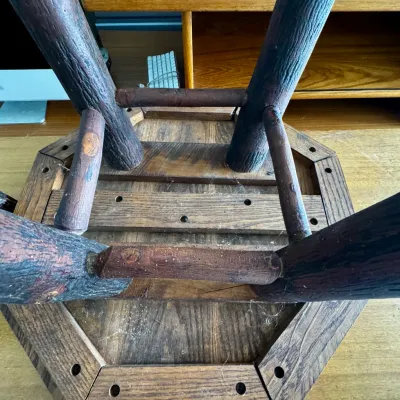
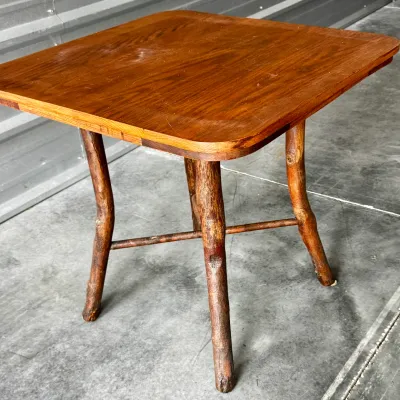
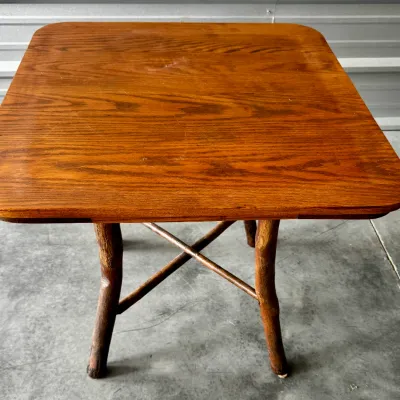
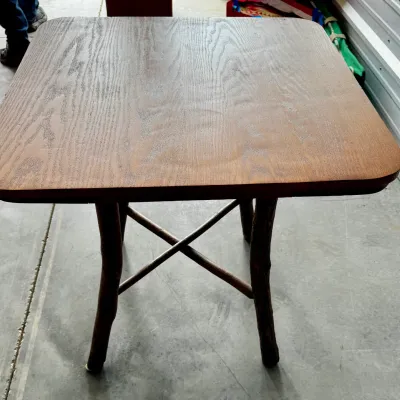
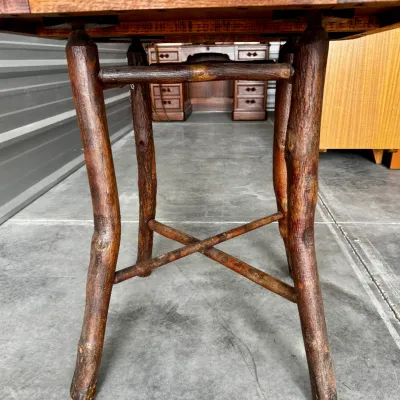
This item is a vintage rustic side table or pedestal stand built in the signature "Old Hickory" style. It features a flat, geometric 6 sided plank top, crafted from solid oak. The support structure is composed of thick, natural bark-on tree branch and sapling logs (hickory) which form the four angled legs and cross stretchers. 148 / 243 -
This item is a vintage rustic side table or pedestal stand built in the signature "Old Hickory" style. It features a flat, geometric 6 sided plank top, crafted from solid oak. The support structure is composed of thick, natural bark-on tree branch and sapling logs (hickory) which form the four angled legs and cross stretchers. 149 / 243 -
This item is a vintage rustic side table or pedestal stand built in the signature "Old Hickory" style. It features a flat, geometric 6 sided plank top, crafted from solid oak. The support structure is composed of thick, natural bark-on tree branch and sapling logs (hickory) which form the four angled legs and cross stretchers. 150 / 243 -
This item is a vintage rustic side table or pedestal stand built in the signature "Old Hickory" style. It features a flat, geometric 6 sided plank top, crafted from solid oak. The support structure is composed of thick, natural bark-on tree branch and sapling logs (hickory) which form the four angled legs and cross stretchers. 151 / 243 -
This item is a vintage rustic side table or pedestal stand built in the signature "Old Hickory" style. It features a flat, geometric 6 sided plank top, crafted from solid oak. The support structure is composed of thick, natural bark-on tree branch and sapling logs (hickory) which form the four angled legs and cross stretchers. 152 / 243 -
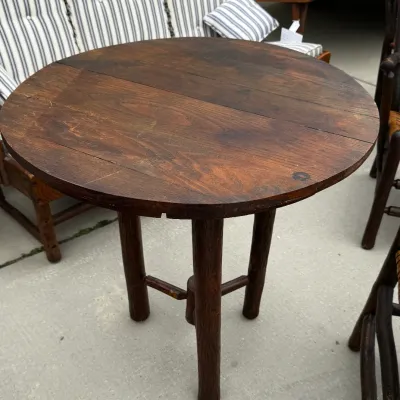
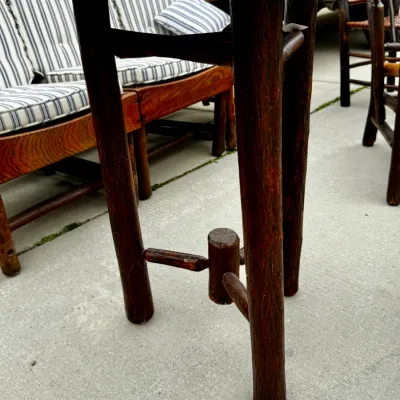
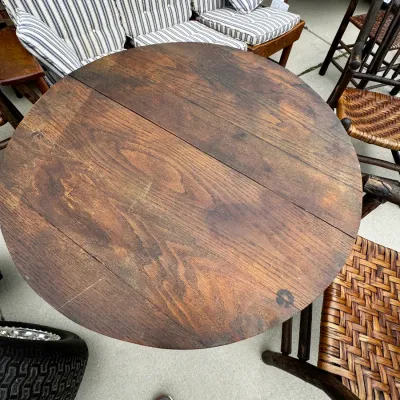
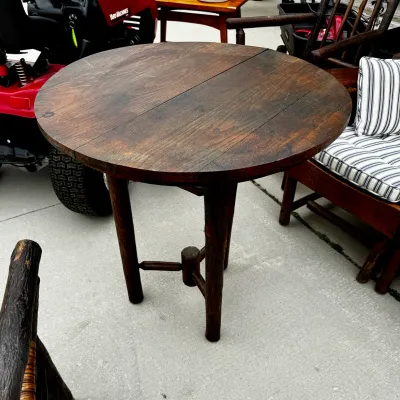
The selected item is a vintage rustic cricket table, a style traditionally characterized by a round top resting on three splayed legs. This type of vernacular furniture became popular in historical English and Welsh households because the three-legged design kept the table perfectly stable on uneven stone or dirt floors.Key CharacteristicsConstruction: Made from heavy, solid hardwood (typically oak or hickory) with simple, robust carpentry joints.Surface: Features a multi-planked round top displaying natural wood grains, minor surface scratches, and a deep, aged patina.Leg Design: Three thick, rounded dowel-style legs supported by low T-shaped or triangular stabilizing stretchers. 153 / 243 -
The selected item is a vintage rustic cricket table, a style traditionally characterized by a round top resting on three splayed legs. This type of vernacular furniture became popular in historical English and Welsh households because the three-legged design kept the table perfectly stable on uneven stone or dirt floors.Key CharacteristicsConstruction: Made from heavy, solid hardwood (typically oak or hickory) with simple, robust carpentry joints.Surface: Features a multi-planked round top displaying natural wood grains, minor surface scratches, and a deep, aged patina.Leg Design: Three thick, rounded dowel-style legs supported by low T-shaped or triangular stabilizing stretchers. 154 / 243 -
The selected item is a vintage rustic cricket table, a style traditionally characterized by a round top resting on three splayed legs. This type of vernacular furniture became popular in historical English and Welsh households because the three-legged design kept the table perfectly stable on uneven stone or dirt floors.Key CharacteristicsConstruction: Made from heavy, solid hardwood (typically oak or hickory) with simple, robust carpentry joints.Surface: Features a multi-planked round top displaying natural wood grains, minor surface scratches, and a deep, aged patina.Leg Design: Three thick, rounded dowel-style legs supported by low T-shaped or triangular stabilizing stretchers. 155 / 243 -
The selected item is a vintage rustic cricket table, a style traditionally characterized by a round top resting on three splayed legs. This type of vernacular furniture became popular in historical English and Welsh households because the three-legged design kept the table perfectly stable on uneven stone or dirt floors.Key CharacteristicsConstruction: Made from heavy, solid hardwood (typically oak or hickory) with simple, robust carpentry joints.Surface: Features a multi-planked round top displaying natural wood grains, minor surface scratches, and a deep, aged patina.Leg Design: Three thick, rounded dowel-style legs supported by low T-shaped or triangular stabilizing stretchers. 156 / 243 -
Old Hickory Furniture Company rustic table Material: Built using natural, unpeeled hickory sapling legs and stretchers.Structure: Features an X-stretcher base with a cross-braced support layout for added stability. Style: Classic American rustic/Adirondack lodge style, popular in cabins and covered porch settings since the early 20th century. 157 / 243 -
Old Hickory Furniture Company rustic table Material: Built using natural, unpeeled hickory sapling legs and stretchers.Structure: Features an X-stretcher base with a cross-braced support layout for added stability. Style: Classic American rustic/Adirondack lodge style, popular in cabins and covered porch settings since the early 20th century. 158 / 243 -
Old Hickory Furniture Company rustic table Material: Built using natural, unpeeled hickory sapling legs and stretchers.Structure: Features an X-stretcher base with a cross-braced support layout for added stability. Style: Classic American rustic/Adirondack lodge style, popular in cabins and covered porch settings since the early 20th century. 159 / 243 -
Old Hickory Furniture Company rustic table Material: Built using natural, unpeeled hickory sapling legs and stretchers.Structure: Features an X-stretcher base with a cross-braced support layout for added stability. Style: Classic American rustic/Adirondack lodge style, popular in cabins and covered porch settings since the early 20th century. 160 / 243 -
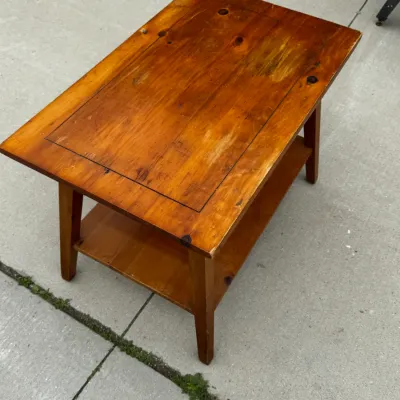
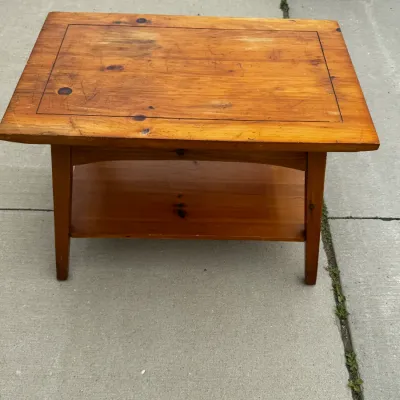
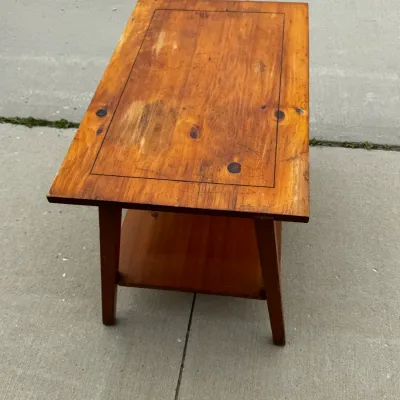
vintage two-tier wood coffee table, featuring a built-in lower storage shelf and a distinct rectangular groove inlay on the tabletop. It exhibits a mid-century or transitional style with arched support aprons beneath the tabletop and slightly tapered legs.Design Elements & FeaturesMaterial: Constructed from solid wood showing a warm golden-amber stain and visible character knots.Aesthetic: Simple, functional design reminiscent of mid-century brands like Lane Furniture or traditional Ethan Allen Pine collections.Storage: Features an open-slat lower tier ideal for holding books, magazines, or decorative baskets. 161 / 243 -
vintage two-tier wood coffee table, featuring a built-in lower storage shelf and a distinct rectangular groove inlay on the tabletop. It exhibits a mid-century or transitional style with arched support aprons beneath the tabletop and slightly tapered legs.Design Elements & FeaturesMaterial: Constructed from solid wood showing a warm golden-amber stain and visible character knots.Aesthetic: Simple, functional design reminiscent of mid-century brands like Lane Furniture or traditional Ethan Allen Pine collections.Storage: Features an open-slat lower tier ideal for holding books, magazines, or decorative baskets. 162 / 243 -
vintage two-tier wood coffee table, featuring a built-in lower storage shelf and a distinct rectangular groove inlay on the tabletop. It exhibits a mid-century or transitional style with arched support aprons beneath the tabletop and slightly tapered legs.Design Elements & FeaturesMaterial: Constructed from solid wood showing a warm golden-amber stain and visible character knots.Aesthetic: Simple, functional design reminiscent of mid-century brands like Lane Furniture or traditional Ethan Allen Pine collections.Storage: Features an open-slat lower tier ideal for holding books, magazines, or decorative baskets. 163 / 243 -
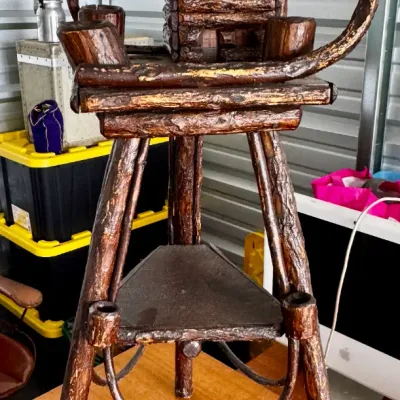
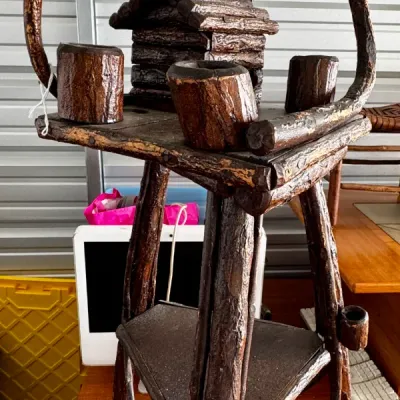
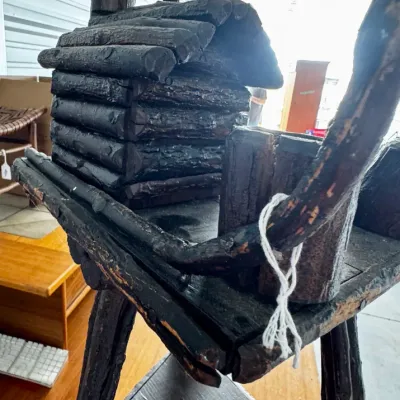
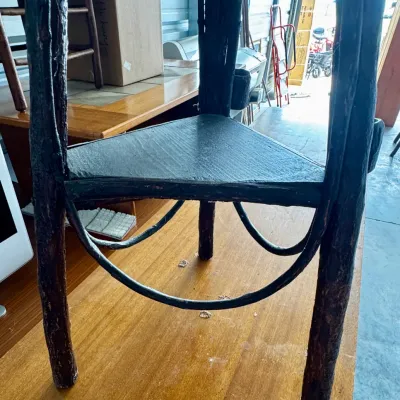
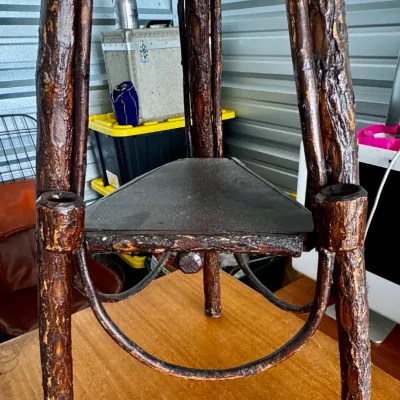
26 1/2" tall, 12 1/2" x 10" flat surface top, Antique Adirondack twig smoking stand (also frequently called an Adirondack folk art smoke stand or side table). Popularized in the early-to-mid 20th century, these unique pieces of American folk art were handcrafted for rustic hunting lodges, cabins, and porches. Key Design Features Log Cabin Humidor: The miniature log cabin on the top tier acts as a storage box, used to hold tobacco, cigars, or smoking accessories. The hollowed-out twig cylindrical pieces attached around the deck and on the legs serve as matches or pipe holders, as well as spots to rest small smoking pipes. Bentwood Construction: The framing is made from natural tree branches, sticks, and bent willow or grapevine twigs, characteristic of the classic Adirondack style. Tiered Shelving: It features a main upper platform for activity and a smaller lower triangular shelf for holding books, magazines, or extra utility items.Today, Highly collectible vintage item prized by antique enthusiasts for rustic home decor, 164 / 243 -
26 1/2" tall, 12 1/2" x 10" flat surface top, Antique Adirondack twig smoking stand (also frequently called an Adirondack folk art smoke stand or side table). Popularized in the early-to-mid 20th century, these unique pieces of American folk art were handcrafted for rustic hunting lodges, cabins, and porches. Key Design Features Log Cabin Humidor: The miniature log cabin on the top tier acts as a storage box, used to hold tobacco, cigars, or smoking accessories. The hollowed-out twig cylindrical pieces attached around the deck and on the legs serve as matches or pipe holders, as well as spots to rest small smoking pipes. Bentwood Construction: The framing is made from natural tree branches, sticks, and bent willow or grapevine twigs, characteristic of the classic Adirondack style. Tiered Shelving: It features a main upper platform for activity and a smaller lower triangular shelf for holding books, magazines, or extra utility items.Today, Highly collectible vintage item prized by antique enthusiasts for rustic home decor, 165 / 243 -
26 1/2" tall, 12 1/2" x 10" flat surface top, Antique Adirondack twig smoking stand (also frequently called an Adirondack folk art smoke stand or side table). Popularized in the early-to-mid 20th century, these unique pieces of American folk art were handcrafted for rustic hunting lodges, cabins, and porches. Key Design Features Log Cabin Humidor: The miniature log cabin on the top tier acts as a storage box, used to hold tobacco, cigars, or smoking accessories. The hollowed-out twig cylindrical pieces attached around the deck and on the legs serve as matches or pipe holders, as well as spots to rest small smoking pipes. Bentwood Construction: The framing is made from natural tree branches, sticks, and bent willow or grapevine twigs, characteristic of the classic Adirondack style. Tiered Shelving: It features a main upper platform for activity and a smaller lower triangular shelf for holding books, magazines, or extra utility items.Today, Highly collectible vintage item prized by antique enthusiasts for rustic home decor, 166 / 243 -
26 1/2" tall, 12 1/2" x 10" flat surface top, Antique Adirondack twig smoking stand (also frequently called an Adirondack folk art smoke stand or side table). Popularized in the early-to-mid 20th century, these unique pieces of American folk art were handcrafted for rustic hunting lodges, cabins, and porches. Key Design Features Log Cabin Humidor: The miniature log cabin on the top tier acts as a storage box, used to hold tobacco, cigars, or smoking accessories. The hollowed-out twig cylindrical pieces attached around the deck and on the legs serve as matches or pipe holders, as well as spots to rest small smoking pipes. Bentwood Construction: The framing is made from natural tree branches, sticks, and bent willow or grapevine twigs, characteristic of the classic Adirondack style. Tiered Shelving: It features a main upper platform for activity and a smaller lower triangular shelf for holding books, magazines, or extra utility items.Today, Highly collectible vintage item prized by antique enthusiasts for rustic home decor, 167 / 243 -
26 1/2" tall, 12 1/2" x 10" flat surface top, Antique Adirondack twig smoking stand (also frequently called an Adirondack folk art smoke stand or side table). Popularized in the early-to-mid 20th century, these unique pieces of American folk art were handcrafted for rustic hunting lodges, cabins, and porches. Key Design Features Log Cabin Humidor: The miniature log cabin on the top tier acts as a storage box, used to hold tobacco, cigars, or smoking accessories. The hollowed-out twig cylindrical pieces attached around the deck and on the legs serve as matches or pipe holders, as well as spots to rest small smoking pipes. Bentwood Construction: The framing is made from natural tree branches, sticks, and bent willow or grapevine twigs, characteristic of the classic Adirondack style. Tiered Shelving: It features a main upper platform for activity and a smaller lower triangular shelf for holding books, magazines, or extra utility items.Today, Highly collectible vintage item prized by antique enthusiasts for rustic home decor, 168 / 243 -
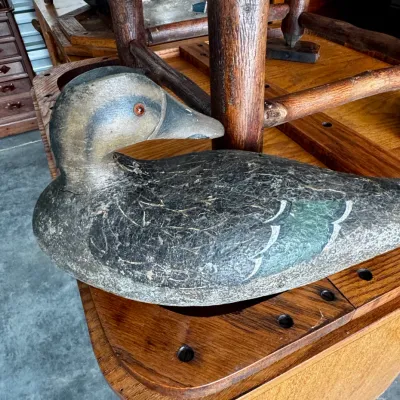
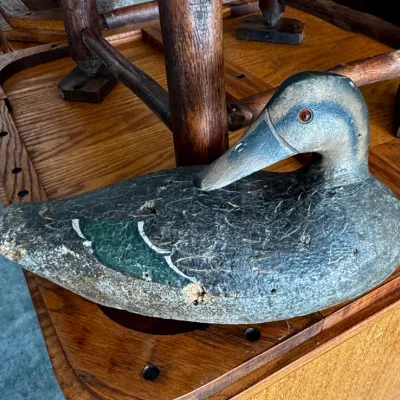
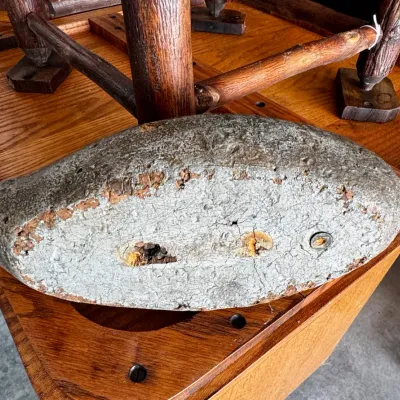
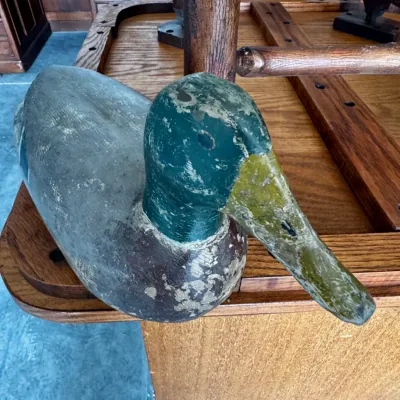
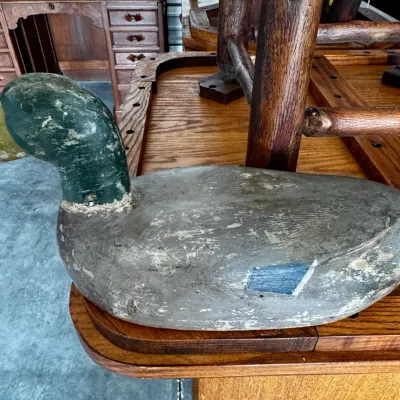
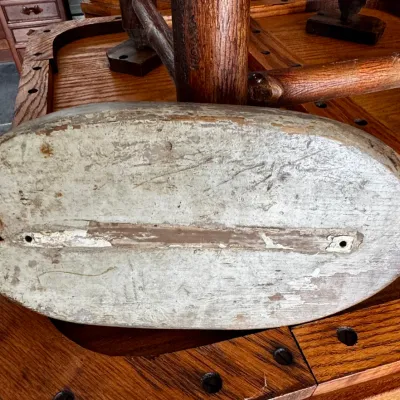
antique hand-carved wooden duck decoy, a highly collectible piece of American folk art. Historically used by hunters to lure waterfowl, these early 20th-century objects are now sought after for rustic interior decor and historical collections.Key Identification FeaturesMaterial: Hand-carved from a solid block of wood (traditionally cedar or pine) with a distinct, weathered texture.Paint: Original multi-toned painted surface showing prominent "crazing" (fine cracking), distressing, and a green patch on the wing.Eyes: Features inset glass or tack eyes, common in factory and premium folk art decoys.Construction: Made in two parts, with the head carved separately and attached to the body. 169 / 243 -
antique hand-carved wooden duck decoy, a highly collectible piece of American folk art. Historically used by hunters to lure waterfowl, these early 20th-century objects are now sought after for rustic interior decor and historical collections.Key Identification FeaturesMaterial: Hand-carved from a solid block of wood (traditionally cedar or pine) with a distinct, weathered texture.Paint: Original multi-toned painted surface showing prominent "crazing" (fine cracking), distressing, and a green patch on the wing.Eyes: Features inset glass or tack eyes, common in factory and premium folk art decoys.Construction: Made in two parts, with the head carved separately and attached to the body. 170 / 243 -
antique hand-carved wooden duck decoy, a highly collectible piece of American folk art. Historically used by hunters to lure waterfowl, these early 20th-century objects are now sought after for rustic interior decor and historical collections.Key Identification FeaturesMaterial: Hand-carved from a solid block of wood (traditionally cedar or pine) with a distinct, weathered texture.Paint: Original multi-toned painted surface showing prominent "crazing" (fine cracking), distressing, and a green patch on the wing.Eyes: Features inset glass or tack eyes, common in factory and premium folk art decoys.Construction: Made in two parts, with the head carved separately and attached to the body. 171 / 243 -
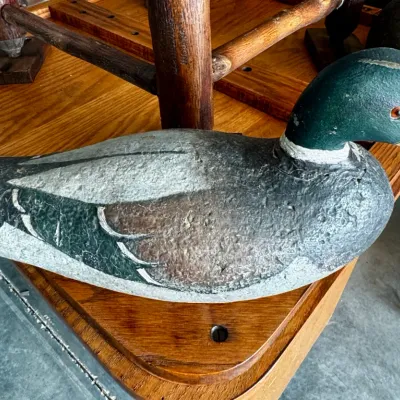
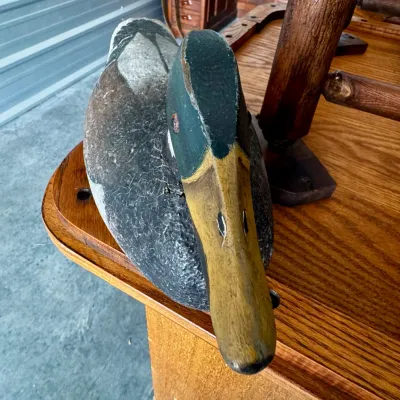
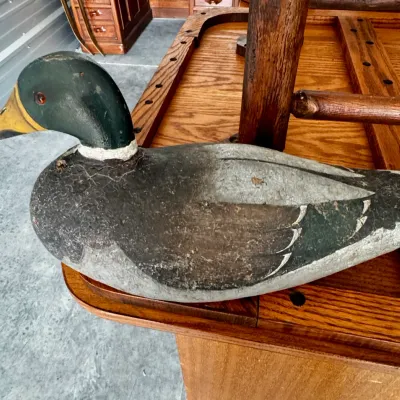
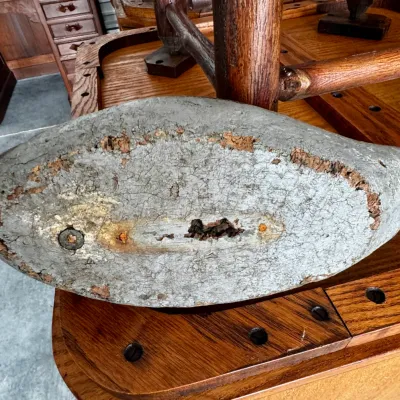
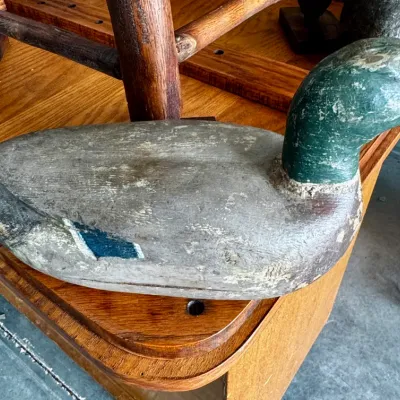
vintage hand-painted Mallard Drake (male) duck decoy, used historically for hunting and highly sought after today as American folk art and rustic home decor.Key Characteristics & IdentificationSpecies Style: It clearly represents a Mallard Drake, recognizable by the characteristic dark green head, white neck ring, chestnut-brown breast, and patterned greyish-white body.Material & Construction: This appears to be a composite, cork, or solid wood factory/hand-carved decoy. The texture shows heavy wear, distress, and a distinct craquelure pattern in the paint surface, indicating significant age and exposure to water. 172 / 243 -
vintage hand-painted Mallard Drake (male) duck decoy, used historically for hunting and highly sought after today as American folk art and rustic home decor.Key Characteristics & IdentificationSpecies Style: It clearly represents a Mallard Drake, recognizable by the characteristic dark green head, white neck ring, chestnut-brown breast, and patterned greyish-white body.Material & Construction: This appears to be a composite, cork, or solid wood factory/hand-carved decoy. The texture shows heavy wear, distress, and a distinct craquelure pattern in the paint surface, indicating significant age and exposure to water. 173 / 243 -
vintage hand-painted Mallard Drake (male) duck decoy, used historically for hunting and highly sought after today as American folk art and rustic home decor.Key Characteristics & IdentificationSpecies Style: It clearly represents a Mallard Drake, recognizable by the characteristic dark green head, white neck ring, chestnut-brown breast, and patterned greyish-white body.Material & Construction: This appears to be a composite, cork, or solid wood factory/hand-carved decoy. The texture shows heavy wear, distress, and a distinct craquelure pattern in the paint surface, indicating significant age and exposure to water. 174 / 243 -
vintage hand-painted Mallard Drake (male) duck decoy, used historically for hunting and highly sought after today as American folk art and rustic home decor.Key Characteristics & IdentificationSpecies Style: It clearly represents a Mallard Drake, recognizable by the characteristic dark green head, white neck ring, chestnut-brown breast, and patterned greyish-white body.Material & Construction: This appears to be a composite, cork, or solid wood factory/hand-carved decoy. The texture shows heavy wear, distress, and a distinct craquelure pattern in the paint surface, indicating significant age and exposure to water. 175 / 243 -
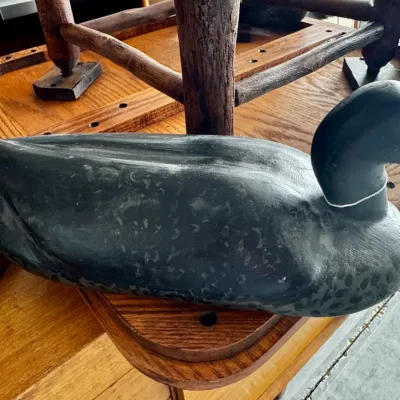
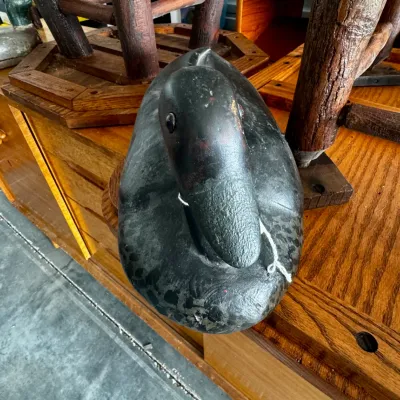
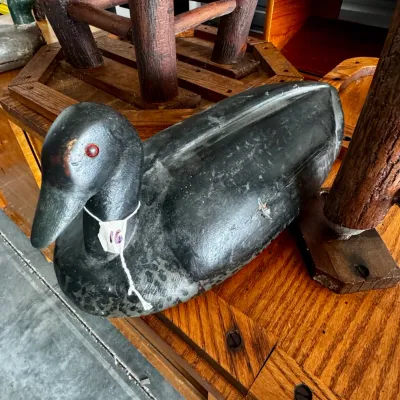
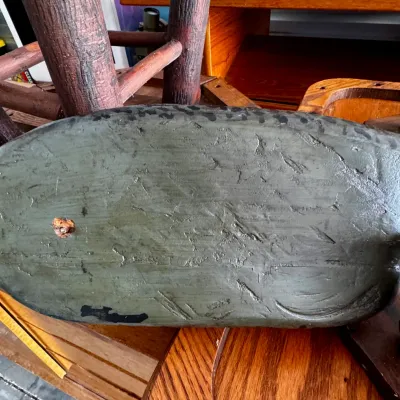
Antique hand-carved wood duck decoy, a piece of classic American folk art commonly used for waterfowl hunting in the 19th and 20th centuries.Key CharacteristicsSpecies Profile: Based on its solid dark coloration and overall body shape, this decoy typically represents a Black Duck or a Scoter (such as a White-winged Scoter).Materials & Construction: It features a solid wood body with aged, distressed black paint, a sleek carved head, and small inlaid glass eyes. 180 / 243 -
Antique hand-carved wood duck decoy, a piece of classic American folk art commonly used for waterfowl hunting in the 19th and 20th centuries.Key CharacteristicsSpecies Profile: Based on its solid dark coloration and overall body shape, this decoy typically represents a Black Duck or a Scoter (such as a White-winged Scoter).Materials & Construction: It features a solid wood body with aged, distressed black paint, a sleek carved head, and small inlaid glass eyes. 181 / 243 -
Antique hand-carved wood duck decoy, a piece of classic American folk art commonly used for waterfowl hunting in the 19th and 20th centuries.Key CharacteristicsSpecies Profile: Based on its solid dark coloration and overall body shape, this decoy typically represents a Black Duck or a Scoter (such as a White-winged Scoter).Materials & Construction: It features a solid wood body with aged, distressed black paint, a sleek carved head, and small inlaid glass eyes. 182 / 243 -
Antique hand-carved wood duck decoy, a piece of classic American folk art commonly used for waterfowl hunting in the 19th and 20th centuries.Key CharacteristicsSpecies Profile: Based on its solid dark coloration and overall body shape, this decoy typically represents a Black Duck or a Scoter (such as a White-winged Scoter).Materials & Construction: It features a solid wood body with aged, distressed black paint, a sleek carved head, and small inlaid glass eyes. 183 / 243 -
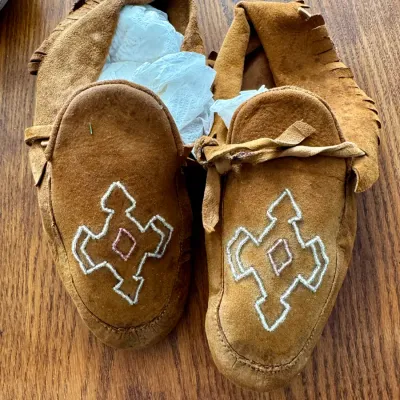
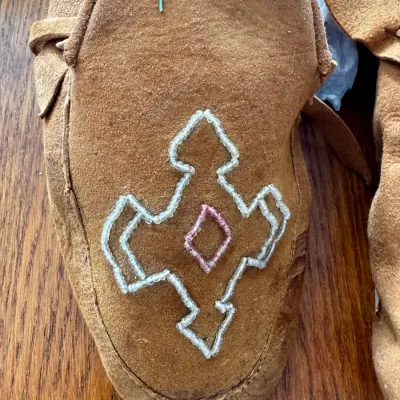
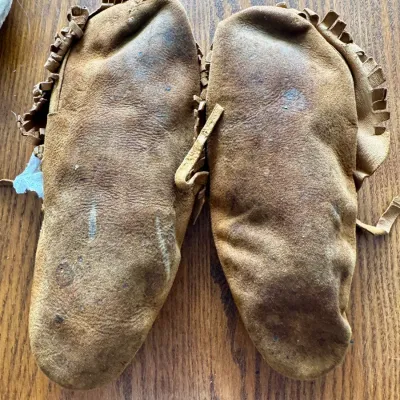
Size 7 These are classic fringe suede leather moccasins, featuring a distinctive stitched geometric or tribal-inspired motif on the toe boxes.They showcase typical traditional elements:Material: Soft, tan suede leather uppers that contour naturally to the foot over time.Trim: A classic fringed collar surrounding the ankle area.Details: Functional matching suede lace ties threaded through the collar to secure the fit.Embroidery: Contrast white, pink, and brown outline stitching highlighting a stylized, geometric central design on each vamp. 184 / 243 -
Size 7 These are classic fringe suede leather moccasins, featuring a distinctive stitched geometric or tribal-inspired motif on the toe boxes.They showcase typical traditional elements:Material: Soft, tan suede leather uppers that contour naturally to the foot over time.Trim: A classic fringed collar surrounding the ankle area.Details: Functional matching suede lace ties threaded through the collar to secure the fit.Embroidery: Contrast white, pink, and brown outline stitching highlighting a stylized, geometric central design on each vamp. 185 / 243 -
Size 7 These are classic fringe suede leather moccasins, featuring a distinctive stitched geometric or tribal-inspired motif on the toe boxes.They showcase typical traditional elements:Material: Soft, tan suede leather uppers that contour naturally to the foot over time.Trim: A classic fringed collar surrounding the ankle area.Details: Functional matching suede lace ties threaded through the collar to secure the fit.Embroidery: Contrast white, pink, and brown outline stitching highlighting a stylized, geometric central design on each vamp. 186 / 243 -
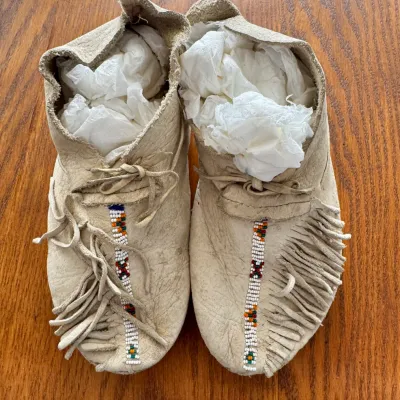
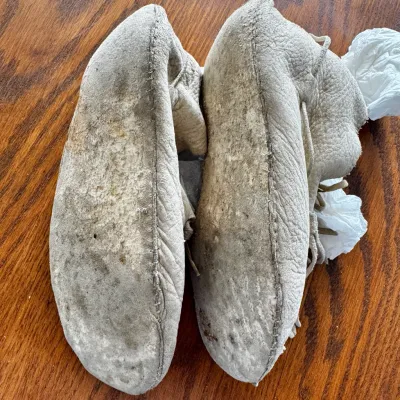
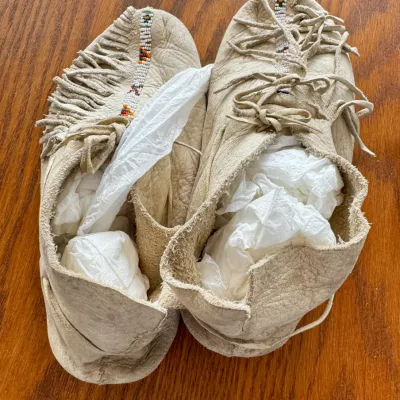
Size 7 Native American beaded deerskin moccasins featuring a fringed accent and lane-stitch beadwork. Built from a soft, untreated light-tan hide, likely deerskin or buckskin.Embellishments: Decorated with a central vertical stripe of multi-colored glass seed beads flanked by a cascading fringe along the outer edge.Structure: Features a classic soft-sole design with lace ties, currently stuffed with paper to help maintain the structural shape. 187 / 243 -
Size 7 Native American beaded deerskin moccasins featuring a fringed accent and lane-stitch beadwork. Built from a soft, untreated light-tan hide, likely deerskin or buckskin.Embellishments: Decorated with a central vertical stripe of multi-colored glass seed beads flanked by a cascading fringe along the outer edge.Structure: Features a classic soft-sole design with lace ties, currently stuffed with paper to help maintain the structural shape. 188 / 243 -
Size 7 Native American beaded deerskin moccasins featuring a fringed accent and lane-stitch beadwork. Built from a soft, untreated light-tan hide, likely deerskin or buckskin.Embellishments: Decorated with a central vertical stripe of multi-colored glass seed beads flanked by a cascading fringe along the outer edge.Structure: Features a classic soft-sole design with lace ties, currently stuffed with paper to help maintain the structural shape. 189 / 243 -
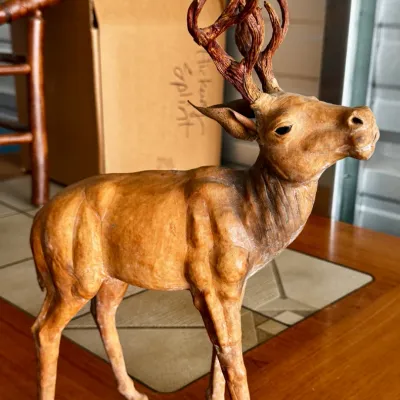
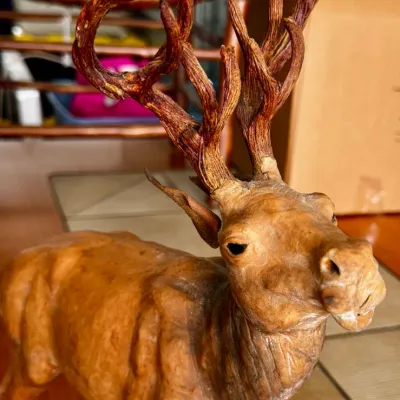
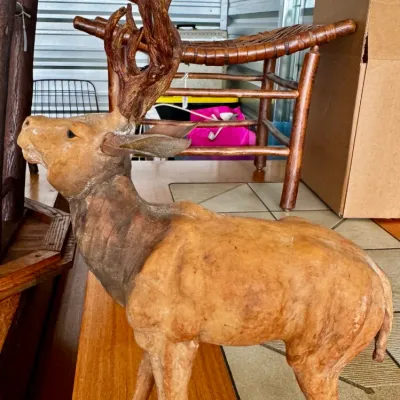
vintage leather-wrapped deer figurine. A popular accent pieces for rustic, cabin-style, or mid-century bohemian interior decor. Characteristics & ConstructionMaterials: Constructed with a lightweight inner core and tightly wrapped in genuine wet-molded leather to define the muscle structure. Details: features realistic inset glass eyes and antlers crafted from molded materials, wrapped wire, and natural components Era: produced from the mid-to-late 20th century. 193 / 243 -
vintage leather-wrapped deer figurine. A popular accent pieces for rustic, cabin-style, or mid-century bohemian interior decor. Characteristics & ConstructionMaterials: Constructed with a lightweight inner core and tightly wrapped in genuine wet-molded leather to define the muscle structure. Details: features realistic inset glass eyes and antlers crafted from molded materials, wrapped wire, and natural components Era: produced from the mid-to-late 20th century. 194 / 243 -
vintage leather-wrapped deer figurine. A popular accent pieces for rustic, cabin-style, or mid-century bohemian interior decor. Characteristics & ConstructionMaterials: Constructed with a lightweight inner core and tightly wrapped in genuine wet-molded leather to define the muscle structure. Details: features realistic inset glass eyes and antlers crafted from molded materials, wrapped wire, and natural components Era: produced from the mid-to-late 20th century. 195 / 243 -
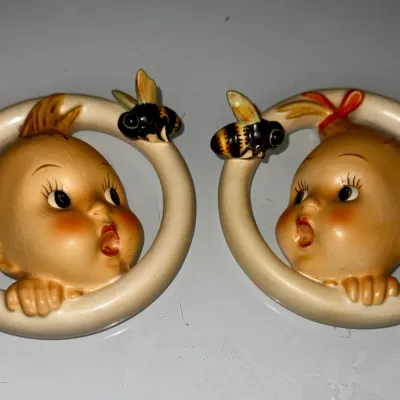
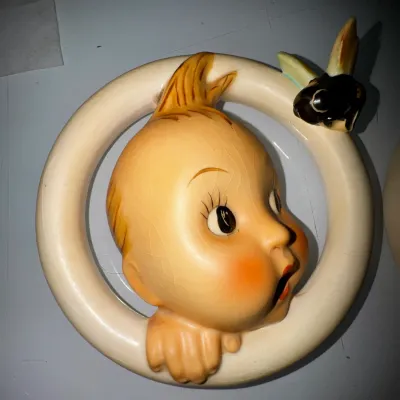
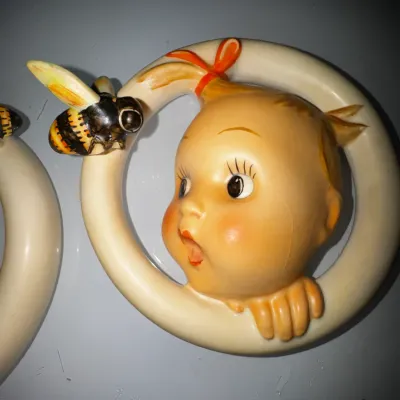
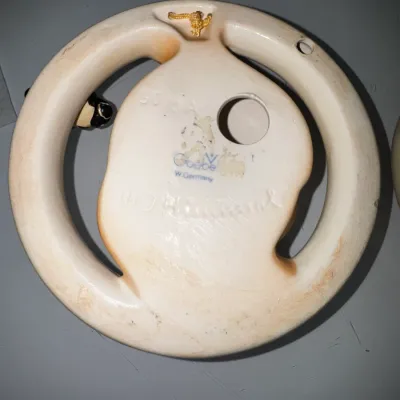
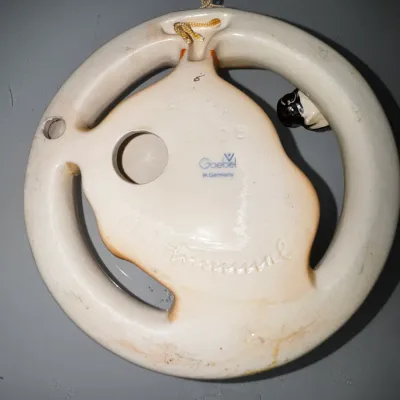
vintage Goebel M.I. Hummel "Ba-Bee Ring" (Girl) porcelain wall plaque, often cataloged under design number 30/0 B.Core Product DetailsBrand/Manufacturer: Produced by Goebel in Germany, featuring designs based on the artwork of Sister Maria Innocentia Hummel.Design Name: "Ba-Bee Ring" (Girl) Wall Plaque.Companion Piece: It was originally designed as a pair alongside the "Ba-Bee Ring" (Boy) plaque, which features a baby boy looking at a bumblebee on the opposite side of the ring.Production Eras: Depending on the specific Goebel trademark stamp (TMK) incised or stamped on the back, these plaques were produced from the late 1930s through the late 20th century. 196 / 243 -
vintage Goebel M.I. Hummel "Ba-Bee Ring" (Girl) porcelain wall plaque, often cataloged under design number 30/0 B.Core Product DetailsBrand/Manufacturer: Produced by Goebel in Germany, featuring designs based on the artwork of Sister Maria Innocentia Hummel.Design Name: "Ba-Bee Ring" (Girl) Wall Plaque.Companion Piece: It was originally designed as a pair alongside the "Ba-Bee Ring" (Boy) plaque, which features a baby boy looking at a bumblebee on the opposite side of the ring.Production Eras: Depending on the specific Goebel trademark stamp (TMK) incised or stamped on the back, these plaques were produced from the late 1930s through the late 20th century. 197 / 243 -
vintage Goebel M.I. Hummel "Ba-Bee Ring" (Girl) porcelain wall plaque, often cataloged under design number 30/0 B.Core Product DetailsBrand/Manufacturer: Produced by Goebel in Germany, featuring designs based on the artwork of Sister Maria Innocentia Hummel.Design Name: "Ba-Bee Ring" (Girl) Wall Plaque.Companion Piece: It was originally designed as a pair alongside the "Ba-Bee Ring" (Boy) plaque, which features a baby boy looking at a bumblebee on the opposite side of the ring.Production Eras: Depending on the specific Goebel trademark stamp (TMK) incised or stamped on the back, these plaques were produced from the late 1930s through the late 20th century. 198 / 243 -
vintage Goebel M.I. Hummel "Ba-Bee Ring" (Girl) porcelain wall plaque, often cataloged under design number 30/0 B.Core Product DetailsBrand/Manufacturer: Produced by Goebel in Germany, featuring designs based on the artwork of Sister Maria Innocentia Hummel.Design Name: "Ba-Bee Ring" (Girl) Wall Plaque.Companion Piece: It was originally designed as a pair alongside the "Ba-Bee Ring" (Boy) plaque, which features a baby boy looking at a bumblebee on the opposite side of the ring.Production Eras: Depending on the specific Goebel trademark stamp (TMK) incised or stamped on the back, these plaques were produced from the late 1930s through the late 20th century. 199 / 243 -
vintage Goebel M.I. Hummel "Ba-Bee Ring" (Girl) porcelain wall plaque, often cataloged under design number 30/0 B.Core Product DetailsBrand/Manufacturer: Produced by Goebel in Germany, featuring designs based on the artwork of Sister Maria Innocentia Hummel.Design Name: "Ba-Bee Ring" (Girl) Wall Plaque.Companion Piece: It was originally designed as a pair alongside the "Ba-Bee Ring" (Boy) plaque, which features a baby boy looking at a bumblebee on the opposite side of the ring.Production Eras: Depending on the specific Goebel trademark stamp (TMK) incised or stamped on the back, these plaques were produced from the late 1930s through the late 20th century. 200 / 243
Photos 101 - 200 of 243
Per page:
