-
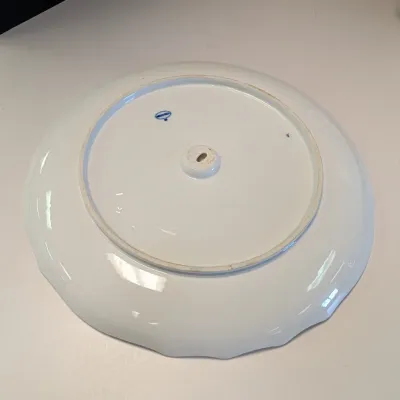
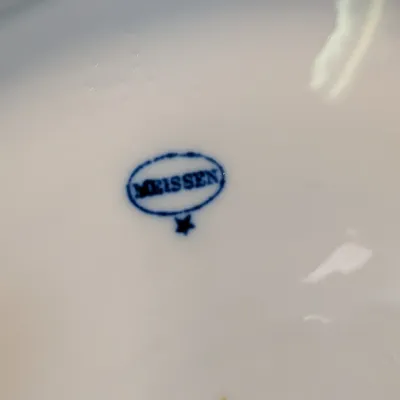
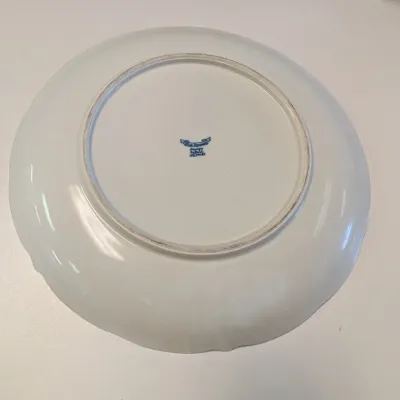
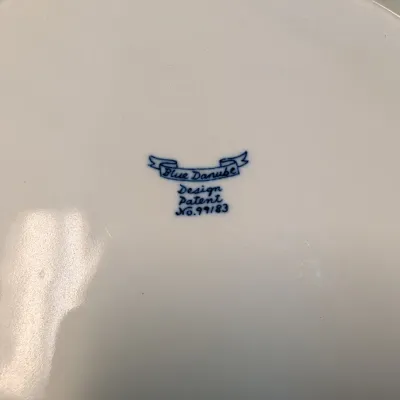
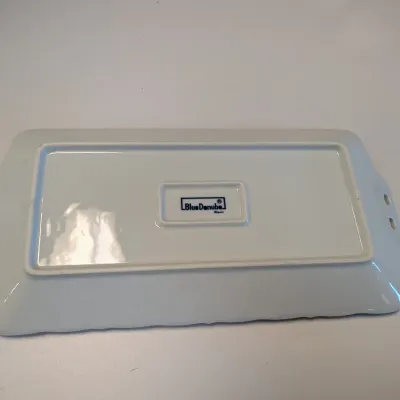
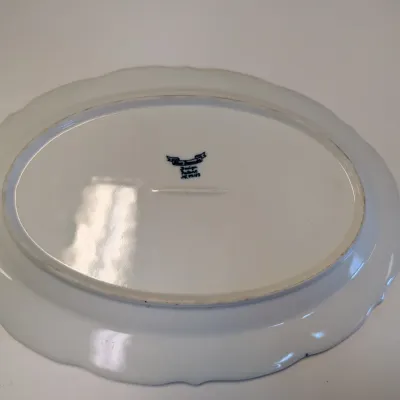
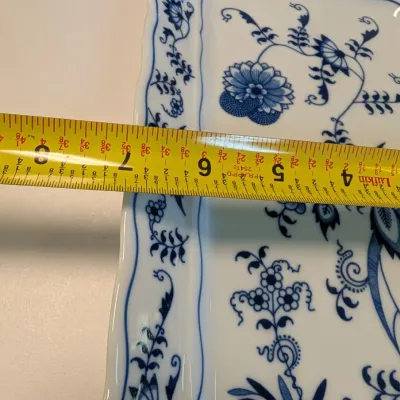
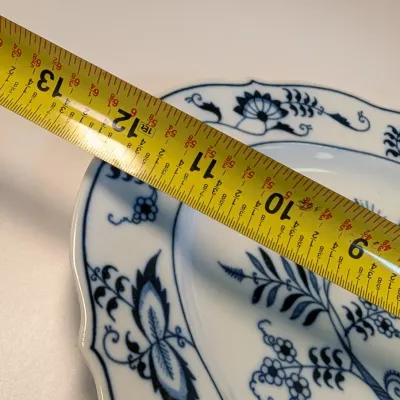
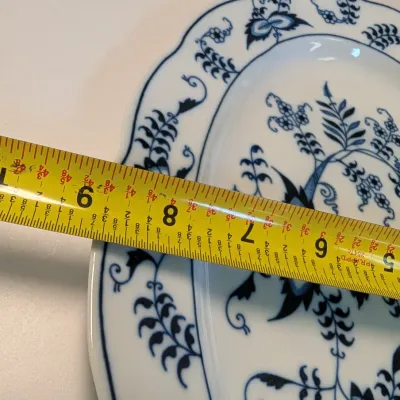
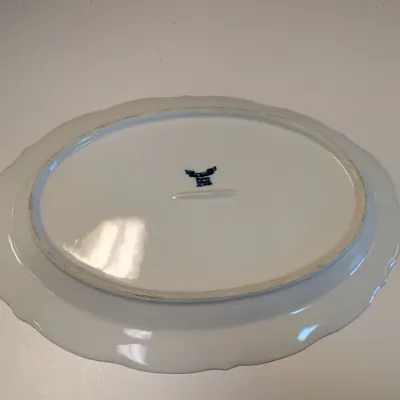
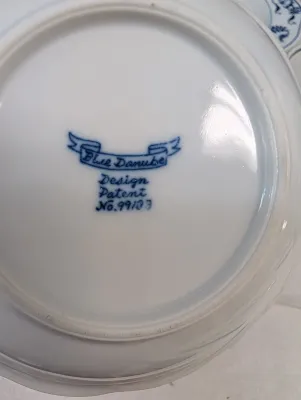
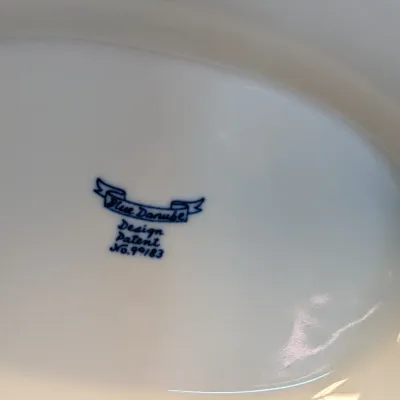
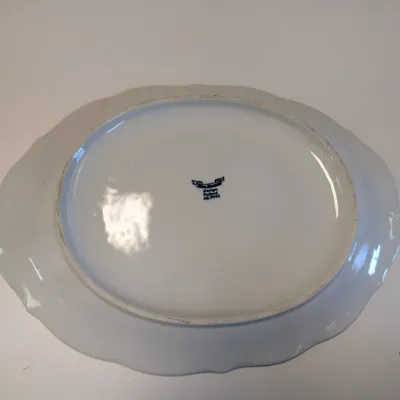
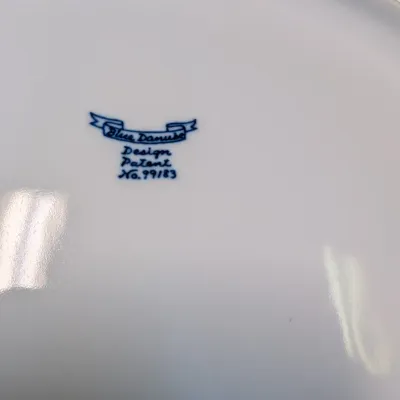
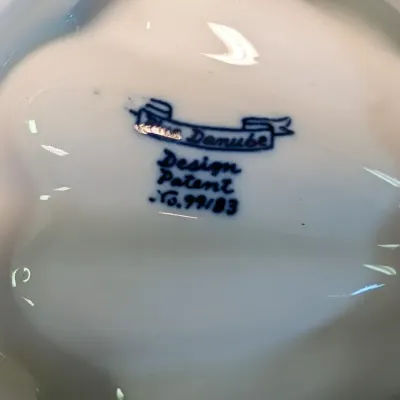
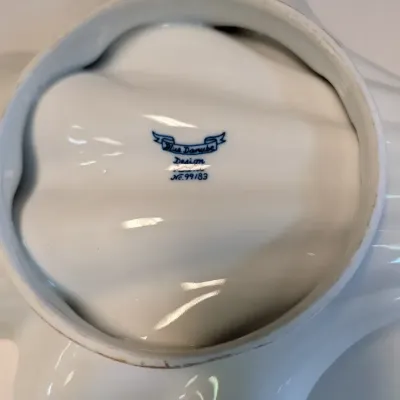
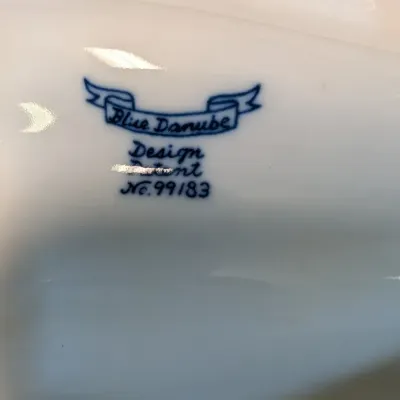
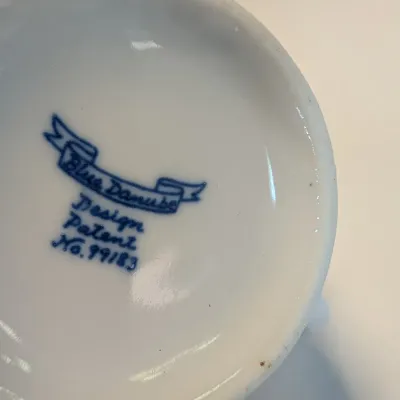
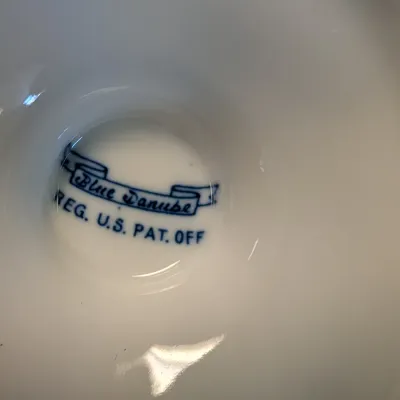
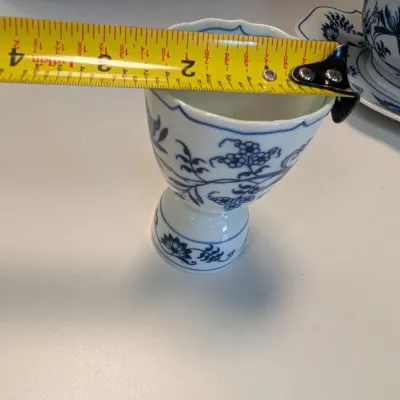
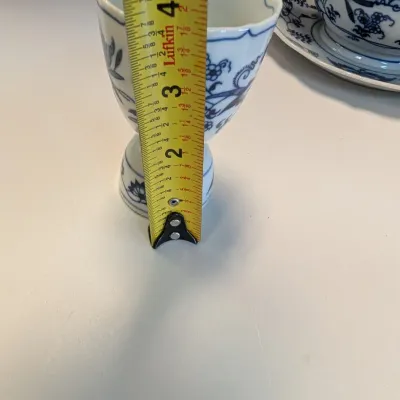
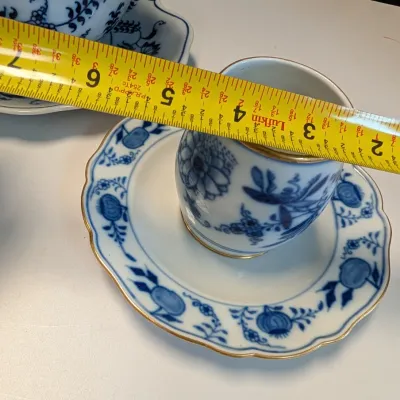
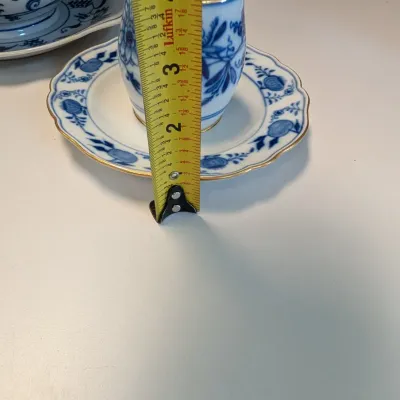
The "Old Ribbon Mark" featuring Design Patent No. 99183 is the earliest and most highly collectible backstamp used on Blue Danube fine porcelain dinnerware. This highly recognizable maker's mark indicates that your porcelain pieces belong to the original mid-century production line Production Era: This exact mark was used exclusively between 1951 and 1976.Manufacturing: The pieces were produced in Japan and imported by the American firm Mascot.The Patent: Design Patent No. 99183 was originally issued by the United States in 1936 to protect a specific variation of the Meissen-inspired "Blue Onion" floral motif. Stamping it on post-WWII pieces re-asserted the brand's authenticity against cheaper knockoff 101 / 5060 -
The "Old Ribbon Mark" featuring Design Patent No. 99183 is the earliest and most highly collectible backstamp used on Blue Danube fine porcelain dinnerware. This highly recognizable maker's mark indicates that your porcelain pieces belong to the original mid-century production line Production Era: This exact mark was used exclusively between 1951 and 1976.Manufacturing: The pieces were produced in Japan and imported by the American firm Mascot.The Patent: Design Patent No. 99183 was originally issued by the United States in 1936 to protect a specific variation of the Meissen-inspired "Blue Onion" floral motif. Stamping it on post-WWII pieces re-asserted the brand's authenticity against cheaper knockoff 102 / 5060 -
The "Old Ribbon Mark" featuring Design Patent No. 99183 is the earliest and most highly collectible backstamp used on Blue Danube fine porcelain dinnerware. This highly recognizable maker's mark indicates that your porcelain pieces belong to the original mid-century production line Production Era: This exact mark was used exclusively between 1951 and 1976.Manufacturing: The pieces were produced in Japan and imported by the American firm Mascot.The Patent: Design Patent No. 99183 was originally issued by the United States in 1936 to protect a specific variation of the Meissen-inspired "Blue Onion" floral motif. Stamping it on post-WWII pieces re-asserted the brand's authenticity against cheaper knockoff 103 / 5060 -
The "Old Ribbon Mark" featuring Design Patent No. 99183 is the earliest and most highly collectible backstamp used on Blue Danube fine porcelain dinnerware. This highly recognizable maker's mark indicates that your porcelain pieces belong to the original mid-century production line Production Era: This exact mark was used exclusively between 1951 and 1976.Manufacturing: The pieces were produced in Japan and imported by the American firm Mascot.The Patent: Design Patent No. 99183 was originally issued by the United States in 1936 to protect a specific variation of the Meissen-inspired "Blue Onion" floral motif. Stamping it on post-WWII pieces re-asserted the brand's authenticity against cheaper knockoff 104 / 5060 -
The "Old Ribbon Mark" featuring Design Patent No. 99183 is the earliest and most highly collectible backstamp used on Blue Danube fine porcelain dinnerware. This highly recognizable maker's mark indicates that your porcelain pieces belong to the original mid-century production line Production Era: This exact mark was used exclusively between 1951 and 1976.Manufacturing: The pieces were produced in Japan and imported by the American firm Mascot.The Patent: Design Patent No. 99183 was originally issued by the United States in 1936 to protect a specific variation of the Meissen-inspired "Blue Onion" floral motif. Stamping it on post-WWII pieces re-asserted the brand's authenticity against cheaper knockoff 105 / 5060 -
The "Old Ribbon Mark" featuring Design Patent No. 99183 is the earliest and most highly collectible backstamp used on Blue Danube fine porcelain dinnerware. This highly recognizable maker's mark indicates that your porcelain pieces belong to the original mid-century production line Production Era: This exact mark was used exclusively between 1951 and 1976.Manufacturing: The pieces were produced in Japan and imported by the American firm Mascot.The Patent: Design Patent No. 99183 was originally issued by the United States in 1936 to protect a specific variation of the Meissen-inspired "Blue Onion" floral motif. Stamping it on post-WWII pieces re-asserted the brand's authenticity against cheaper knockoff 106 / 5060 -
The "Old Ribbon Mark" featuring Design Patent No. 99183 is the earliest and most highly collectible backstamp used on Blue Danube fine porcelain dinnerware. This highly recognizable maker's mark indicates that your porcelain pieces belong to the original mid-century production line Production Era: This exact mark was used exclusively between 1951 and 1976.Manufacturing: The pieces were produced in Japan and imported by the American firm Mascot.The Patent: Design Patent No. 99183 was originally issued by the United States in 1936 to protect a specific variation of the Meissen-inspired "Blue Onion" floral motif. Stamping it on post-WWII pieces re-asserted the brand's authenticity against cheaper knockoff 107 / 5060 -
The "Old Ribbon Mark" featuring Design Patent No. 99183 is the earliest and most highly collectible backstamp used on Blue Danube fine porcelain dinnerware. This highly recognizable maker's mark indicates that your porcelain pieces belong to the original mid-century production line Production Era: This exact mark was used exclusively between 1951 and 1976.Manufacturing: The pieces were produced in Japan and imported by the American firm Mascot.The Patent: Design Patent No. 99183 was originally issued by the United States in 1936 to protect a specific variation of the Meissen-inspired "Blue Onion" floral motif. Stamping it on post-WWII pieces re-asserted the brand's authenticity against cheaper knockoff 108 / 5060 -
The "Old Ribbon Mark" featuring Design Patent No. 99183 is the earliest and most highly collectible backstamp used on Blue Danube fine porcelain dinnerware. This highly recognizable maker's mark indicates that your porcelain pieces belong to the original mid-century production line Production Era: This exact mark was used exclusively between 1951 and 1976.Manufacturing: The pieces were produced in Japan and imported by the American firm Mascot.The Patent: Design Patent No. 99183 was originally issued by the United States in 1936 109 / 5060 -
The "Old Ribbon Mark" featuring Design Patent No. 99183 is the earliest and most highly collectible backstamp used on Blue Danube fine porcelain dinnerware. This highly recognizable maker's mark indicates that your porcelain pieces belong to the original mid-century production line Production Era: This exact mark was used exclusively between 1951 and 1976.Manufacturing: The pieces were produced in Japan and imported by the American firm Mascot.The Patent: Design Patent No. 99183 was originally issued by the United States in 1936 110 / 5060 -
The "Old Ribbon Mark" featuring Design Patent No. 99183 is the earliest and most highly collectible backstamp used on Blue Danube fine porcelain dinnerware. This highly recognizable maker's mark indicates that your porcelain pieces belong to the original mid-century production line Production Era: This exact mark was used exclusively between 1951 and 1976.Manufacturing: The pieces were produced in Japan and imported by the American firm Mascot.The Patent: Design Patent No. 99183 was originally issued by the United States in 1936 111 / 5060 -
The "Old Ribbon Mark" featuring Design Patent No. 99183 is the earliest and most highly collectible backstamp used on Blue Danube fine porcelain dinnerware. This highly recognizable maker's mark indicates that your porcelain pieces belong to the original mid-century production line Production Era: This exact mark was used exclusively between 1951 and 1976.Manufacturing: The pieces were produced in Japan and imported by the American firm Mascot.The Patent: Design Patent No. 99183 was originally issued by the United States in 1936 112 / 5060 -
The "Old Ribbon Mark" featuring Design Patent No. 99183 is the earliest and most highly collectible backstamp used on Blue Danube fine porcelain dinnerware. This highly recognizable maker's mark indicates that your porcelain pieces belong to the original mid-century production line Production Era: This exact mark was used exclusively between 1951 and 1976.Manufacturing: The pieces were produced in Japan and imported by the American firm Mascot.The Patent: Design Patent No. 99183 was originally issued by the United States in 1936 113 / 5060 -
The "Old Ribbon Mark" featuring Design Patent No. 99183 is the earliest and most highly collectible backstamp used on Blue Danube fine porcelain dinnerware. This highly recognizable maker's mark indicates that your porcelain pieces belong to the original mid-century production line Production Era: This exact mark was used exclusively between 1951 and 1976.Manufacturing: The pieces were produced in Japan and imported by the American firm Mascot.The Patent: Design Patent No. 99183 was originally issued by the United States in 1936 114 / 5060 -
The "Old Ribbon Mark" featuring Design Patent No. 99183 is the earliest and most highly collectible backstamp used on Blue Danube fine porcelain dinnerware. This highly recognizable maker's mark indicates that your porcelain pieces belong to the original mid-century production line Production Era: This exact mark was used exclusively between 1951 and 1976.Manufacturing: The pieces were produced in Japan and imported by the American firm Mascot.The Patent: Design Patent No. 99183 was originally issued by the United States in 1936 115 / 5060 -
The "Old Ribbon Mark" featuring Design Patent No. 99183 is the earliest and most highly collectible backstamp used on Blue Danube fine porcelain dinnerware. This highly recognizable maker's mark indicates that your porcelain pieces belong to the original mid-century production line Production Era: This exact mark was used exclusively between 1951 and 1976.Manufacturing: The pieces were produced in Japan and imported by the American firm Mascot.The Patent: Design Patent No. 99183 was originally issued by the United States in 1936 116 / 5060 -
The "Old Ribbon Mark" featuring Design Patent No. 99183 is the earliest and most highly collectible backstamp used on Blue Danube fine porcelain dinnerware. This highly recognizable maker's mark indicates that your porcelain pieces belong to the original mid-century production line Production Era: This exact mark was used exclusively between 1951 and 1976.Manufacturing: The pieces were produced in Japan and imported by the American firm Mascot.The Patent: Design Patent No. 99183 was originally issued by the United States in 1936 117 / 5060 -
The "Old Ribbon Mark" featuring Design Patent No. 99183 is the earliest and most highly collectible backstamp used on Blue Danube fine porcelain dinnerware. This highly recognizable maker's mark indicates that your porcelain pieces belong to the original mid-century production line Production Era: This exact mark was used exclusively between 1951 and 1976.Manufacturing: The pieces were produced in Japan and imported by the American firm Mascot.The Patent: Design Patent No. 99183 was originally issued by the United States in 1936 118 / 5060 -
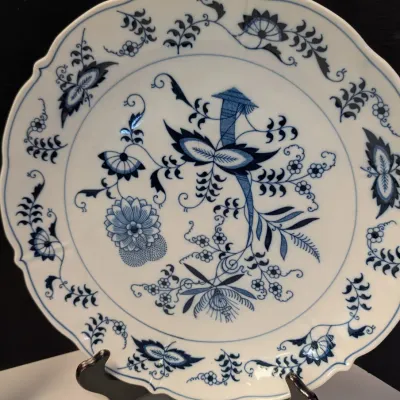
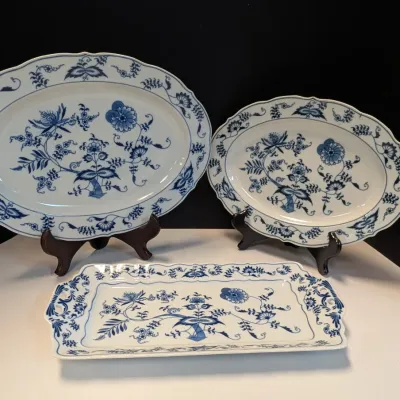
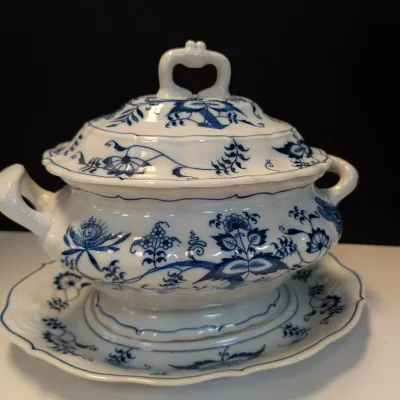
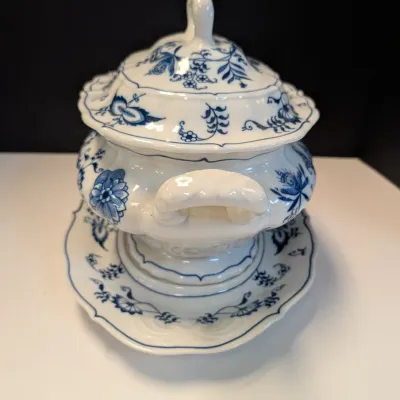
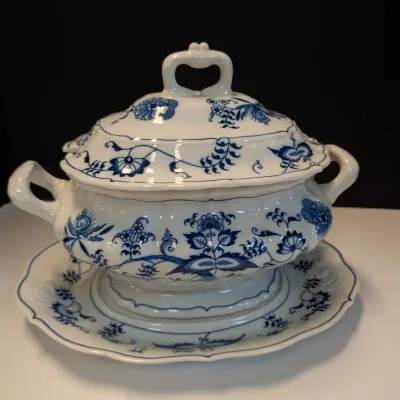
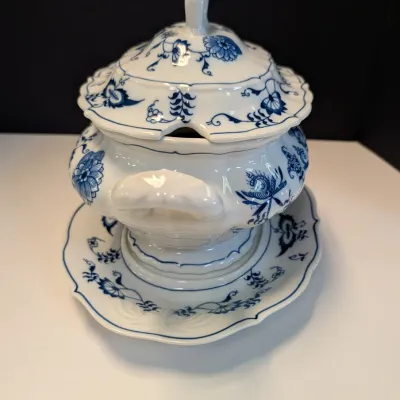
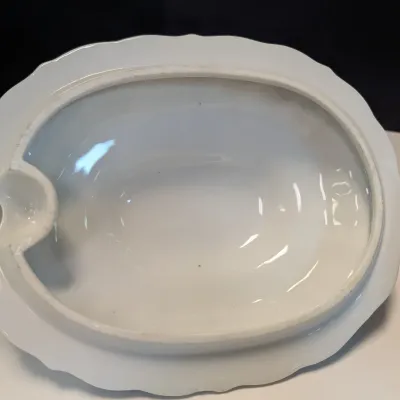
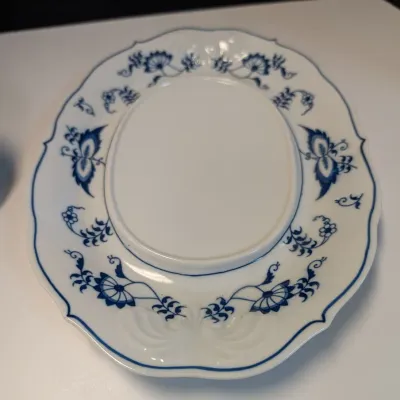
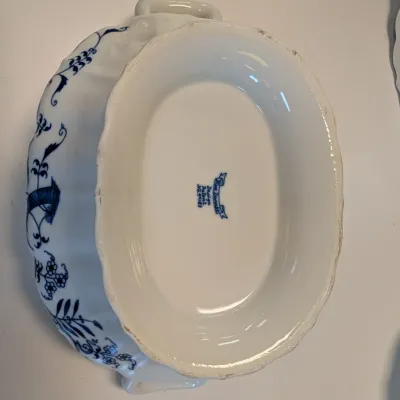
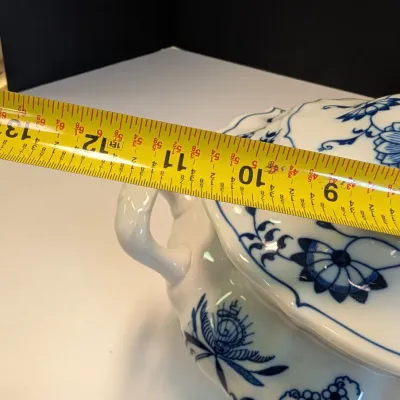
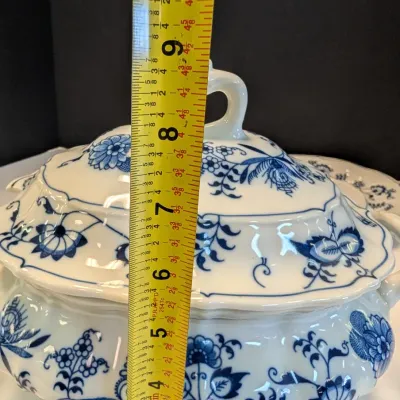
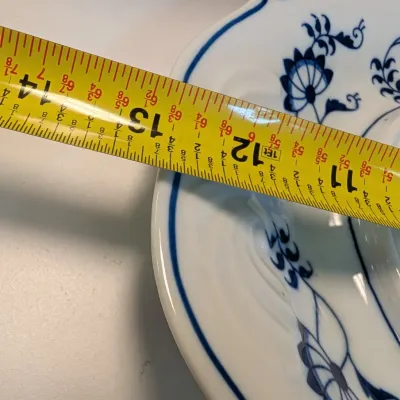
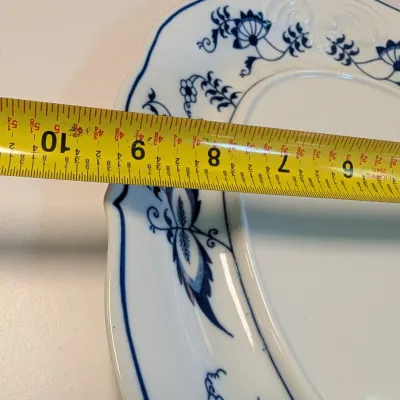
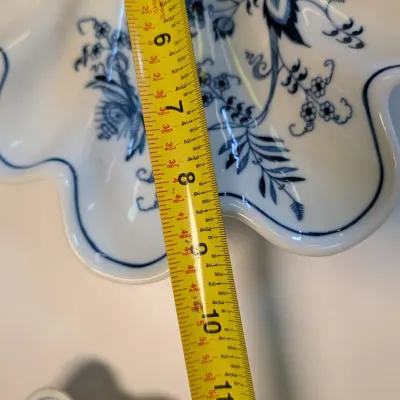
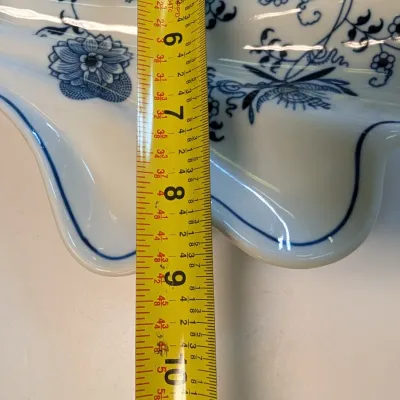
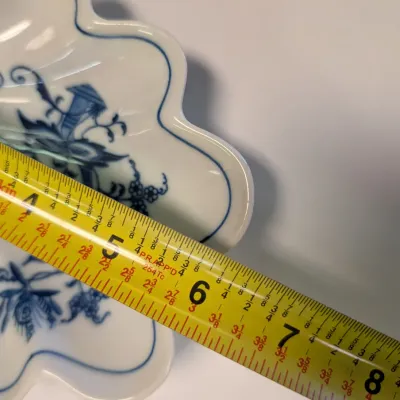
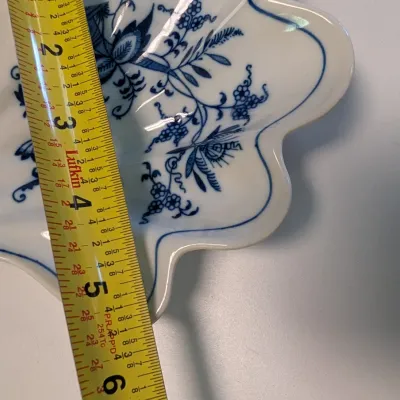
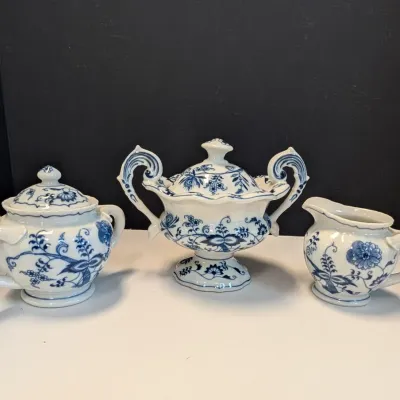
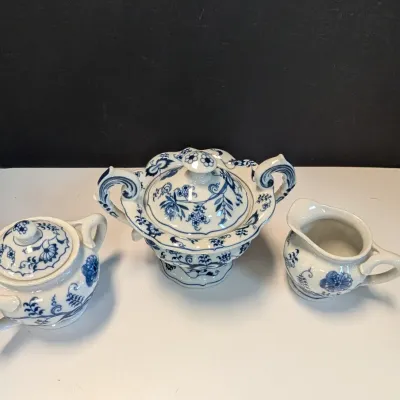
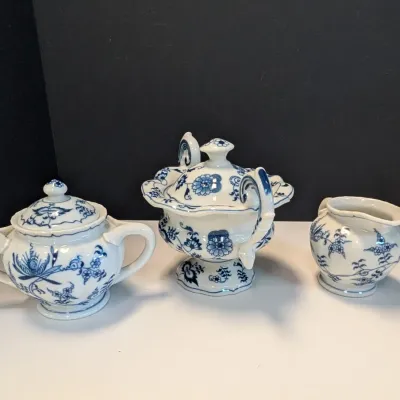
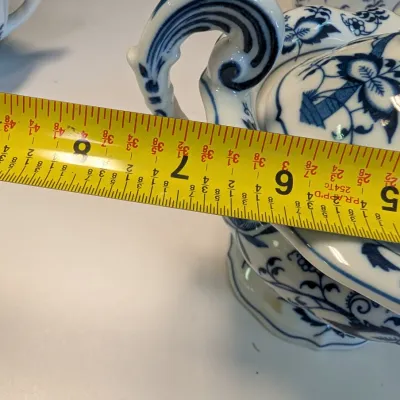
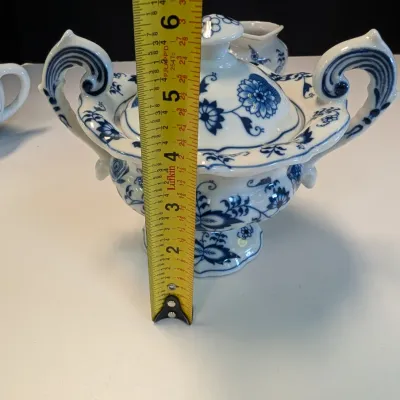
The Blue Danube Onion Pattern 3-Piece Tureen is a highly collectible vintage serving set featuring vivid, Meissen-inspired blue floral designs on crisp white porcelain. Produced primarily in Japan starting in the 1950s, these classic sets typically consist of either a tureen, lid, and ladle or a tureen, lid, and underplate. 125 / 5060 -
The Blue Danube Onion Pattern 3-Piece Tureen is a highly collectible vintage serving set featuring vivid, Meissen-inspired blue floral designs on crisp white porcelain. Produced primarily in Japan starting in the 1950s, these classic sets typically consist of either a tureen, lid, and ladle or a tureen, lid, and underplate. 126 / 5060 -
The Blue Danube Onion Pattern 3-Piece Tureen is a highly collectible vintage serving set featuring vivid, Meissen-inspired blue floral designs on crisp white porcelain. Produced primarily in Japan starting in the 1950s, these classic sets typically consist of either a tureen, lid, and ladle or a tureen, lid, and underplate. 127 / 5060 -
The Blue Danube Onion Pattern 3-Piece Tureen is a highly collectible vintage serving set featuring vivid, Meissen-inspired blue floral designs on crisp white porcelain. Produced primarily in Japan starting in the 1950s, these classic sets typically consist of either a tureen, lid, and ladle or a tureen, lid, and underplate. 128 / 5060 -
The Blue Danube Onion Pattern 3-Piece Tureen is a highly collectible vintage serving set featuring vivid, Meissen-inspired blue floral designs on crisp white porcelain. Produced primarily in Japan starting in the 1950s, these classic sets typically consist of either a tureen, lid, and ladle or a tureen, lid, and underplate. 129 / 5060 -
The Blue Danube Onion Pattern 3-Piece Tureen is a highly collectible vintage serving set featuring vivid, Meissen-inspired blue floral designs on crisp white porcelain. Produced primarily in Japan starting in the 1950s, these classic sets typically consist of either a tureen, lid, and ladle or a tureen, lid, and underplate. 130 / 5060 -
The Blue Danube Onion Pattern 3-Piece Tureen is a highly collectible vintage serving set featuring vivid, Meissen-inspired blue floral designs on crisp white porcelain. Produced primarily in Japan starting in the 1950s, these classic sets typically consist of either a tureen, lid, and ladle or a tureen, lid, and underplate. 131 / 5060 -
The Blue Danube Onion Pattern 3-Piece Tureen is a highly collectible vintage serving set featuring vivid, Meissen-inspired blue floral designs on crisp white porcelain. Produced primarily in Japan starting in the 1950s, these classic sets typically consist of either a tureen, lid, and ladle or a tureen, lid, and underplate. 132 / 5060 -
The Blue Danube Onion Pattern 3-Piece Tureen is a highly collectible vintage serving set featuring vivid, Meissen-inspired blue floral designs on crisp white porcelain. Produced primarily in Japan starting in the 1950s, these classic sets typically consist of either a tureen, lid, and ladle or a tureen, lid, and underplate. 133 / 5060 -
The Blue Danube Onion Pattern 3-Piece Tureen is a highly collectible vintage serving set featuring vivid, Meissen-inspired blue floral designs on crisp white porcelain. Produced primarily in Japan starting in the 1950s, these classic sets typically consist of either a tureen, lid, and ladle or a tureen, lid, and underplate. 134 / 5060 -
The Blue Danube Onion Pattern 3-Piece Tureen is a highly collectible vintage serving set featuring vivid, Meissen-inspired blue floral designs on crisp white porcelain. Produced primarily in Japan starting in the 1950s, these classic sets typically consist of either a tureen, lid, and ladle or a tureen, lid, and underplate. 135 / 5060 -
The Blue Danube Onion Pattern 3-Piece Tureen is a highly collectible vintage serving set featuring vivid, Meissen-inspired blue floral designs on crisp white porcelain. Produced primarily in Japan starting in the 1950s, these classic sets typically consist of either a tureen, lid, and ladle or a tureen, lid, and underplate. 136 / 5060 -
The Blue Danube Onion Pattern 3-Piece Tureen is a highly collectible vintage serving set featuring vivid, Meissen-inspired blue floral designs on crisp white porcelain. Produced primarily in Japan starting in the 1950s, these classic sets typically consist of either a tureen, lid, and ladle or a tureen, lid, and underplate. 137 / 5060 -
The Blue Danube Onion Pattern 3-Piece Tureen is a highly collectible vintage serving set featuring vivid, Meissen-inspired blue floral designs on crisp white porcelain. Produced primarily in Japan starting in the 1950s, these classic sets typically consist of either a tureen, lid, and ladle or a tureen, lid, and underplate. 138 / 5060 -
The "Old Ribbon Mark" featuring Design Patent No. 99183 is the earliest and most highly collectible backstamp used on Blue Danube fine porcelain dinnerware. This highly recognizable maker's mark indicates that your porcelain pieces belong to the original mid-century production line Production Era: This exact mark was used exclusively between 1951 and 1976.Manufacturing: The pieces were produced in Japan and imported by the American firm Mascot.The Patent: Design Patent No. 99183 was originally issued by the United States in 1936 139 / 5060 -
The "Old Ribbon Mark" featuring Design Patent No. 99183 is the earliest and most highly collectible backstamp used on Blue Danube fine porcelain dinnerware. This highly recognizable maker's mark indicates that your porcelain pieces belong to the original mid-century production line Production Era: This exact mark was used exclusively between 1951 and 1976.Manufacturing: The pieces were produced in Japan and imported by the American firm Mascot.The Patent: Design Patent No. 99183 was originally issued by the United States in 1936 140 / 5060 -
The "Old Ribbon Mark" featuring Design Patent No. 99183 is the earliest and most highly collectible backstamp used on Blue Danube fine porcelain dinnerware. This highly recognizable maker's mark indicates that your porcelain pieces belong to the original mid-century production line Production Era: This exact mark was used exclusively between 1951 and 1976.Manufacturing: The pieces were produced in Japan and imported by the American firm Mascot.The Patent: Design Patent No. 99183 was originally issued by the United States in 1936 141 / 5060 -
The "Old Ribbon Mark" featuring Design Patent No. 99183 is the earliest and most highly collectible backstamp used on Blue Danube fine porcelain dinnerware. This highly recognizable maker's mark indicates that your porcelain pieces belong to the original mid-century production line Production Era: This exact mark was used exclusively between 1951 and 1976.Manufacturing: The pieces were produced in Japan and imported by the American firm Mascot.The Patent: Design Patent No. 99183 was originally issued by the United States in 1936 142 / 5060 -
The "Old Ribbon Mark" featuring Design Patent No. 99183 is the earliest and most highly collectible backstamp used on Blue Danube fine porcelain dinnerware. This highly recognizable maker's mark indicates that your porcelain pieces belong to the original mid-century production line Production Era: This exact mark was used exclusively between 1951 and 1976.Manufacturing: The pieces were produced in Japan and imported by the American firm Mascot.The Patent: Design Patent No. 99183 was originally issued by the United States in 1936 143 / 5060 -
The "Old Ribbon Mark" featuring Design Patent No. 99183 is the earliest and most highly collectible backstamp used on Blue Danube fine porcelain dinnerware. This highly recognizable maker's mark indicates that your porcelain pieces belong to the original mid-century production line Production Era: This exact mark was used exclusively between 1951 and 1976.Manufacturing: The pieces were produced in Japan and imported by the American firm Mascot.The Patent: Design Patent No. 99183 was originally issued by the United States in 1936 144 / 5060 -
The "Old Ribbon Mark" featuring Design Patent No. 99183 is the earliest and most highly collectible backstamp used on Blue Danube fine porcelain dinnerware. This highly recognizable maker's mark indicates that your porcelain pieces belong to the original mid-century production line Production Era: This exact mark was used exclusively between 1951 and 1976.Manufacturing: The pieces were produced in Japan and imported by the American firm Mascot.The Patent: Design Patent No. 99183 was originally issued by the United States in 1936 145 / 5060 -
The "Old Ribbon Mark" featuring Design Patent No. 99183 is the earliest and most highly collectible backstamp used on Blue Danube fine porcelain dinnerware. This highly recognizable maker's mark indicates that your porcelain pieces belong to the original mid-century production line Production Era: This exact mark was used exclusively between 1951 and 1976.Manufacturing: The pieces were produced in Japan and imported by the American firm Mascot.The Patent: Design Patent No. 99183 was originally issued by the United States in 1936 146 / 5060 -
The "Old Ribbon Mark" featuring Design Patent No. 99183 is the earliest and most highly collectible backstamp used on Blue Danube fine porcelain dinnerware. This highly recognizable maker's mark indicates that your porcelain pieces belong to the original mid-century production line Production Era: This exact mark was used exclusively between 1951 and 1976.Manufacturing: The pieces were produced in Japan and imported by the American firm Mascot.The Patent: Design Patent No. 99183 was originally issued by the United States in 1936 147 / 5060 -
The "Old Ribbon Mark" featuring Design Patent No. 99183 is the earliest and most highly collectible backstamp used on Blue Danube fine porcelain dinnerware. This highly recognizable maker's mark indicates that your porcelain pieces belong to the original mid-century production line Production Era: This exact mark was used exclusively between 1951 and 1976.Manufacturing: The pieces were produced in Japan and imported by the American firm Mascot.The Patent: Design Patent No. 99183 was originally issued by the United States in 1936 148 / 5060 -
The "Old Ribbon Mark" featuring Design Patent No. 99183 is the earliest and most highly collectible backstamp used on Blue Danube fine porcelain dinnerware. This highly recognizable maker's mark indicates that your porcelain pieces belong to the original mid-century production line Production Era: This exact mark was used exclusively between 1951 and 1976.Manufacturing: The pieces were produced in Japan and imported by the American firm Mascot.The Patent: Design Patent No. 99183 was originally issued by the United States in 1936 149 / 5060 -
The "Old Ribbon Mark" featuring Design Patent No. 99183 is the earliest and most highly collectible backstamp used on Blue Danube fine porcelain dinnerware. This highly recognizable maker's mark indicates that your porcelain pieces belong to the original mid-century production line Production Era: This exact mark was used exclusively between 1951 and 1976.Manufacturing: The pieces were produced in Japan and imported by the American firm Mascot.The Patent: Design Patent No. 99183 was originally issued by the United States in 1936 150 / 5060 -
The "Old Ribbon Mark" featuring Design Patent No. 99183 is the earliest and most highly collectible backstamp used on Blue Danube fine porcelain dinnerware. This highly recognizable maker's mark indicates that your porcelain pieces belong to the original mid-century production line Production Era: This exact mark was used exclusively between 1951 and 1976.Manufacturing: The pieces were produced in Japan and imported by the American firm Mascot.The Patent: Design Patent No. 99183 was originally issued by the United States in 1936 151 / 5060 -
The "Old Ribbon Mark" featuring Design Patent No. 99183 is the earliest and most highly collectible backstamp used on Blue Danube fine porcelain dinnerware. This highly recognizable maker's mark indicates that your porcelain pieces belong to the original mid-century production line Production Era: This exact mark was used exclusively between 1951 and 1976.Manufacturing: The pieces were produced in Japan and imported by the American firm Mascot.The Patent: Design Patent No. 99183 was originally issued by the United States in 1936 152 / 5060 -
The "Old Ribbon Mark" featuring Design Patent No. 99183 is the earliest and most highly collectible backstamp used on Blue Danube fine porcelain dinnerware. This highly recognizable maker's mark indicates that your porcelain pieces belong to the original mid-century production line Production Era: This exact mark was used exclusively between 1951 and 1976.Manufacturing: The pieces were produced in Japan and imported by the American firm Mascot.The Patent: Design Patent No. 99183 was originally issued by the United States in 1936 153 / 5060 -
The "Old Ribbon Mark" featuring Design Patent No. 99183 is the earliest and most highly collectible backstamp used on Blue Danube fine porcelain dinnerware. This highly recognizable maker's mark indicates that your porcelain pieces belong to the original mid-century production line Production Era: This exact mark was used exclusively between 1951 and 1976.Manufacturing: The pieces were produced in Japan and imported by the American firm Mascot.The Patent: Design Patent No. 99183 was originally issued by the United States in 1936 154 / 5060 -
The "Old Ribbon Mark" featuring Design Patent No. 99183 is the earliest and most highly collectible backstamp used on Blue Danube fine porcelain dinnerware. This highly recognizable maker's mark indicates that your porcelain pieces belong to the original mid-century production line Production Era: This exact mark was used exclusively between 1951 and 1976.Manufacturing: The pieces were produced in Japan and imported by the American firm Mascot.The Patent: Design Patent No. 99183 was originally issued by the United States in 1936 155 / 5060 -
The "Old Ribbon Mark" featuring Design Patent No. 99183 is the earliest and most highly collectible backstamp used on Blue Danube fine porcelain dinnerware. This highly recognizable maker's mark indicates that your porcelain pieces belong to the original mid-century production line Production Era: This exact mark was used exclusively between 1951 and 1976.Manufacturing: The pieces were produced in Japan and imported by the American firm Mascot.The Patent: Design Patent No. 99183 was originally issued by the United States in 1936 156 / 5060 -
The "Old Ribbon Mark" featuring Design Patent No. 99183 is the earliest and most highly collectible backstamp used on Blue Danube fine porcelain dinnerware. This highly recognizable maker's mark indicates that your porcelain pieces belong to the original mid-century production line Production Era: This exact mark was used exclusively between 1951 and 1976.Manufacturing: The pieces were produced in Japan and imported by the American firm Mascot.The Patent: Design Patent No. 99183 was originally issued by the United States in 1936 157 / 5060 -
The "Old Ribbon Mark" featuring Design Patent No. 99183 is the earliest and most highly collectible backstamp used on Blue Danube fine porcelain dinnerware. This highly recognizable maker's mark indicates that your porcelain pieces belong to the original mid-century production line Production Era: This exact mark was used exclusively between 1951 and 1976.Manufacturing: The pieces were produced in Japan and imported by the American firm Mascot.The Patent: Design Patent No. 99183 was originally issued by the United States in 1936 158 / 5060 -
The "Old Ribbon Mark" featuring Design Patent No. 99183 is the earliest and most highly collectible backstamp used on Blue Danube fine porcelain dinnerware. This highly recognizable maker's mark indicates that your porcelain pieces belong to the original mid-century production line Production Era: This exact mark was used exclusively between 1951 and 1976.Manufacturing: The pieces were produced in Japan and imported by the American firm Mascot.The Patent: Design Patent No. 99183 was originally issued by the United States in 1936 159 / 5060 -
The "Old Ribbon Mark" featuring Design Patent No. 99183 is the earliest and most highly collectible backstamp used on Blue Danube fine porcelain dinnerware. This highly recognizable maker's mark indicates that your porcelain pieces belong to the original mid-century production line Production Era: This exact mark was used exclusively between 1951 and 1976.Manufacturing: The pieces were produced in Japan and imported by the American firm Mascot.The Patent: Design Patent No. 99183 was originally issued by the United States in 1936 160 / 5060 -
The "Old Ribbon Mark" featuring Design Patent No. 99183 is the earliest and most highly collectible backstamp used on Blue Danube fine porcelain dinnerware. This highly recognizable maker's mark indicates that your porcelain pieces belong to the original mid-century production line Production Era: This exact mark was used exclusively between 1951 and 1976.Manufacturing: The pieces were produced in Japan and imported by the American firm Mascot.The Patent: Design Patent No. 99183 was originally issued by the United States in 1936 161 / 5060 -
The "Old Ribbon Mark" featuring Design Patent No. 99183 is the earliest and most highly collectible backstamp used on Blue Danube fine porcelain dinnerware. This highly recognizable maker's mark indicates that your porcelain pieces belong to the original mid-century production line Production Era: This exact mark was used exclusively between 1951 and 1976.Manufacturing: The pieces were produced in Japan and imported by the American firm Mascot.The Patent: Design Patent No. 99183 was originally issued by the United States in 1936 162 / 5060 -
The "Old Ribbon Mark" featuring Design Patent No. 99183 is the earliest and most highly collectible backstamp used on Blue Danube fine porcelain dinnerware. This highly recognizable maker's mark indicates that your porcelain pieces belong to the original mid-century production line Production Era: This exact mark was used exclusively between 1951 and 1976.Manufacturing: The pieces were produced in Japan and imported by the American firm Mascot.The Patent: Design Patent No. 99183 was originally issued by the United States in 1936 163 / 5060 -
The "Old Ribbon Mark" featuring Design Patent No. 99183 is the earliest and most highly collectible backstamp used on Blue Danube fine porcelain dinnerware. This highly recognizable maker's mark indicates that your porcelain pieces belong to the original mid-century production line Production Era: This exact mark was used exclusively between 1951 and 1976.Manufacturing: The pieces were produced in Japan and imported by the American firm Mascot.The Patent: Design Patent No. 99183 was originally issued by the United States in 1936 164 / 5060 -
The "Old Ribbon Mark" featuring Design Patent No. 99183 is the earliest and most highly collectible backstamp used on Blue Danube fine porcelain dinnerware. This highly recognizable maker's mark indicates that your porcelain pieces belong to the original mid-century production line Production Era: This exact mark was used exclusively between 1951 and 1976.Manufacturing: The pieces were produced in Japan and imported by the American firm Mascot.The Patent: Design Patent No. 99183 was originally issued by the United States in 1936 165 / 5060 -
The "Old Ribbon Mark" featuring Design Patent No. 99183 is the earliest and most highly collectible backstamp used on Blue Danube fine porcelain dinnerware. This highly recognizable maker's mark indicates that your porcelain pieces belong to the original mid-century production line Production Era: This exact mark was used exclusively between 1951 and 1976.Manufacturing: The pieces were produced in Japan and imported by the American firm Mascot.The Patent: Design Patent No. 99183 was originally issued by the United States in 1936 166 / 5060 -
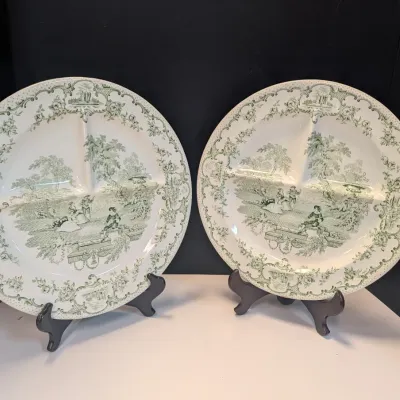
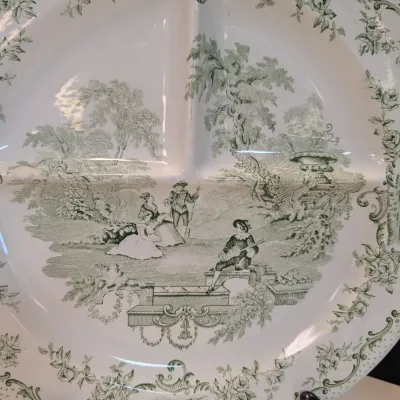
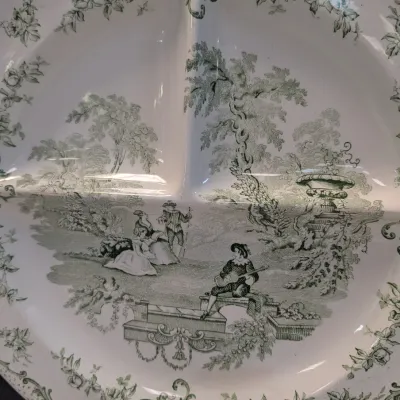
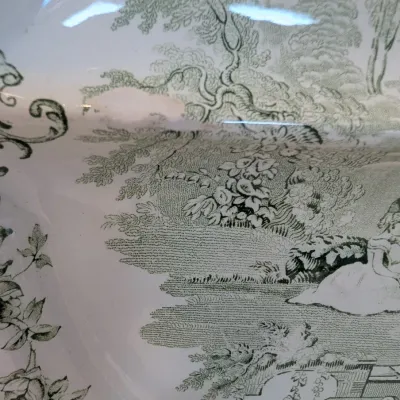
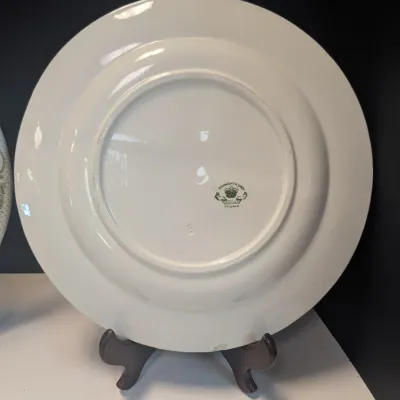
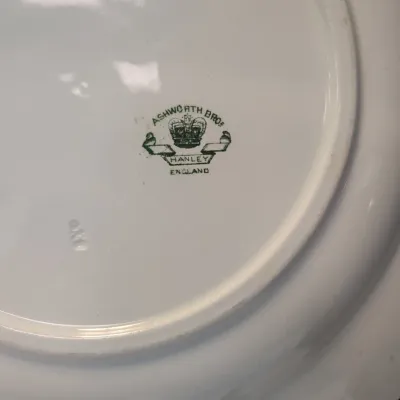
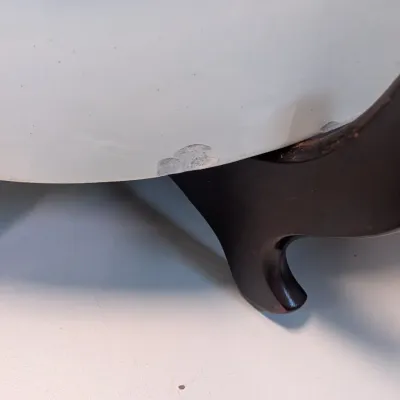
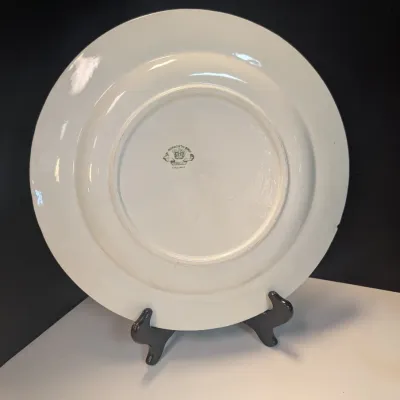
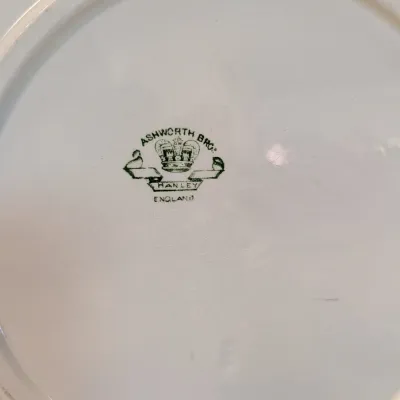
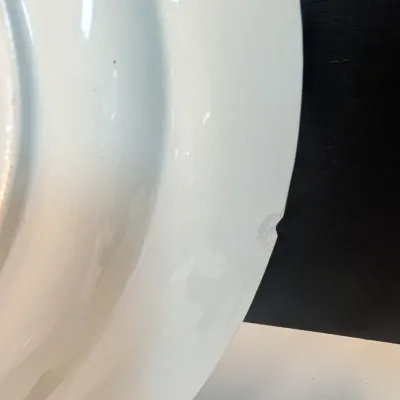
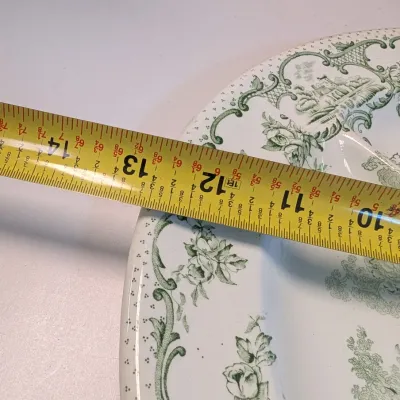
Plates have a chip An Ashworth Bros Hanley England divided plate is an antique ironstone or earthenware piece Maker: Ashworth Bros (G.L. Ashworth & Bros) was a prominent pottery factory in Hanley, Stoke-on-Trent, Staffordshire, England.Age: Many of these divided platters date from the late 19th century (post-1891, based on the maker's mark containing "England").Design: They commonly feature blue and white transferware romantic or floral scenes, embossed details, and divided interior sections meant for serving multiple side dishes. 167 / 5060 -
Plates have a chip An Ashworth Bros Hanley England divided plate is an antique ironstone or earthenware piece Maker: Ashworth Bros (G.L. Ashworth & Bros) was a prominent pottery factory in Hanley, Stoke-on-Trent, Staffordshire, England.Age: Many of these divided platters date from the late 19th century (post-1891, based on the maker's mark containing "England").Design: They commonly feature blue and white transferware romantic or floral scenes, embossed details, and divided interior sections meant for serving multiple side dishes. 168 / 5060 -
Plates have a chip An Ashworth Bros Hanley England divided plate is an antique ironstone or earthenware piece Maker: Ashworth Bros (G.L. Ashworth & Bros) was a prominent pottery factory in Hanley, Stoke-on-Trent, Staffordshire, England.Age: Many of these divided platters date from the late 19th century (post-1891, based on the maker's mark containing "England").Design: They commonly feature blue and white transferware romantic or floral scenes, embossed details, and divided interior sections meant for serving multiple side dishes. 169 / 5060 -
Plates have a chip An Ashworth Bros Hanley England divided plate is an antique ironstone or earthenware piece Maker: Ashworth Bros (G.L. Ashworth & Bros) was a prominent pottery factory in Hanley, Stoke-on-Trent, Staffordshire, England.Age: Many of these divided platters date from the late 19th century (post-1891, based on the maker's mark containing "England").Design: They commonly feature blue and white transferware romantic or floral scenes, embossed details, and divided interior sections meant for serving multiple side dishes. 170 / 5060 -
Plates have a chip An Ashworth Bros Hanley England divided plate is an antique ironstone or earthenware piece Maker: Ashworth Bros (G.L. Ashworth & Bros) was a prominent pottery factory in Hanley, Stoke-on-Trent, Staffordshire, England.Age: Many of these divided platters date from the late 19th century (post-1891, based on the maker's mark containing "England").Design: They commonly feature blue and white transferware romantic or floral scenes, embossed details, and divided interior sections meant for serving multiple side dishes. 171 / 5060 -
Plates have a chip An Ashworth Bros Hanley England divided plate is an antique ironstone or earthenware piece Maker: Ashworth Bros (G.L. Ashworth & Bros) was a prominent pottery factory in Hanley, Stoke-on-Trent, Staffordshire, England.Age: Many of these divided platters date from the late 19th century (post-1891, based on the maker's mark containing "England").Design: They commonly feature blue and white transferware romantic or floral scenes, embossed details, and divided interior sections meant for serving multiple side dishes. 172 / 5060 -
Plates have a chip An Ashworth Bros Hanley England divided plate is an antique ironstone or earthenware piece Maker: Ashworth Bros (G.L. Ashworth & Bros) was a prominent pottery factory in Hanley, Stoke-on-Trent, Staffordshire, England.Age: Many of these divided platters date from the late 19th century (post-1891, based on the maker's mark containing "England").Design: They commonly feature blue and white transferware romantic or floral scenes, embossed details, and divided interior sections meant for serving multiple side dishes. 173 / 5060 -
Plates have a chip An Ashworth Bros Hanley England divided plate is an antique ironstone or earthenware piece Maker: Ashworth Bros (G.L. Ashworth & Bros) was a prominent pottery factory in Hanley, Stoke-on-Trent, Staffordshire, England.Age: Many of these divided platters date from the late 19th century (post-1891, based on the maker's mark containing "England").Design: They commonly feature blue and white transferware romantic or floral scenes, embossed details, and divided interior sections meant for serving multiple side dishes. 174 / 5060 -
Plates have a chip An Ashworth Bros Hanley England divided plate is an antique ironstone or earthenware piece Maker: Ashworth Bros (G.L. Ashworth & Bros) was a prominent pottery factory in Hanley, Stoke-on-Trent, Staffordshire, England.Age: Many of these divided platters date from the late 19th century (post-1891, based on the maker's mark containing "England").Design: They commonly feature blue and white transferware romantic or floral scenes, embossed details, and divided interior sections meant for serving multiple side dishes. 175 / 5060 -
Plates have a chip An Ashworth Bros Hanley England divided plate is an antique ironstone or earthenware piece Maker: Ashworth Bros (G.L. Ashworth & Bros) was a prominent pottery factory in Hanley, Stoke-on-Trent, Staffordshire, England.Age: Many of these divided platters date from the late 19th century (post-1891, based on the maker's mark containing "England").Design: They commonly feature blue and white transferware romantic or floral scenes, embossed details, and divided interior sections meant for serving multiple side dishes. 176 / 5060 -
Plates have a chip An Ashworth Bros Hanley England divided plate is an antique ironstone or earthenware piece Maker: Ashworth Bros (G.L. Ashworth & Bros) was a prominent pottery factory in Hanley, Stoke-on-Trent, Staffordshire, England.Age: Many of these divided platters date from the late 19th century (post-1891, based on the maker's mark containing "England").Design: They commonly feature blue and white transferware romantic or floral scenes, embossed details, and divided interior sections meant for serving multiple side dishes. 177 / 5060 -
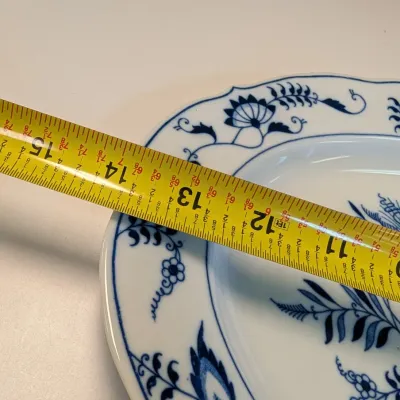
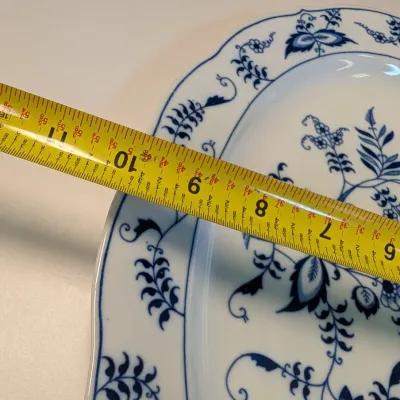
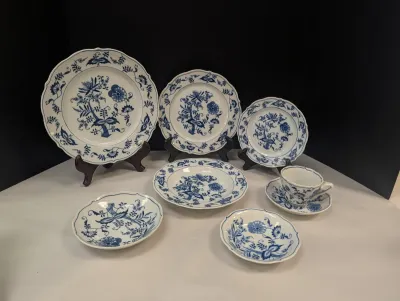
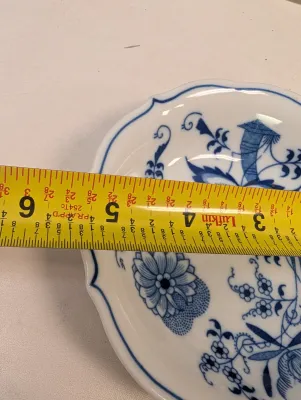
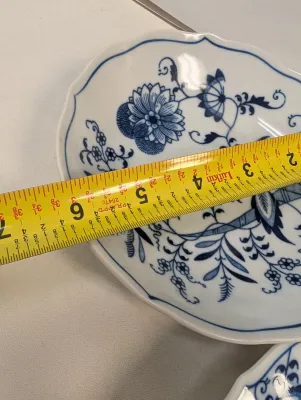
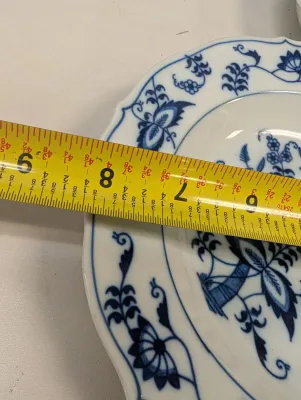
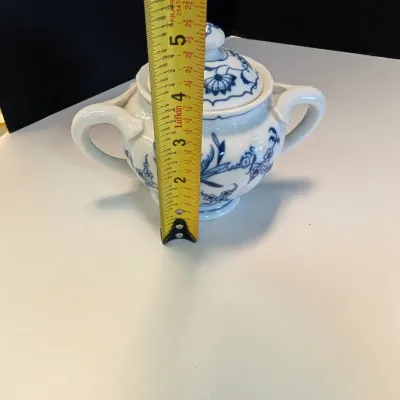
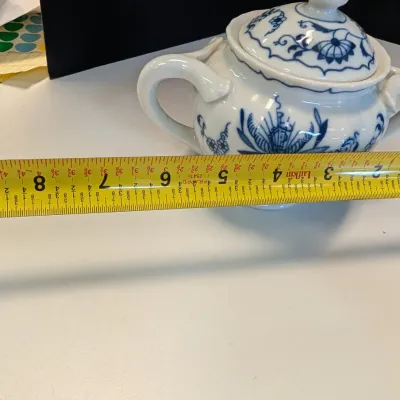
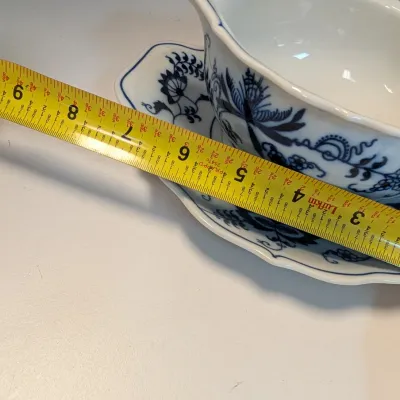
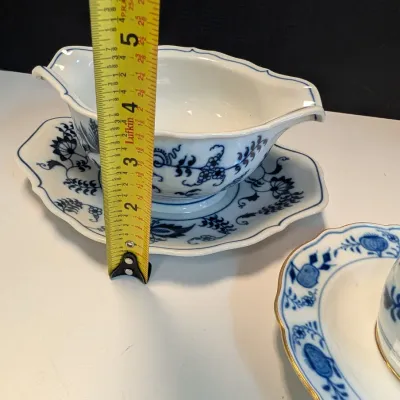
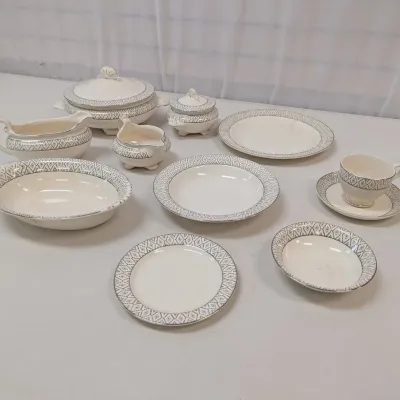
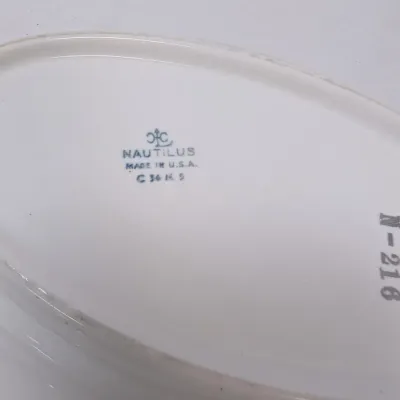
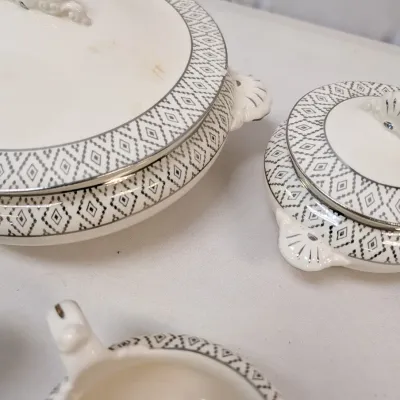
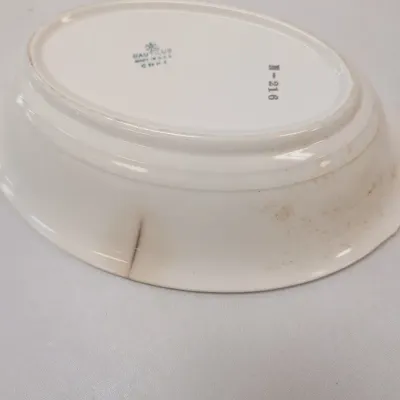
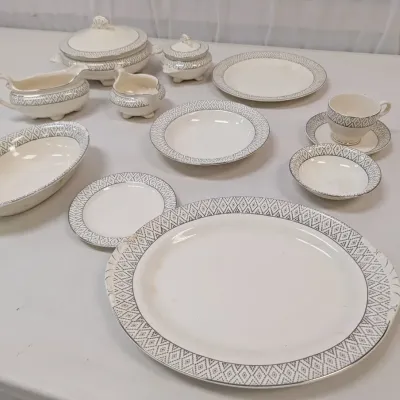
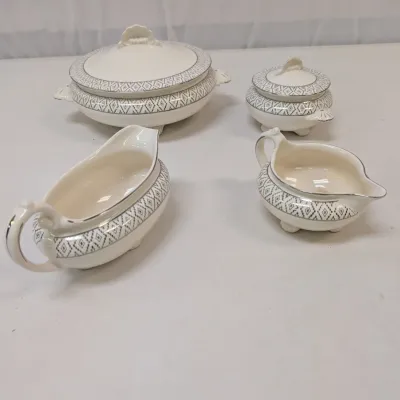
The pieces include 8-dinner plates (9 3/8"), 7-salad plates (7 1/4"), 11-Bread Plates (6 1/4"), 12-soup bowls(8 1/4"), 12-fruit bowls(5 1/4") 8-cups, 9-saucers, 2-platters(15 5/8" and 11 3/4"), gravy boat (7 1/2"), sugar bowl & lid, creamer, and vegetable server and lid (3 1/8" by 7 5/8" across the opening 178 / 5060 -
The pieces include 8-dinner plates (9 3/8"), 7-salad plates (7 1/4"), 11-Bread Plates (6 1/4"), 12-soup bowls(8 1/4"), 12-fruit bowls(5 1/4") 8-cups, 9-saucers, 2-platters(15 5/8" and 11 3/4"), gravy boat (7 1/2"), sugar bowl & lid, creamer, and vegetable server and lid (3 1/8" by 7 5/8" across the opening 179 / 5060 -
The pieces include 8-dinner plates (9 3/8"), 7-salad plates (7 1/4"), 11-Bread Plates (6 1/4"), 12-soup bowls(8 1/4"), 12-fruit bowls(5 1/4") 8-cups, 9-saucers, 2-platters(15 5/8" and 11 3/4"), gravy boat (7 1/2"), sugar bowl & lid, creamer, and vegetable server and lid (3 1/8" by 7 5/8" across the opening 180 / 5060 -
The pieces include 8-dinner plates (9 3/8"), 7-salad plates (7 1/4"), 11-Bread Plates (6 1/4"), 12-soup bowls(8 1/4"), 12-fruit bowls(5 1/4") 8-cups, 9-saucers, 2-platters(15 5/8" and 11 3/4"), gravy boat (7 1/2"), sugar bowl & lid, creamer, and vegetable server and lid (3 1/8" by 7 5/8" across the opening 181 / 5060 -
The pieces include 8-dinner plates (9 3/8"), 7-salad plates (7 1/4"), 11-Bread Plates (6 1/4"), 12-soup bowls(8 1/4"), 12-fruit bowls(5 1/4") 8-cups, 9-saucers, 2-platters(15 5/8" and 11 3/4"), gravy boat (7 1/2"), sugar bowl & lid, creamer, and vegetable server and lid (3 1/8" by 7 5/8" across the opening 182 / 5060 -
The pieces include 8-dinner plates (9 3/8"), 7-salad plates (7 1/4"), 11-Bread Plates (6 1/4"), 12-soup bowls(8 1/4"), 12-fruit bowls(5 1/4") 8-cups, 9-saucers, 2-platters(15 5/8" and 11 3/4"), gravy boat (7 1/2"), sugar bowl & lid, creamer, and vegetable server and lid (3 1/8" by 7 5/8" across the opening 183 / 5060 -
The pieces include 8-dinner plates (9 3/8"), 7-salad plates (7 1/4"), 11-Bread Plates (6 1/4"), 12-soup bowls(8 1/4"), 12-fruit bowls(5 1/4") 8-cups, 9-saucers, 2-platters(15 5/8" and 11 3/4"), gravy boat (7 1/2"), sugar bowl & lid, creamer, and vegetable server and lid (3 1/8" by 7 5/8" across the opening 184 / 5060 -
The pieces include 8-dinner plates (9 3/8"), 7-salad plates (7 1/4"), 11-Bread Plates (6 1/4"), 12-soup bowls(8 1/4"), 12-fruit bowls(5 1/4") 8-cups, 9-saucers, 2-platters(15 5/8" and 11 3/4"), gravy boat (7 1/2"), sugar bowl & lid, creamer, and vegetable server and lid (3 1/8" by 7 5/8" across the opening 185 / 5060 -
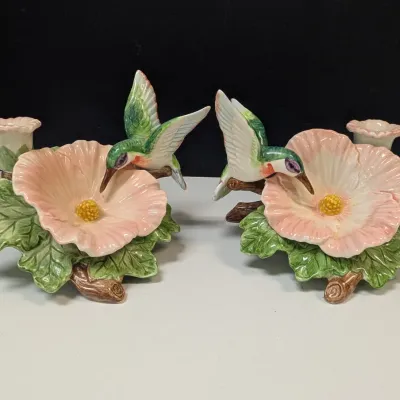
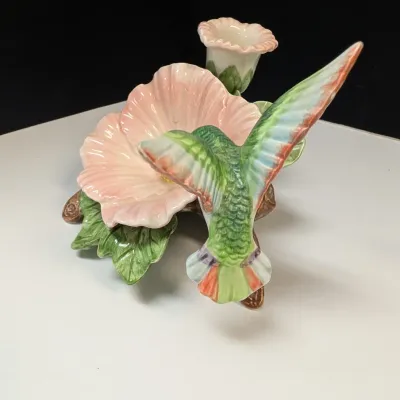
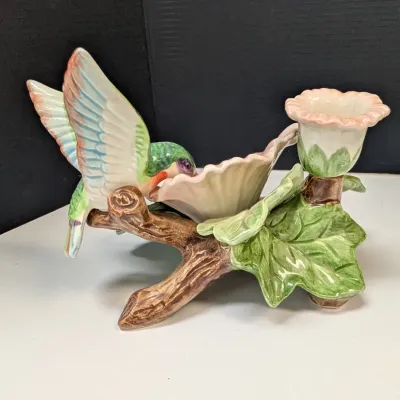
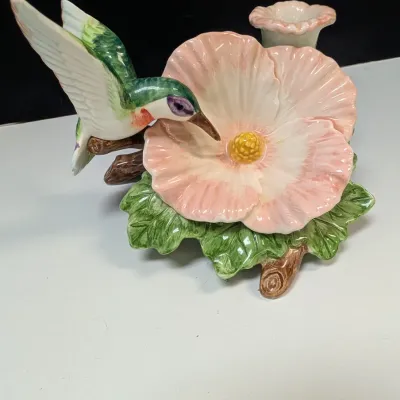
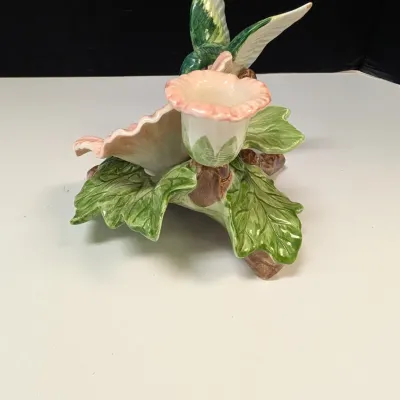
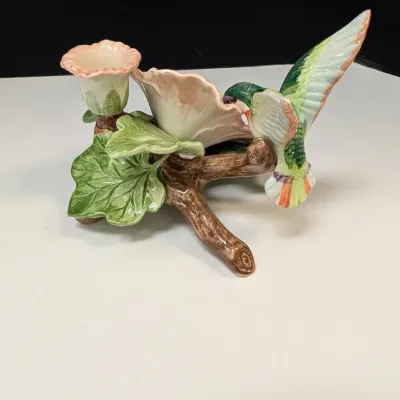
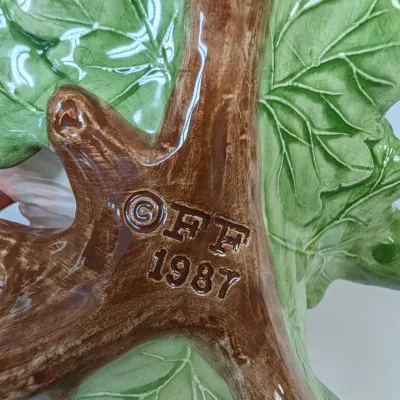
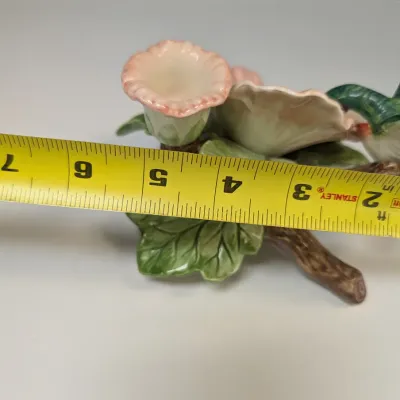
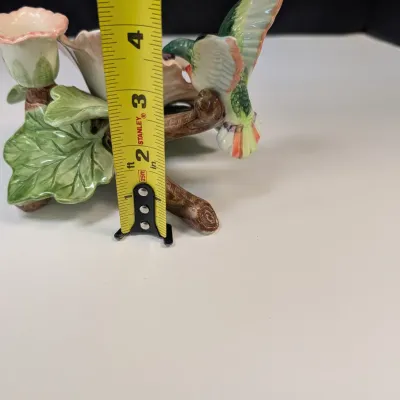
Add a touch of vintage elegance to your home decor with this beautiful set of Fitz & Floyd candle holders. The intricate floral pattern featuring hummingbirds and hibiscus is sure to impress your guests. These candle holders were manufactured in Japan in 1987 and are made of high-quality pottery. The green and pink color combination adds a pop of color to any room. Perfect for a romantic dinner or as a decorative accent piece. 186 / 5060 -
Add a touch of vintage elegance to your home decor with this beautiful set of Fitz & Floyd candle holders. The intricate floral pattern featuring hummingbirds and hibiscus is sure to impress your guests. These candle holders were manufactured in Japan in 1987 and are made of high-quality pottery. The green and pink color combination adds a pop of color to any room. Perfect for a romantic dinner or as a decorative accent piece. 187 / 5060 -
Add a touch of vintage elegance to your home decor with this beautiful set of Fitz & Floyd candle holders. The intricate floral pattern featuring hummingbirds and hibiscus is sure to impress your guests. These candle holders were manufactured in Japan in 1987 and are made of high-quality pottery. The green and pink color combination adds a pop of color to any room. Perfect for a romantic dinner or as a decorative accent piece. 188 / 5060 -
Add a touch of vintage elegance to your home decor with this beautiful set of Fitz & Floyd candle holders. The intricate floral pattern featuring hummingbirds and hibiscus is sure to impress your guests. These candle holders were manufactured in Japan in 1987 and are made of high-quality pottery. The green and pink color combination adds a pop of color to any room. Perfect for a romantic dinner or as a decorative accent piece. 189 / 5060 -
Add a touch of vintage elegance to your home decor with this beautiful set of Fitz & Floyd candle holders. The intricate floral pattern featuring hummingbirds and hibiscus is sure to impress your guests. These candle holders were manufactured in Japan in 1987 and are made of high-quality pottery. The green and pink color combination adds a pop of color to any room. Perfect for a romantic dinner or as a decorative accent piece. 190 / 5060 -
Add a touch of vintage elegance to your home decor with this beautiful set of Fitz & Floyd candle holders. The intricate floral pattern featuring hummingbirds and hibiscus is sure to impress your guests. These candle holders were manufactured in Japan in 1987 and are made of high-quality pottery. The green and pink color combination adds a pop of color to any room. Perfect for a romantic dinner or as a decorative accent piece. 191 / 5060 -
Add a touch of vintage elegance to your home decor with this beautiful set of Fitz & Floyd candle holders. The intricate floral pattern featuring hummingbirds and hibiscus is sure to impress your guests. These candle holders were manufactured in Japan in 1987 and are made of high-quality pottery. The green and pink color combination adds a pop of color to any room. Perfect for a romantic dinner or as a decorative accent piece. 192 / 5060 -
Add a touch of vintage elegance to your home decor with this beautiful set of Fitz & Floyd candle holders. The intricate floral pattern featuring hummingbirds and hibiscus is sure to impress your guests. These candle holders were manufactured in Japan in 1987 and are made of high-quality pottery. The green and pink color combination adds a pop of color to any room. Perfect for a romantic dinner or as a decorative accent piece. 193 / 5060 -
Add a touch of vintage elegance to your home decor with this beautiful set of Fitz & Floyd candle holders. The intricate floral pattern featuring hummingbirds and hibiscus is sure to impress your guests. These candle holders were manufactured in Japan in 1987 and are made of high-quality pottery. The green and pink color combination adds a pop of color to any room. Perfect for a romantic dinner or as a decorative accent piece. 194 / 5060 -
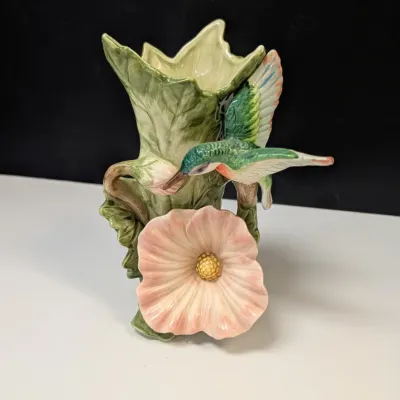
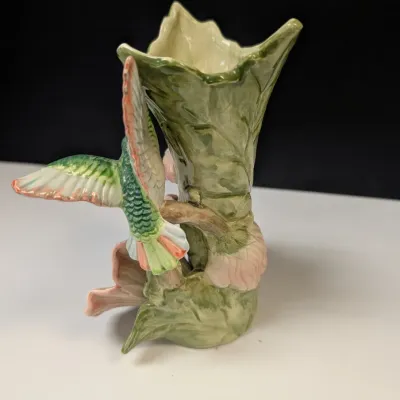
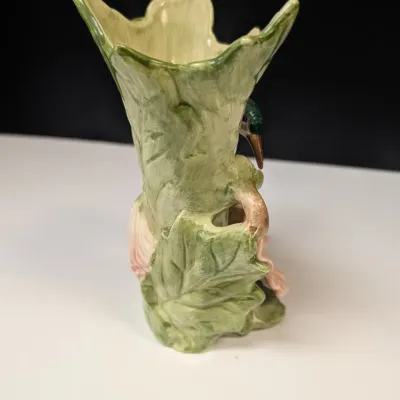
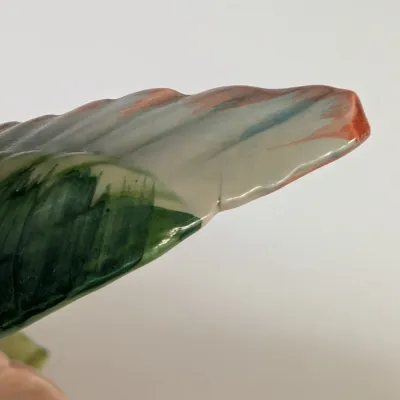
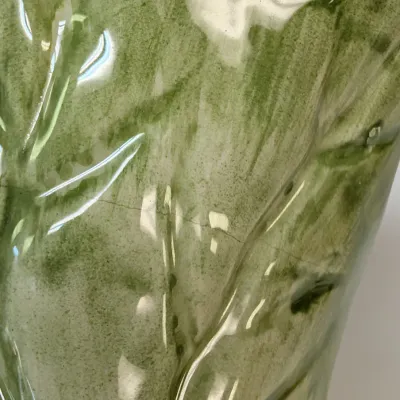
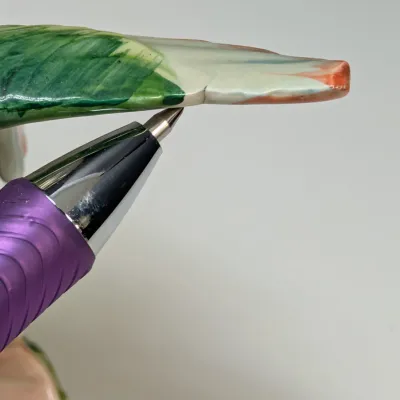
The piece does have a crack on one of its wing The Vintage Fitz and Floyd 1987 Hummingbird Hibiscus Flower Vase is a medium-sized porcelain vase featuring a beautiful multicolor design with a bird subject. This original collectible piece is handmade in Taiwan, measuring 7 inches in height and 5 inches in width. The vase showcases intricate details of a hummingbird and hibiscus flower, making it a unique and charming decorative item for adults who appreciate vintage collectibles. 195 / 5060 -
The piece does have a crack on one of its wing The Vintage Fitz and Floyd 1987 Hummingbird Hibiscus Flower Vase is a medium-sized porcelain vase featuring a beautiful multicolor design with a bird subject. This original collectible piece is handmade in Taiwan, measuring 7 inches in height and 5 inches in width. The vase showcases intricate details of a hummingbird and hibiscus flower, making it a unique and charming decorative item for adults who appreciate vintage collectibles. 196 / 5060 -
The piece does have a crack on one of its wing The Vintage Fitz and Floyd 1987 Hummingbird Hibiscus Flower Vase is a medium-sized porcelain vase featuring a beautiful multicolor design with a bird subject. This original collectible piece is handmade in Taiwan, measuring 7 inches in height and 5 inches in width. The vase showcases intricate details of a hummingbird and hibiscus flower, making it a unique and charming decorative item for adults who appreciate vintage collectibles. 197 / 5060 -
The piece does have a crack on one of its wing The Vintage Fitz and Floyd 1987 Hummingbird Hibiscus Flower Vase is a medium-sized porcelain vase featuring a beautiful multicolor design with a bird subject. This original collectible piece is handmade in Taiwan, measuring 7 inches in height and 5 inches in width. The vase showcases intricate details of a hummingbird and hibiscus flower, making it a unique and charming decorative item for adults who appreciate vintage collectibles. 198 / 5060 -
The piece does have a crack on one of its wing The Vintage Fitz and Floyd 1987 Hummingbird Hibiscus Flower Vase is a medium-sized porcelain vase featuring a beautiful multicolor design with a bird subject. This original collectible piece is handmade in Taiwan, measuring 7 inches in height and 5 inches in width. The vase showcases intricate details of a hummingbird and hibiscus flower, making it a unique and charming decorative item for adults who appreciate vintage collectibles. 199 / 5060 -
The piece does have a crack on one of its wing The Vintage Fitz and Floyd 1987 Hummingbird Hibiscus Flower Vase is a medium-sized porcelain vase featuring a beautiful multicolor design with a bird subject. This original collectible piece is handmade in Taiwan, measuring 7 inches in height and 5 inches in width. The vase showcases intricate details of a hummingbird and hibiscus flower, making it a unique and charming decorative item for adults who appreciate vintage collectibles. 200 / 5060
Photos 101 - 200 of 5060
Per page: