







-
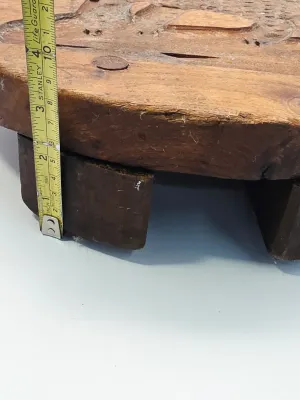
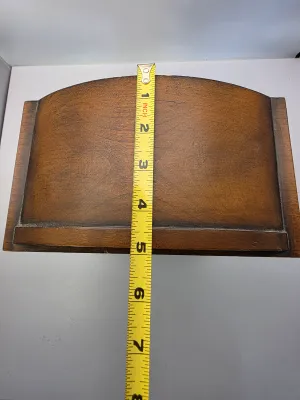
antique Pennsylvania Dutch hand-carved wooden mold, historically used for shaping cheese or butter.The carved figure appears to be a pig or wild boar, a common motif in early American folk art.These presses were typically crafted from hardwoods like cherry, maple, or poplar by folk artisans.Similar primitive molds are often collected as decorative farmhouse Americana 901 / 1444 -
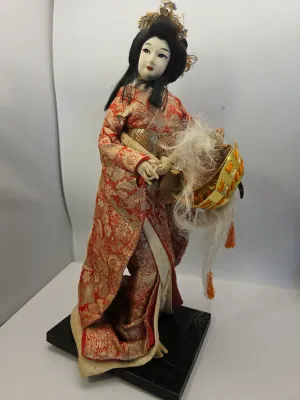
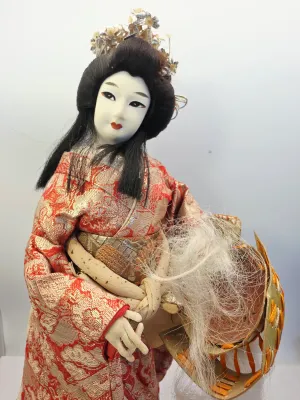
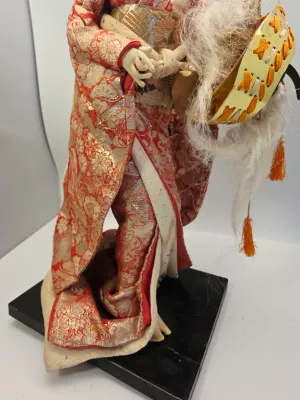
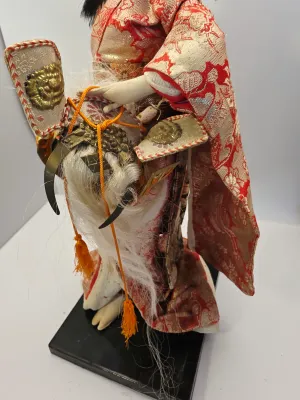
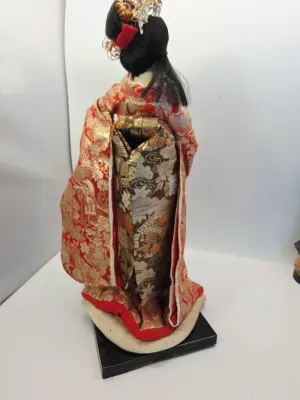
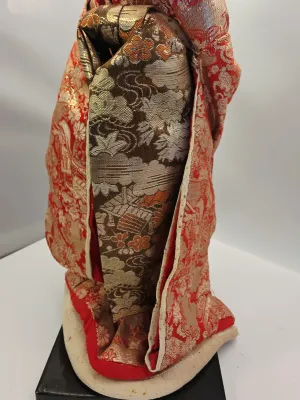
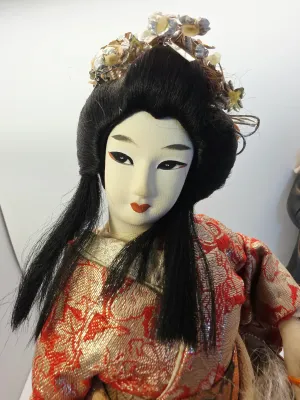
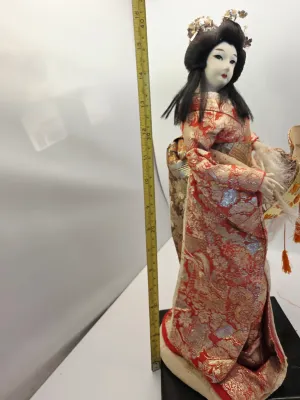
Vintage Japanese geisha doll dressed in a red and gold metallic brocade kimono with detailed obi and traditional headpiece ornament. Figure is fixed to a black display stand and measures approximately 16 inches tall. Includes prop elements including a lacquered/decorated hat with faux white hair details. Overall good condition with minor age-appropriate wear and slight fraying/discoloration to fabrics. 902 / 1444 -
Vintage Japanese geisha doll dressed in a red and gold metallic brocade kimono with detailed obi and traditional headpiece ornament. Figure is fixed to a black display stand and measures approximately 16 inches tall. Includes prop elements including a lacquered/decorated hat with faux white hair details. Overall good condition with minor age-appropriate wear and slight fraying/discoloration to fabrics. 903 / 1444 -
Vintage Japanese geisha doll dressed in a red and gold metallic brocade kimono with detailed obi and traditional headpiece ornament. Figure is fixed to a black display stand and measures approximately 16 inches tall. Includes prop elements including a lacquered/decorated hat with faux white hair details. Overall good condition with minor age-appropriate wear and slight fraying/discoloration to fabrics. 904 / 1444 -
Vintage Japanese geisha doll dressed in a red and gold metallic brocade kimono with detailed obi and traditional headpiece ornament. Figure is fixed to a black display stand and measures approximately 16 inches tall. Includes prop elements including a lacquered/decorated hat with faux white hair details. Overall good condition with minor age-appropriate wear and slight fraying/discoloration to fabrics. 905 / 1444 -
Vintage Japanese geisha doll dressed in a red and gold metallic brocade kimono with detailed obi and traditional headpiece ornament. Figure is fixed to a black display stand and measures approximately 16 inches tall. Includes prop elements including a lacquered/decorated hat with faux white hair details. Overall good condition with minor age-appropriate wear and slight fraying/discoloration to fabrics. 906 / 1444 -
Vintage Japanese geisha doll dressed in a red and gold metallic brocade kimono with detailed obi and traditional headpiece ornament. Figure is fixed to a black display stand and measures approximately 16 inches tall. Includes prop elements including a lacquered/decorated hat with faux white hair details. Overall good condition with minor age-appropriate wear and slight fraying/discoloration to fabrics. 907 / 1444 -
Vintage Japanese geisha doll dressed in a red and gold metallic brocade kimono with detailed obi and traditional headpiece ornament. Figure is fixed to a black display stand and measures approximately 16 inches tall. Includes prop elements including a lacquered/decorated hat with faux white hair details. Overall good condition with minor age-appropriate wear and slight fraying/discoloration to fabrics. 908 / 1444 -
Vintage Japanese geisha doll dressed in a red and gold metallic brocade kimono with detailed obi and traditional headpiece ornament. Figure is fixed to a black display stand and measures approximately 16 inches tall. Includes prop elements including a lacquered/decorated hat with faux white hair details. Overall good condition with minor age-appropriate wear and slight fraying/discoloration to fabrics. 909 / 1444 -
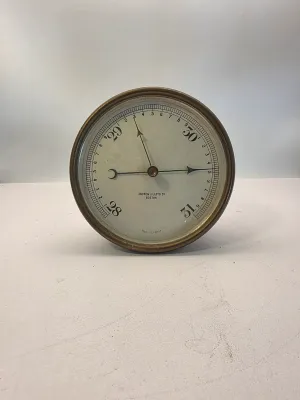
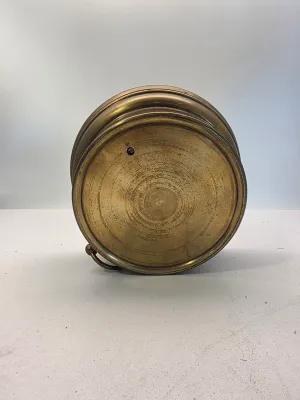
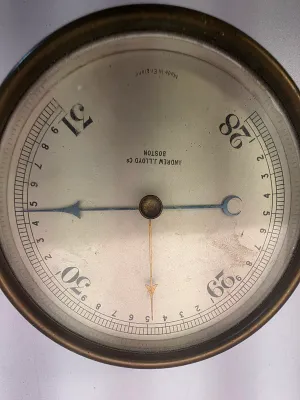
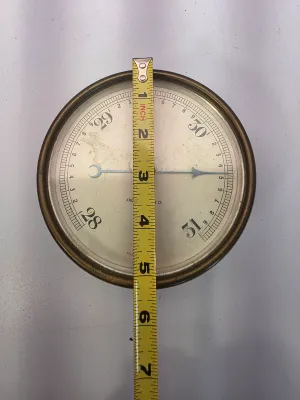
Antique brass aneroid barometer marked 'Andrew J. Lloyd Co. Boston' and 'Made in England'. Features a heavy brass casing, glass face, and measures approximately 5.5 inches in diameter. Shows vintage wear and patina to the brass housing and light aging on the face dial. Untested for accuracy. 910 / 1444 -
Antique brass aneroid barometer marked 'Andrew J. Lloyd Co. Boston' and 'Made in England'. Features a heavy brass casing, glass face, and measures approximately 5.5 inches in diameter. Shows vintage wear and patina to the brass housing and light aging on the face dial. Untested for accuracy. 911 / 1444 -
Antique brass aneroid barometer marked 'Andrew J. Lloyd Co. Boston' and 'Made in England'. Features a heavy brass casing, glass face, and measures approximately 5.5 inches in diameter. Shows vintage wear and patina to the brass housing and light aging on the face dial. Untested for accuracy. 912 / 1444 -
Antique brass aneroid barometer marked 'Andrew J. Lloyd Co. Boston' and 'Made in England'. Features a heavy brass casing, glass face, and measures approximately 5.5 inches in diameter. Shows vintage wear and patina to the brass housing and light aging on the face dial. Untested for accuracy. 913 / 1444 -
Antique brass aneroid barometer marked 'Andrew J. Lloyd Co. Boston' and 'Made in England'. Features a heavy brass casing, glass face, and measures approximately 5.5 inches in diameter. Shows vintage wear and patina to the brass housing and light aging on the face dial. Untested for accuracy. 914 / 1444 -
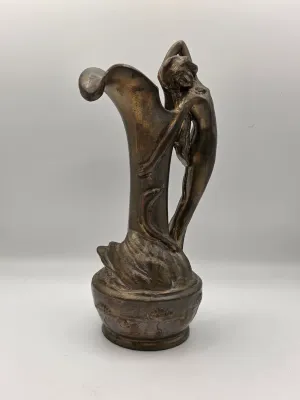
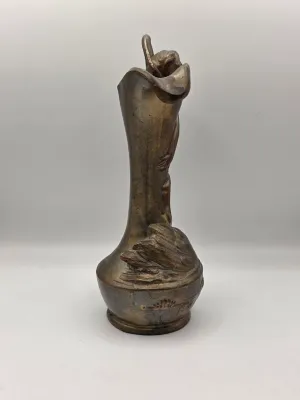
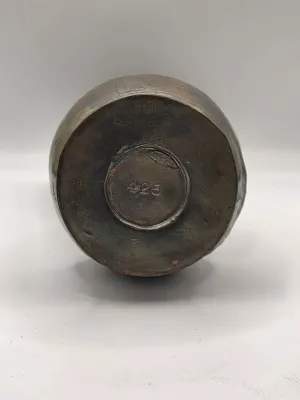
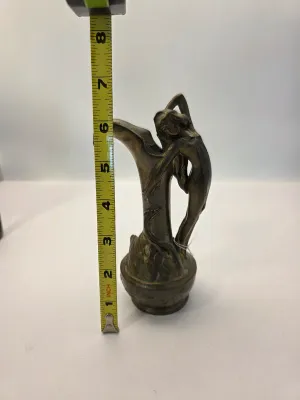
An Art Nouveau style figural metal vase featuring a molded maiden nymph figure draped along the side. Appears to be cast metal with a dark bronze-toned patina finish. Stamped with '425' on the underside. Measures approximately 7 inches tall. Displays minor age-appropriate surface wear, scuffs, and patina variation. 915 / 1444 -
An Art Nouveau style figural metal vase featuring a molded maiden nymph figure draped along the side. Appears to be cast metal with a dark bronze-toned patina finish. Stamped with '425' on the underside. Measures approximately 7 inches tall. Displays minor age-appropriate surface wear, scuffs, and patina variation. 916 / 1444 -
An Art Nouveau style figural metal vase featuring a molded maiden nymph figure draped along the side. Appears to be cast metal with a dark bronze-toned patina finish. Stamped with '425' on the underside. Measures approximately 7 inches tall. Displays minor age-appropriate surface wear, scuffs, and patina variation. 917 / 1444 -
An Art Nouveau style figural metal vase featuring a molded maiden nymph figure draped along the side. Appears to be cast metal with a dark bronze-toned patina finish. Stamped with '425' on the underside. Measures approximately 7 inches tall. Displays minor age-appropriate surface wear, scuffs, and patina variation. 918 / 1444 -
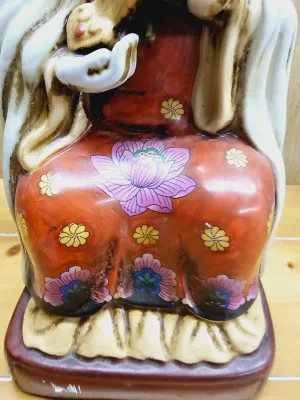
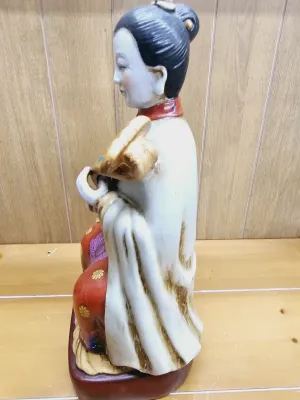
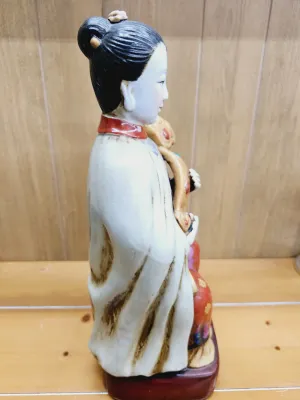
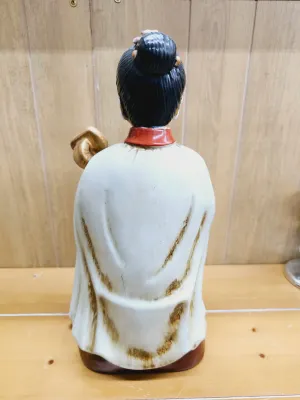
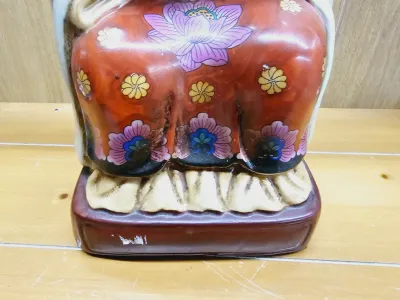
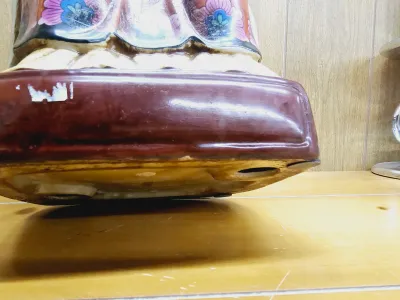
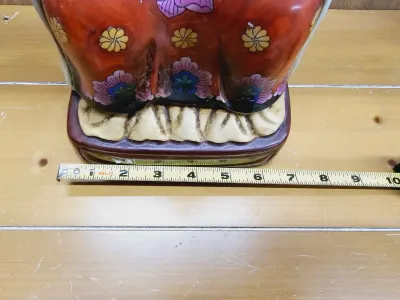
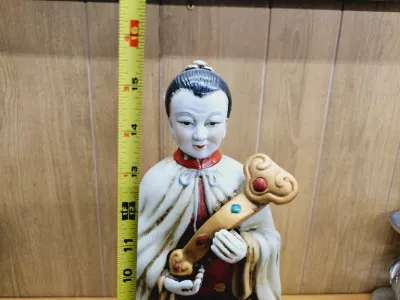
Hand-painted vintage Chinese porcelain figure depicting an immortal or figure holding a gold-colored ruyi scepter. Features detailed floral patterns on the lower robe and a draped white cape. Measures approximately 15.5 inches tall with a base width of around 7 inches. Shows minor paint loss and surface wear near the base, consistent with age. 919 / 1444 -
Hand-painted vintage Chinese porcelain figure depicting an immortal or figure holding a gold-colored ruyi scepter. Features detailed floral patterns on the lower robe and a draped white cape. Measures approximately 15.5 inches tall with a base width of around 7 inches. Shows minor paint loss and surface wear near the base, consistent with age. 920 / 1444 -
Hand-painted vintage Chinese porcelain figure depicting an immortal or figure holding a gold-colored ruyi scepter. Features detailed floral patterns on the lower robe and a draped white cape. Measures approximately 15.5 inches tall with a base width of around 7 inches. Shows minor paint loss and surface wear near the base, consistent with age. 921 / 1444 -
Hand-painted vintage Chinese porcelain figure depicting an immortal or figure holding a gold-colored ruyi scepter. Features detailed floral patterns on the lower robe and a draped white cape. Measures approximately 15.5 inches tall with a base width of around 7 inches. Shows minor paint loss and surface wear near the base, consistent with age. 922 / 1444 -
Hand-painted vintage Chinese porcelain figure depicting an immortal or figure holding a gold-colored ruyi scepter. Features detailed floral patterns on the lower robe and a draped white cape. Measures approximately 15.5 inches tall with a base width of around 7 inches. Shows minor paint loss and surface wear near the base, consistent with age. 923 / 1444 -
Hand-painted vintage Chinese porcelain figure depicting an immortal or figure holding a gold-colored ruyi scepter. Features detailed floral patterns on the lower robe and a draped white cape. Measures approximately 15.5 inches tall with a base width of around 7 inches. Shows minor paint loss and surface wear near the base, consistent with age. 924 / 1444 -
Hand-painted vintage Chinese porcelain figure depicting an immortal or figure holding a gold-colored ruyi scepter. Features detailed floral patterns on the lower robe and a draped white cape. Measures approximately 15.5 inches tall with a base width of around 7 inches. Shows minor paint loss and surface wear near the base, consistent with age. 925 / 1444 -
Hand-painted vintage Chinese porcelain figure depicting an immortal or figure holding a gold-colored ruyi scepter. Features detailed floral patterns on the lower robe and a draped white cape. Measures approximately 15.5 inches tall with a base width of around 7 inches. Shows minor paint loss and surface wear near the base, consistent with age. 926 / 1444 -
Hand-painted vintage Chinese porcelain figure depicting an immortal or figure holding a gold-colored ruyi scepter. Features detailed floral patterns on the lower robe and a draped white cape. Measures approximately 15.5 inches tall with a base width of around 7 inches. Shows minor paint loss and surface wear near the base, consistent with age. 927 / 1444 -
Hand-painted vintage Chinese porcelain figure depicting an immortal or figure holding a gold-colored ruyi scepter. Features detailed floral patterns on the lower robe and a draped white cape. Measures approximately 15.5 inches tall with a base width of around 7 inches. Shows minor paint loss and surface wear near the base, consistent with age. 928 / 1444 -
Hand-painted vintage Chinese porcelain figure depicting an immortal or figure holding a gold-colored ruyi scepter. Features detailed floral patterns on the lower robe and a draped white cape. Measures approximately 15.5 inches tall with a base width of around 7 inches. Shows minor paint loss and surface wear near the base, consistent with age. 929 / 1444 -
Hand-painted vintage Chinese porcelain figure depicting an immortal or figure holding a gold-colored ruyi scepter. Features detailed floral patterns on the lower robe and a draped white cape. Measures approximately 15.5 inches tall with a base width of around 7 inches. Shows minor paint loss and surface wear near the base, consistent with age. 930 / 1444 -
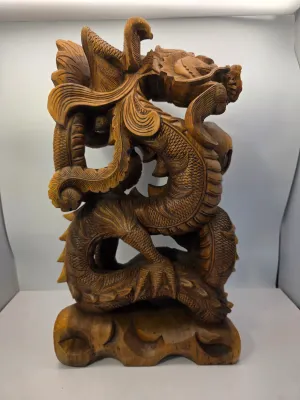
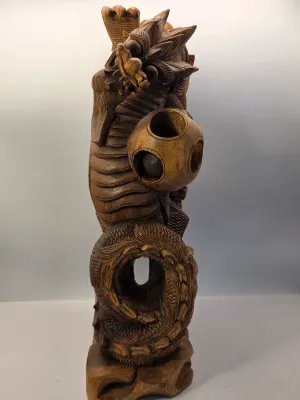
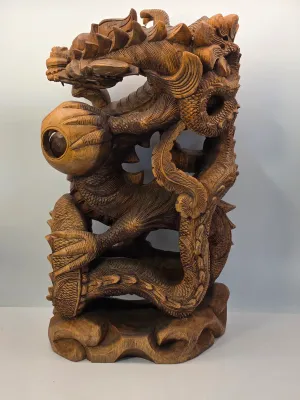
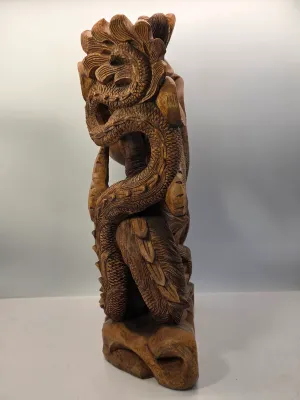
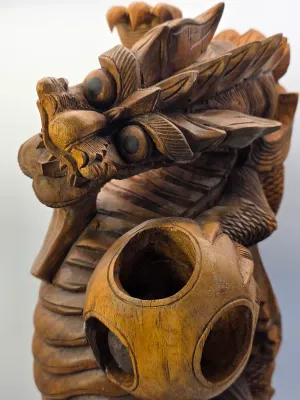
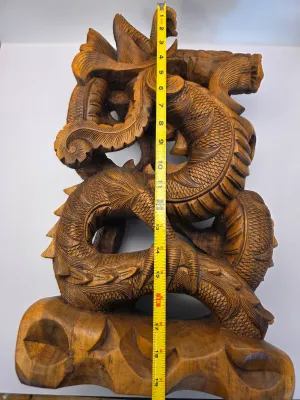
An intricately hand-carved solid wood sculpture depicting a oriental dragon clutching a hollow sphere with a loose carved ball inside. Features detailed scale patterns, facial features, and a carved wooden base. Measures approximately 19 inches tall. Good condition with light surface wear consistent with age and handling. 931 / 1444 -
An intricately hand-carved solid wood sculpture depicting a oriental dragon clutching a hollow sphere with a loose carved ball inside. Features detailed scale patterns, facial features, and a carved wooden base. Measures approximately 19 inches tall. Good condition with light surface wear consistent with age and handling. 932 / 1444 -
An intricately hand-carved solid wood sculpture depicting a oriental dragon clutching a hollow sphere with a loose carved ball inside. Features detailed scale patterns, facial features, and a carved wooden base. Measures approximately 19 inches tall. Good condition with light surface wear consistent with age and handling. 933 / 1444 -
An intricately hand-carved solid wood sculpture depicting a oriental dragon clutching a hollow sphere with a loose carved ball inside. Features detailed scale patterns, facial features, and a carved wooden base. Measures approximately 19 inches tall. Good condition with light surface wear consistent with age and handling. 934 / 1444 -
An intricately hand-carved solid wood sculpture depicting a oriental dragon clutching a hollow sphere with a loose carved ball inside. Features detailed scale patterns, facial features, and a carved wooden base. Measures approximately 19 inches tall. Good condition with light surface wear consistent with age and handling. 935 / 1444 -
An intricately hand-carved solid wood sculpture depicting a oriental dragon clutching a hollow sphere with a loose carved ball inside. Features detailed scale patterns, facial features, and a carved wooden base. Measures approximately 19 inches tall. Good condition with light surface wear consistent with age and handling. 936 / 1444 -
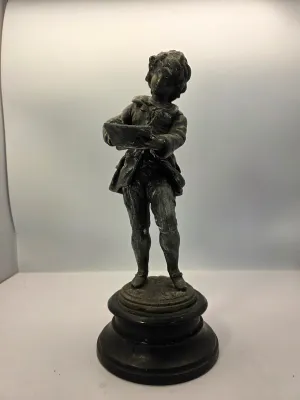
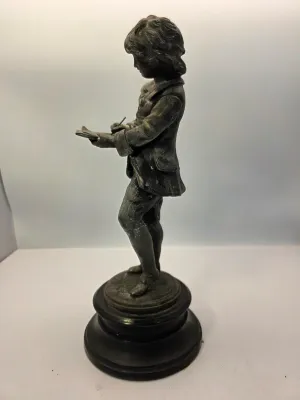
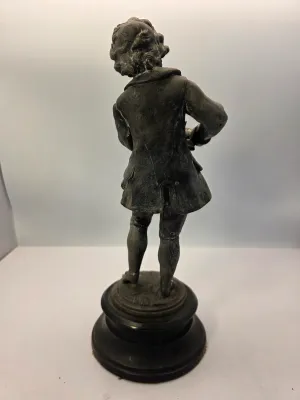
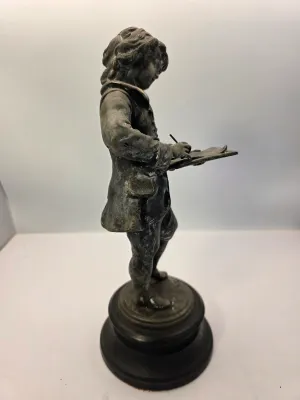
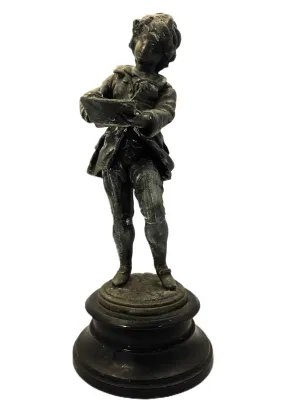
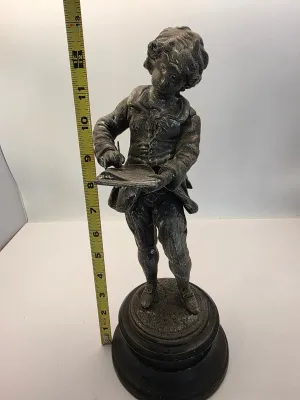
antique 19th-century French spelter statue of a schoolboy or young scholar, crafted in the style of the Moreau family of sculptors.Key DetailsMaterial: Made from spelter (a zinc-based alloy) with a dark or bronze-toned patina, mounted on a heavy, rounded dark base.Subject: Depicts a young boy or student in period attire holding a book, writing tablet, or drawing pad.Origin & Era: Typically produced in France during the late 19th century (Victorian era), often inspired by or attributed to classical sculptors like Auguste or Louis Auguste Moreau 937 / 1444 -
antique 19th-century French spelter statue of a schoolboy or young scholar, crafted in the style of the Moreau family of sculptors.Key DetailsMaterial: Made from spelter (a zinc-based alloy) with a dark or bronze-toned patina, mounted on a heavy, rounded dark base.Subject: Depicts a young boy or student in period attire holding a book, writing tablet, or drawing pad.Origin & Era: Typically produced in France during the late 19th century (Victorian era), often inspired by or attributed to classical sculptors like Auguste or Louis Auguste Moreau 938 / 1444 -
antique 19th-century French spelter statue of a schoolboy or young scholar, crafted in the style of the Moreau family of sculptors.Key DetailsMaterial: Made from spelter (a zinc-based alloy) with a dark or bronze-toned patina, mounted on a heavy, rounded dark base.Subject: Depicts a young boy or student in period attire holding a book, writing tablet, or drawing pad.Origin & Era: Typically produced in France during the late 19th century (Victorian era), often inspired by or attributed to classical sculptors like Auguste or Louis Auguste Moreau 939 / 1444 -
antique 19th-century French spelter statue of a schoolboy or young scholar, crafted in the style of the Moreau family of sculptors.Key DetailsMaterial: Made from spelter (a zinc-based alloy) with a dark or bronze-toned patina, mounted on a heavy, rounded dark base.Subject: Depicts a young boy or student in period attire holding a book, writing tablet, or drawing pad.Origin & Era: Typically produced in France during the late 19th century (Victorian era), often inspired by or attributed to classical sculptors like Auguste or Louis Auguste Moreau 940 / 1444 -
antique 19th-century French spelter statue of a schoolboy or young scholar, crafted in the style of the Moreau family of sculptors.Key DetailsMaterial: Made from spelter (a zinc-based alloy) with a dark or bronze-toned patina, mounted on a heavy, rounded dark base.Subject: Depicts a young boy or student in period attire holding a book, writing tablet, or drawing pad.Origin & Era: Typically produced in France during the late 19th century (Victorian era), often inspired by or attributed to classical sculptors like Auguste or Louis Auguste Moreau 941 / 1444 -
antique 19th-century French spelter statue of a schoolboy or young scholar, crafted in the style of the Moreau family of sculptors.Key DetailsMaterial: Made from spelter (a zinc-based alloy) with a dark or bronze-toned patina, mounted on a heavy, rounded dark base.Subject: Depicts a young boy or student in period attire holding a book, writing tablet, or drawing pad.Origin & Era: Typically produced in France during the late 19th century (Victorian era), often inspired by or attributed to classical sculptors like Auguste or Louis Auguste Moreau 942 / 1444 -
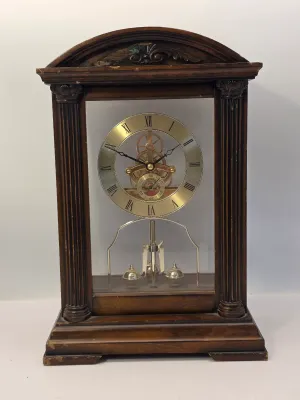
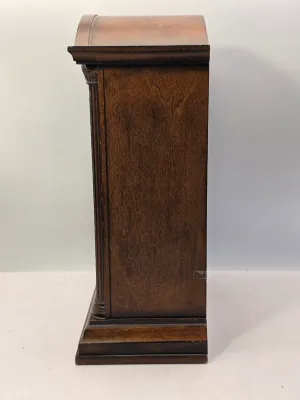
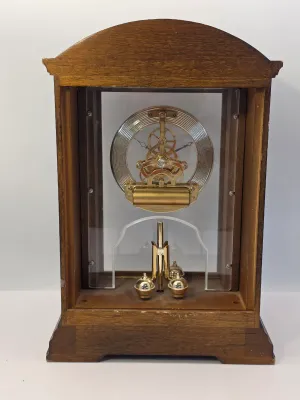
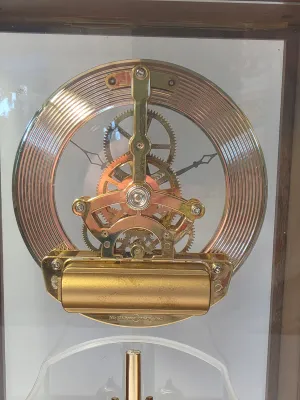
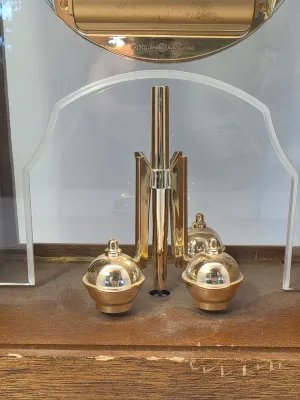
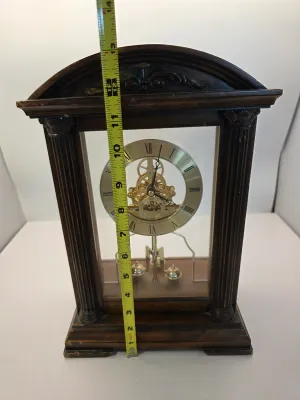
Vintage wooden anniversary/mantel clock featuring a visible brass skeleton movement, roman numeral chapter ring, glass front and back panels, and a rotating torsion pendulum with brass spheres. Encased in a dark wood frame with fluted side columns and an arched top. Measures approximately 13.5 inches tall by 5.5 inches deep. Marked 'No (0) Jewel Unadjusted' on the movement back. Shows light surface wear and minor scuffs to the wood finish. 943 / 1444 -
Vintage wooden anniversary/mantel clock featuring a visible brass skeleton movement, roman numeral chapter ring, glass front and back panels, and a rotating torsion pendulum with brass spheres. Encased in a dark wood frame with fluted side columns and an arched top. Measures approximately 13.5 inches tall by 5.5 inches deep. Marked 'No (0) Jewel Unadjusted' on the movement back. Shows light surface wear and minor scuffs to the wood finish. 944 / 1444 -
Vintage wooden anniversary/mantel clock featuring a visible brass skeleton movement, roman numeral chapter ring, glass front and back panels, and a rotating torsion pendulum with brass spheres. Encased in a dark wood frame with fluted side columns and an arched top. Measures approximately 13.5 inches tall by 5.5 inches deep. Marked 'No (0) Jewel Unadjusted' on the movement back. Shows light surface wear and minor scuffs to the wood finish. 945 / 1444 -
Vintage wooden anniversary/mantel clock featuring a visible brass skeleton movement, roman numeral chapter ring, glass front and back panels, and a rotating torsion pendulum with brass spheres. Encased in a dark wood frame with fluted side columns and an arched top. Measures approximately 13.5 inches tall by 5.5 inches deep. Marked 'No (0) Jewel Unadjusted' on the movement back. Shows light surface wear and minor scuffs to the wood finish. 946 / 1444 -
Vintage wooden anniversary/mantel clock featuring a visible brass skeleton movement, roman numeral chapter ring, glass front and back panels, and a rotating torsion pendulum with brass spheres. Encased in a dark wood frame with fluted side columns and an arched top. Measures approximately 13.5 inches tall by 5.5 inches deep. Marked 'No (0) Jewel Unadjusted' on the movement back. Shows light surface wear and minor scuffs to the wood finish. 947 / 1444 -
Vintage wooden anniversary/mantel clock featuring a visible brass skeleton movement, roman numeral chapter ring, glass front and back panels, and a rotating torsion pendulum with brass spheres. Encased in a dark wood frame with fluted side columns and an arched top. Measures approximately 13.5 inches tall by 5.5 inches deep. Marked 'No (0) Jewel Unadjusted' on the movement back. Shows light surface wear and minor scuffs to the wood finish. 948 / 1444 -
Vintage wooden anniversary/mantel clock featuring a visible brass skeleton movement, roman numeral chapter ring, glass front and back panels, and a rotating torsion pendulum with brass spheres. Encased in a dark wood frame with fluted side columns and an arched top. Measures approximately 13.5 inches tall by 5.5 inches deep. Marked 'No (0) Jewel Unadjusted' on the movement back. Shows light surface wear and minor scuffs to the wood finish. 949 / 1444 -
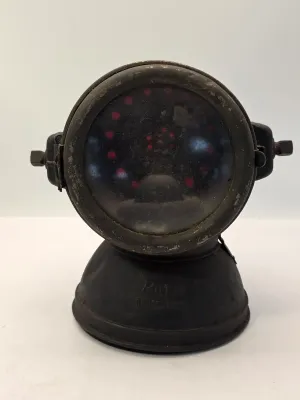
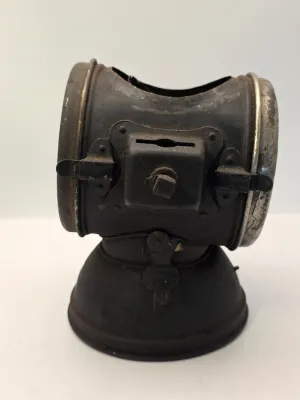
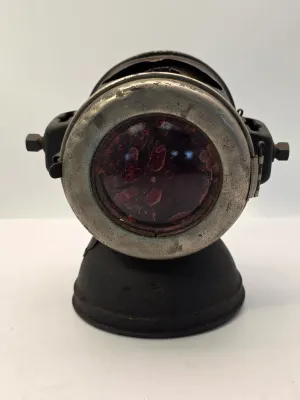
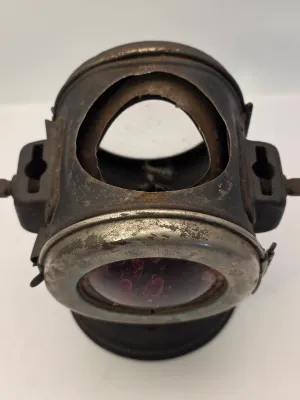
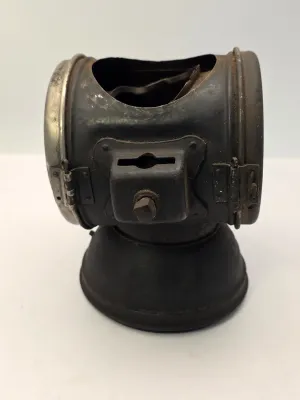
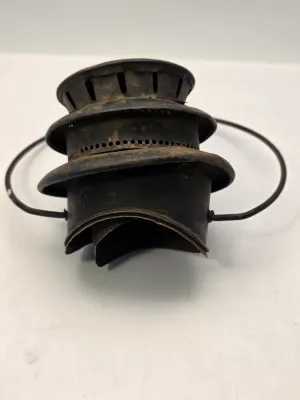
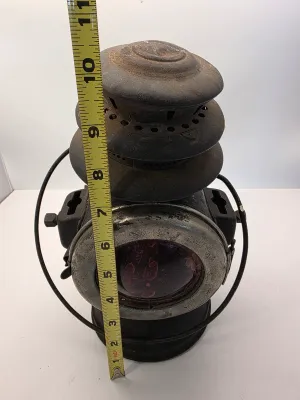
Antique Rayo black metal lantern features red glass lenses and a wire handle. The top cap section is detached/separate from the main body as shown in photos. Stamped 'Rayo' on the base. Shows age-appropriate patina, surface rust, finish wear, and dust. Measures approximately 10.5 inches tall assembled. 950 / 1444 -
Antique Rayo black metal lantern features red glass lenses and a wire handle. The top cap section is detached/separate from the main body as shown in photos. Stamped 'Rayo' on the base. Shows age-appropriate patina, surface rust, finish wear, and dust. Measures approximately 10.5 inches tall assembled. 951 / 1444 -
Antique Rayo black metal lantern features red glass lenses and a wire handle. The top cap section is detached/separate from the main body as shown in photos. Stamped 'Rayo' on the base. Shows age-appropriate patina, surface rust, finish wear, and dust. Measures approximately 10.5 inches tall assembled. 952 / 1444 -
Antique Rayo black metal lantern features red glass lenses and a wire handle. The top cap section is detached/separate from the main body as shown in photos. Stamped 'Rayo' on the base. Shows age-appropriate patina, surface rust, finish wear, and dust. Measures approximately 10.5 inches tall assembled. 953 / 1444 -
Antique Rayo black metal lantern features red glass lenses and a wire handle. The top cap section is detached/separate from the main body as shown in photos. Stamped 'Rayo' on the base. Shows age-appropriate patina, surface rust, finish wear, and dust. Measures approximately 10.5 inches tall assembled. 954 / 1444 -
Antique Rayo black metal lantern features red glass lenses and a wire handle. The top cap section is detached/separate from the main body as shown in photos. Stamped 'Rayo' on the base. Shows age-appropriate patina, surface rust, finish wear, and dust. Measures approximately 10.5 inches tall assembled. 955 / 1444 -
Antique Rayo black metal lantern features red glass lenses and a wire handle. The top cap section is detached/separate from the main body as shown in photos. Stamped 'Rayo' on the base. Shows age-appropriate patina, surface rust, finish wear, and dust. Measures approximately 10.5 inches tall assembled. 956 / 1444 -
Antique Rayo black metal lantern features red glass lenses and a wire handle. The top cap section is detached/separate from the main body as shown in photos. Stamped 'Rayo' on the base. Shows age-appropriate patina, surface rust, finish wear, and dust. Measures approximately 10.5 inches tall assembled. 957 / 1444 -
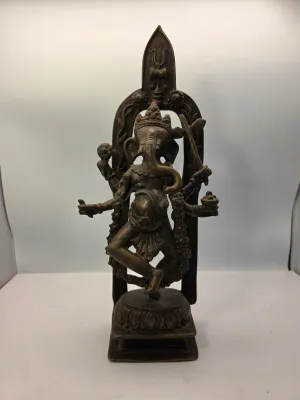
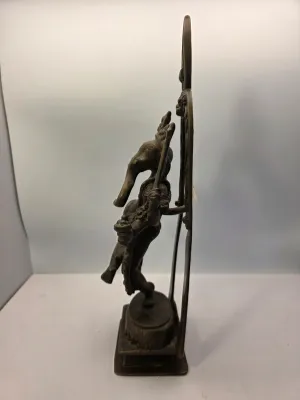
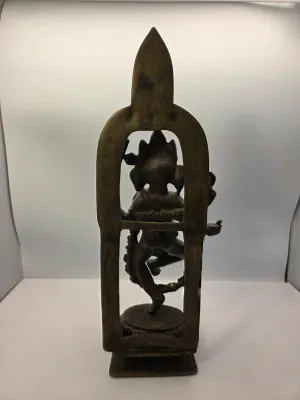
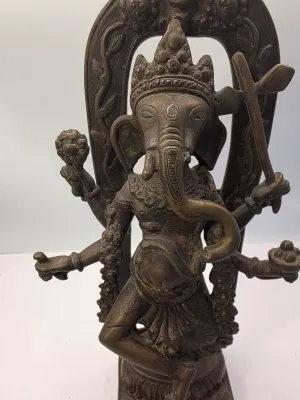
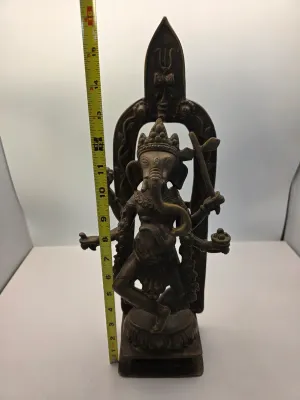
A bronze or brass metal statue depicting the Hindu deity Ganesha in a dancing pose (Nritya Ganesha), set against a decorative prabhavali (arch backdrop) topped with a Trishula emblem. The statue features detailed ornamental carving and stands approximately 15 inches tall. Shows an aged dark patina with light surface wear consistent with age. 958 / 1444 -
A bronze or brass metal statue depicting the Hindu deity Ganesha in a dancing pose (Nritya Ganesha), set against a decorative prabhavali (arch backdrop) topped with a Trishula emblem. The statue features detailed ornamental carving and stands approximately 15 inches tall. Shows an aged dark patina with light surface wear consistent with age. 959 / 1444 -
A bronze or brass metal statue depicting the Hindu deity Ganesha in a dancing pose (Nritya Ganesha), set against a decorative prabhavali (arch backdrop) topped with a Trishula emblem. The statue features detailed ornamental carving and stands approximately 15 inches tall. Shows an aged dark patina with light surface wear consistent with age. 960 / 1444 -
A bronze or brass metal statue depicting the Hindu deity Ganesha in a dancing pose (Nritya Ganesha), set against a decorative prabhavali (arch backdrop) topped with a Trishula emblem. The statue features detailed ornamental carving and stands approximately 15 inches tall. Shows an aged dark patina with light surface wear consistent with age. 961 / 1444 -
A bronze or brass metal statue depicting the Hindu deity Ganesha in a dancing pose (Nritya Ganesha), set against a decorative prabhavali (arch backdrop) topped with a Trishula emblem. The statue features detailed ornamental carving and stands approximately 15 inches tall. Shows an aged dark patina with light surface wear consistent with age. 962 / 1444 -
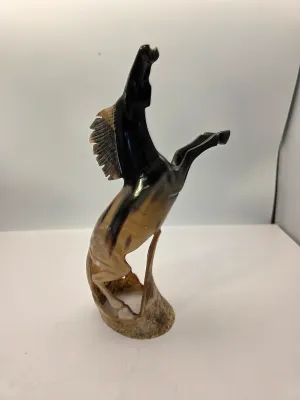
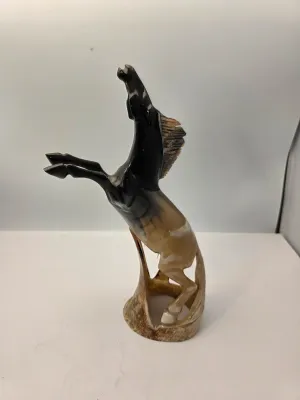
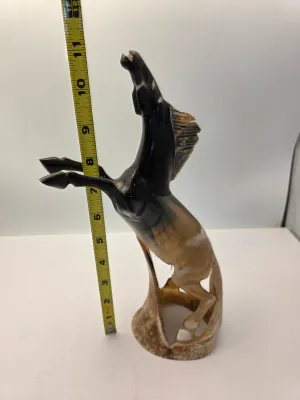
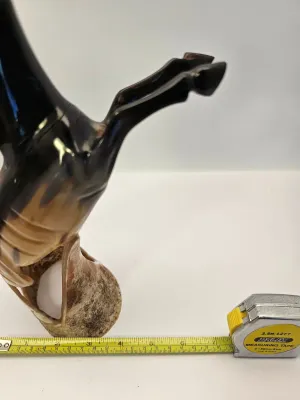
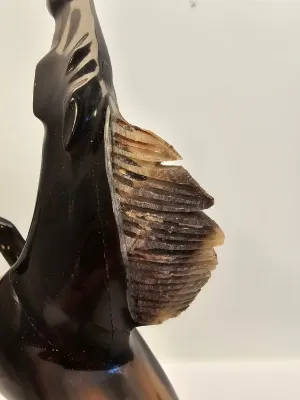
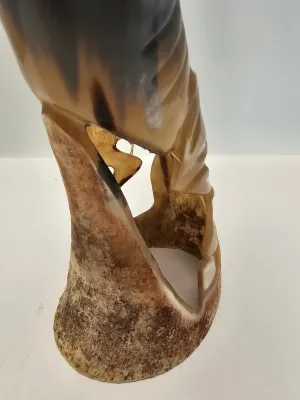
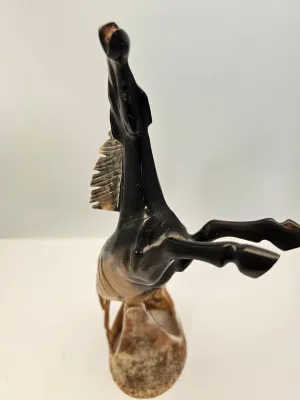
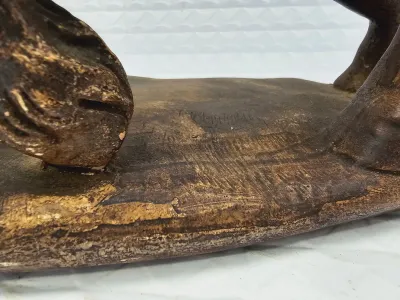
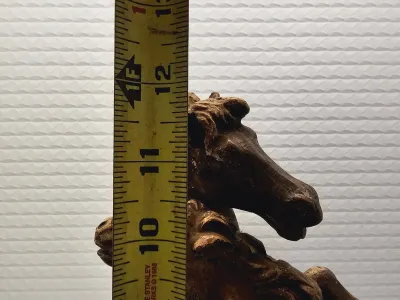
Hand-carved horn sculpture featuring a rearing horse with detailed mane and polished two-tone finish. Stands approximately 11 inches tall with a base diameter of about 3 inches. Shows natural variations in the horn material and minor surface stress lines/cracks typical of organic materials. 963 / 1444 -
Hand-carved horn sculpture featuring a rearing horse with detailed mane and polished two-tone finish. Stands approximately 11 inches tall with a base diameter of about 3 inches. Shows natural variations in the horn material and minor surface stress lines/cracks typical of organic materials. 964 / 1444 -
Hand-carved horn sculpture featuring a rearing horse with detailed mane and polished two-tone finish. Stands approximately 11 inches tall with a base diameter of about 3 inches. Shows natural variations in the horn material and minor surface stress lines/cracks typical of organic materials. 965 / 1444 -
Hand-carved horn sculpture featuring a rearing horse with detailed mane and polished two-tone finish. Stands approximately 11 inches tall with a base diameter of about 3 inches. Shows natural variations in the horn material and minor surface stress lines/cracks typical of organic materials. 966 / 1444 -
Hand-carved horn sculpture featuring a rearing horse with detailed mane and polished two-tone finish. Stands approximately 11 inches tall with a base diameter of about 3 inches. Shows natural variations in the horn material and minor surface stress lines/cracks typical of organic materials. 967 / 1444 -
Hand-carved horn sculpture featuring a rearing horse with detailed mane and polished two-tone finish. Stands approximately 11 inches tall with a base diameter of about 3 inches. Shows natural variations in the horn material and minor surface stress lines/cracks typical of organic materials. 968 / 1444 -
Hand-carved horn sculpture featuring a rearing horse with detailed mane and polished two-tone finish. Stands approximately 11 inches tall with a base diameter of about 3 inches. Shows natural variations in the horn material and minor surface stress lines/cracks typical of organic materials. 969 / 1444 -
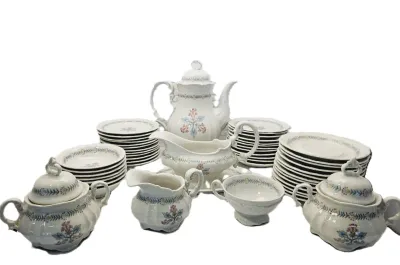
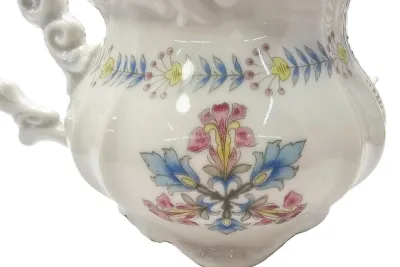
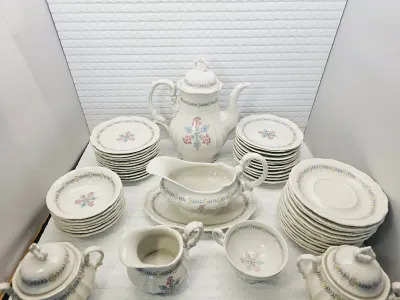
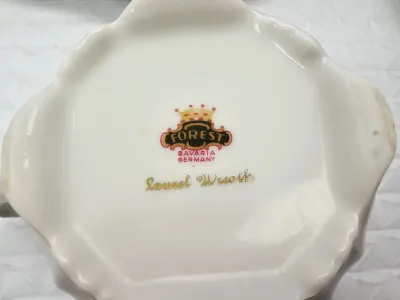
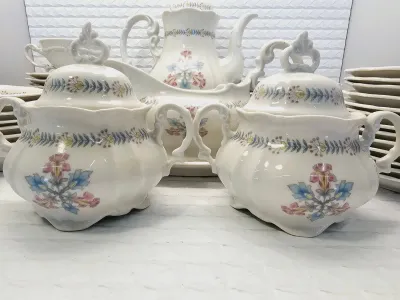
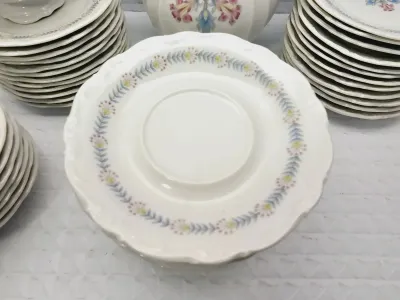
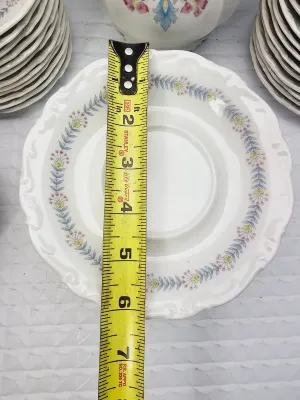
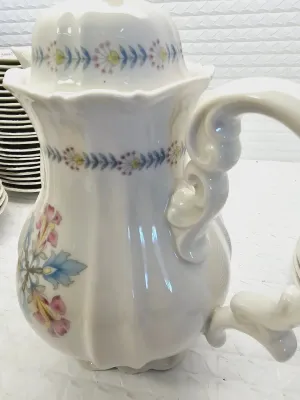
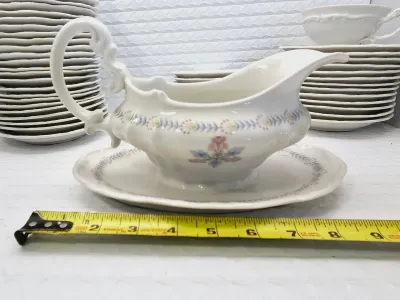
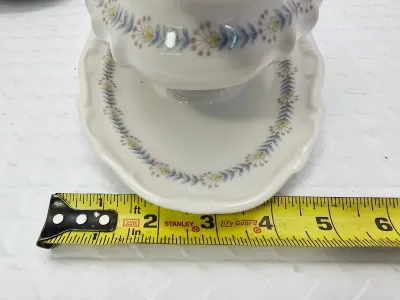
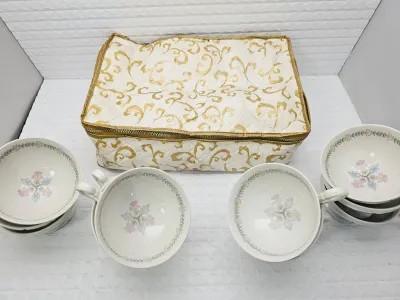
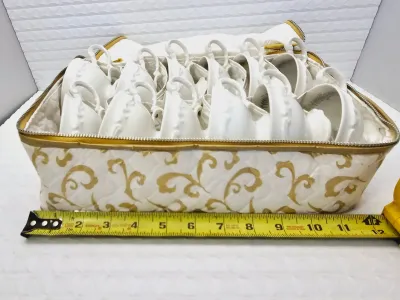
Vintage Forest Bavaria Germany porcelain dinnerware service featuring the Laurel Wreath floral pattern. Set includes a coffee/teapot, gravy boat with attached underplate, creamer, two covered sugar/jam bowls, teacups, saucers, and plates. Marked on base 'Forest Bavaria Germany Laurel Wreath'. Includes a fabric quilted storage case. Items are in good vintage condition with light wear consistent with age and use; no major chips or cracks visible. 976 / 1444 -
Vintage Forest Bavaria Germany porcelain dinnerware service featuring the Laurel Wreath floral pattern. Set includes a coffee/teapot, gravy boat with attached underplate, creamer, two covered sugar/jam bowls, teacups, saucers, and plates. Marked on base 'Forest Bavaria Germany Laurel Wreath'. Includes a fabric quilted storage case. Items are in good vintage condition with light wear consistent with age and use; no major chips or cracks visible. 977 / 1444 -
Vintage Forest Bavaria Germany porcelain dinnerware service featuring the Laurel Wreath floral pattern. Set includes a coffee/teapot, gravy boat with attached underplate, creamer, two covered sugar/jam bowls, teacups, saucers, and plates. Marked on base 'Forest Bavaria Germany Laurel Wreath'. Includes a fabric quilted storage case. Items are in good vintage condition with light wear consistent with age and use; no major chips or cracks visible. 978 / 1444 -
Vintage Forest Bavaria Germany porcelain dinnerware service featuring the Laurel Wreath floral pattern. Set includes a coffee/teapot, gravy boat with attached underplate, creamer, two covered sugar/jam bowls, teacups, saucers, and plates. Marked on base 'Forest Bavaria Germany Laurel Wreath'. Includes a fabric quilted storage case. Items are in good vintage condition with light wear consistent with age and use; no major chips or cracks visible. 979 / 1444 -
Vintage Forest Bavaria Germany porcelain dinnerware service featuring the Laurel Wreath floral pattern. Set includes a coffee/teapot, gravy boat with attached underplate, creamer, two covered sugar/jam bowls, teacups, saucers, and plates. Marked on base 'Forest Bavaria Germany Laurel Wreath'. Includes a fabric quilted storage case. Items are in good vintage condition with light wear consistent with age and use; no major chips or cracks visible. 980 / 1444 -
Vintage Forest Bavaria Germany porcelain dinnerware service featuring the Laurel Wreath floral pattern. Set includes a coffee/teapot, gravy boat with attached underplate, creamer, two covered sugar/jam bowls, teacups, saucers, and plates. Marked on base 'Forest Bavaria Germany Laurel Wreath'. Includes a fabric quilted storage case. Items are in good vintage condition with light wear consistent with age and use; no major chips or cracks visible. 981 / 1444 -
Vintage Forest Bavaria Germany porcelain dinnerware service featuring the Laurel Wreath floral pattern. Set includes a coffee/teapot, gravy boat with attached underplate, creamer, two covered sugar/jam bowls, teacups, saucers, and plates. Marked on base 'Forest Bavaria Germany Laurel Wreath'. Includes a fabric quilted storage case. Items are in good vintage condition with light wear consistent with age and use; no major chips or cracks visible. 982 / 1444 -
Vintage Forest Bavaria Germany porcelain dinnerware service featuring the Laurel Wreath floral pattern. Set includes a coffee/teapot, gravy boat with attached underplate, creamer, two covered sugar/jam bowls, teacups, saucers, and plates. Marked on base 'Forest Bavaria Germany Laurel Wreath'. Includes a fabric quilted storage case. Items are in good vintage condition with light wear consistent with age and use; no major chips or cracks visible. 983 / 1444 -
Vintage Forest Bavaria Germany porcelain dinnerware service featuring the Laurel Wreath floral pattern. Set includes a coffee/teapot, gravy boat with attached underplate, creamer, two covered sugar/jam bowls, teacups, saucers, and plates. Marked on base 'Forest Bavaria Germany Laurel Wreath'. Includes a fabric quilted storage case. Items are in good vintage condition with light wear consistent with age and use; no major chips or cracks visible. 984 / 1444 -
Vintage Forest Bavaria Germany porcelain dinnerware service featuring the Laurel Wreath floral pattern. Set includes a coffee/teapot, gravy boat with attached underplate, creamer, two covered sugar/jam bowls, teacups, saucers, and plates. Marked on base 'Forest Bavaria Germany Laurel Wreath'. Includes a fabric quilted storage case. Items are in good vintage condition with light wear consistent with age and use; no major chips or cracks visible. 985 / 1444 -
Vintage Forest Bavaria Germany porcelain dinnerware service featuring the Laurel Wreath floral pattern. Set includes a coffee/teapot, gravy boat with attached underplate, creamer, two covered sugar/jam bowls, teacups, saucers, and plates. Marked on base 'Forest Bavaria Germany Laurel Wreath'. Includes a fabric quilted storage case. Items are in good vintage condition with light wear consistent with age and use; no major chips or cracks visible. 986 / 1444 -
Vintage Forest Bavaria Germany porcelain dinnerware service featuring the Laurel Wreath floral pattern. Set includes a coffee/teapot, gravy boat with attached underplate, creamer, two covered sugar/jam bowls, teacups, saucers, and plates. Marked on base 'Forest Bavaria Germany Laurel Wreath'. Includes a fabric quilted storage case. Items are in good vintage condition with light wear consistent with age and use; no major chips or cracks visible. 987 / 1444 -
Vintage Forest Bavaria Germany porcelain dinnerware service featuring the Laurel Wreath floral pattern. Set includes a coffee/teapot, gravy boat with attached underplate, creamer, two covered sugar/jam bowls, teacups, saucers, and plates. Marked on base 'Forest Bavaria Germany Laurel Wreath'. Includes a fabric quilted storage case. Items are in good vintage condition with light wear consistent with age and use; no major chips or cracks visible. 988 / 1444 -
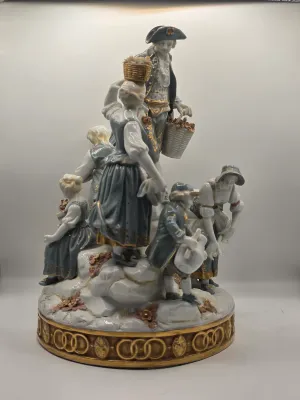
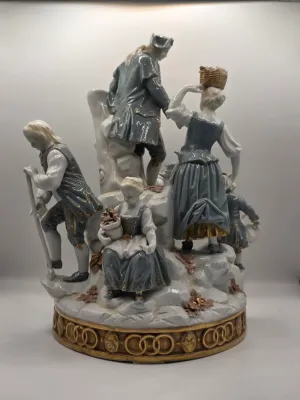
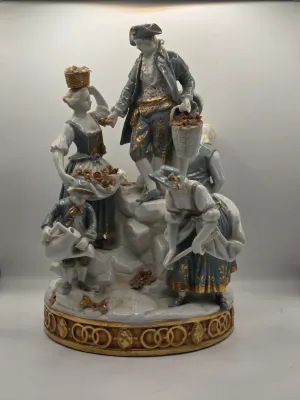
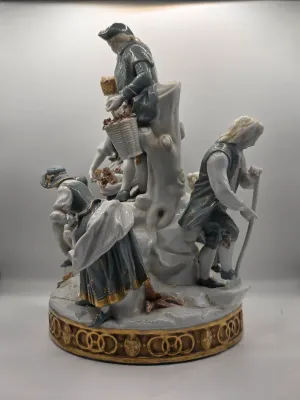
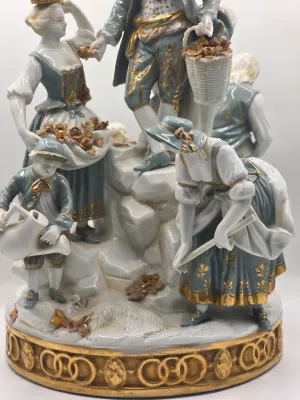
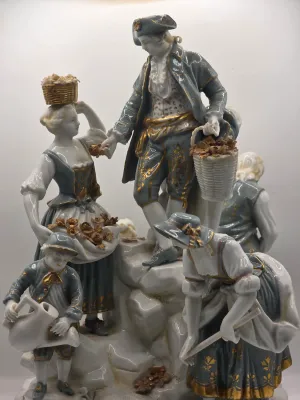
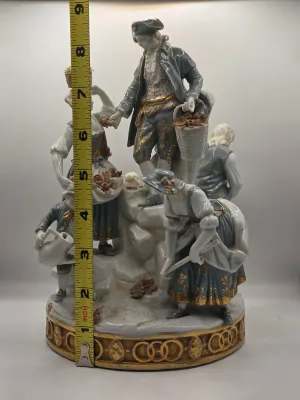
An ornate porcelain figural group depicting classical figures gathered around a rocky landscape with flowers and baskets, finished in slate blue, white, and gilt highlights on a molded gold-tone base. Stands approximately 9 inches tall. Good condition with light wear consistent with age. Large Rare Antique 19th centuryVolkstedt German Porcelain Group of Gardeners, Marked R 1762 This mark was used by Volkstedt factory in the early 19th century. There is a similar piece done by Meissen in the same time period. It was not unusual for Meissen factory to make blank pieces and send them to be painted to other shops. If Meissen made this piece is worth much much more. The feel, the weight of the porcelain is Meissen, but i am not an expert; with the details on hands and flowers (see pictures), while the hand paint job and guilding feel different. No restoration work visible. There is a piece of a rake missing and few petals. All in all excellent condition. The mark R 1762 represents the year when Prince Johann Friedrich established the factory in Rudolstadt. In September 1760, Georg Heinrich Macheleid (1723-1801) made a request to Prince Johann Friedrich, Fürst von Schwartzburg-Rudolstadt to establish a porcelain factory in Sitzendorf, Thuringia, Germany. Macheleid previously worked at a glass factory in Glücksthal. Independent of the ceramicists at Meissen, Macheleid conducted his own research into creating a hard paste porcelain. Prince Johann Friedrich granted Macheleid’s request in 1762 with the stipulation that the plant be located near his court in Schwarzburg-Rudolstadt. Macheleid established the Aelteste Volkstedter Porzellanfabrik (Oldest Volkstedt Porcelain Factory) in Volstedt which became part of Rudolstadt in 1923. Macheleid created a self-sustaining village for his workers. In 1767, Macheleid left. The factory came under the control of the prince, his wife, his son, and five other investors. They leased the factory to Christian Nome from Erfurt. During the latter half of the eighteenth century, Volksted gained a reputation for its well modeled and painted figurines, rivaling those of Meissen. In 1793, Prince Johann Friedrich purchased all outstanding shares. In 1797, Prince Ludwig Friedrich, Johann’s successor, sold the factory to his brother-in-law Ernest Constantine, Landgrave of Hesse-Philippstahl, who sold it to Wilhelm Greiner and Carl Holzapfel several years later. Nome left around 1800. Holzapfel left in 1816. Wilhelm Greiner’s son Anton formed a partnership with a group of investors. The new firm was named Greiner, Stauch & Co. About 1861, the firm became Macheleid, Triebner & Co. In 1877, the firm was known as Triebner, Ens & Eckert. In 1894, Richard Eckert left to form his own company. Triebner and Ens created Aelteste Volkstedter Porzellanfabrik Triebner, Ens & Co. Ens left to create his own firm. The remaining firm became AeltesteVolkstedter Porzellan Factory Triebner & Co. The company was a joint stock company from 1898 to 1902. In the mid and late 19th century, rival ceramic manufacturers, such as Beyer & Boch, Kämmer & Kramer, and Müller and Hammer, established ceramic factories in Volkstedt. Around 1902, the company acquired the Porcelain Factory Unterweissbach in Unterweissbach. In 1909, the company established a porcelain workshop to train workers. Following World War I, Aelteste Volkstedter Porzellanfabrik AG became part of a combine with six other ceramic manufacturers. When the combine collapsed in 1936, it was reorganized as Staalich Thüringische Porzellan-Manufaktur vormal Aelteste Volkstedter Gmbh and operated as such until 1949. 994 / 1444 -
An ornate porcelain figural group depicting classical figures gathered around a rocky landscape with flowers and baskets, finished in slate blue, white, and gilt highlights on a molded gold-tone base. Stands approximately 9 inches tall. Good condition with light wear consistent with age. Large Rare Antique 19th centuryVolkstedt German Porcelain Group of Gardeners, Marked R 1762 This mark was used by Volkstedt factory in the early 19th century. There is a similar piece done by Meissen in the same time period. It was not unusual for Meissen factory to make blank pieces and send them to be painted to other shops. If Meissen made this piece is worth much much more. The feel, the weight of the porcelain is Meissen, but i am not an expert; with the details on hands and flowers (see pictures), while the hand paint job and guilding feel different. No restoration work visible. There is a piece of a rake missing and few petals. All in all excellent condition. The mark R 1762 represents the year when Prince Johann Friedrich established the factory in Rudolstadt. In September 1760, Georg Heinrich Macheleid (1723-1801) made a request to Prince Johann Friedrich, Fürst von Schwartzburg-Rudolstadt to establish a porcelain factory in Sitzendorf, Thuringia, Germany. Macheleid previously worked at a glass factory in Glücksthal. Independent of the ceramicists at Meissen, Macheleid conducted his own research into creating a hard paste porcelain. Prince Johann Friedrich granted Macheleid’s request in 1762 with the stipulation that the plant be located near his court in Schwarzburg-Rudolstadt. Macheleid established the Aelteste Volkstedter Porzellanfabrik (Oldest Volkstedt Porcelain Factory) in Volstedt which became part of Rudolstadt in 1923. Macheleid created a self-sustaining village for his workers. In 1767, Macheleid left. The factory came under the control of the prince, his wife, his son, and five other investors. They leased the factory to Christian Nome from Erfurt. During the latter half of the eighteenth century, Volksted gained a reputation for its well modeled and painted figurines, rivaling those of Meissen. In 1793, Prince Johann Friedrich purchased all outstanding shares. In 1797, Prince Ludwig Friedrich, Johann’s successor, sold the factory to his brother-in-law Ernest Constantine, Landgrave of Hesse-Philippstahl, who sold it to Wilhelm Greiner and Carl Holzapfel several years later. Nome left around 1800. Holzapfel left in 1816. Wilhelm Greiner’s son Anton formed a partnership with a group of investors. The new firm was named Greiner, Stauch & Co. About 1861, the firm became Macheleid, Triebner & Co. In 1877, the firm was known as Triebner, Ens & Eckert. In 1894, Richard Eckert left to form his own company. Triebner and Ens created Aelteste Volkstedter Porzellanfabrik Triebner, Ens & Co. Ens left to create his own firm. The remaining firm became AeltesteVolkstedter Porzellan Factory Triebner & Co. The company was a joint stock company from 1898 to 1902. In the mid and late 19th century, rival ceramic manufacturers, such as Beyer & Boch, Kämmer & Kramer, and Müller and Hammer, established ceramic factories in Volkstedt. Around 1902, the company acquired the Porcelain Factory Unterweissbach in Unterweissbach. In 1909, the company established a porcelain workshop to train workers. Following World War I, Aelteste Volkstedter Porzellanfabrik AG became part of a combine with six other ceramic manufacturers. When the combine collapsed in 1936, it was reorganized as Staalich Thüringische Porzellan-Manufaktur vormal Aelteste Volkstedter Gmbh and operated as such until 1949. 995 / 1444 -
An ornate porcelain figural group depicting classical figures gathered around a rocky landscape with flowers and baskets, finished in slate blue, white, and gilt highlights on a molded gold-tone base. Stands approximately 9 inches tall. Good condition with light wear consistent with age. Large Rare Antique 19th centuryVolkstedt German Porcelain Group of Gardeners, Marked R 1762 This mark was used by Volkstedt factory in the early 19th century. There is a similar piece done by Meissen in the same time period. It was not unusual for Meissen factory to make blank pieces and send them to be painted to other shops. If Meissen made this piece is worth much much more. The feel, the weight of the porcelain is Meissen, but i am not an expert; with the details on hands and flowers (see pictures), while the hand paint job and guilding feel different. No restoration work visible. There is a piece of a rake missing and few petals. All in all excellent condition. The mark R 1762 represents the year when Prince Johann Friedrich established the factory in Rudolstadt. In September 1760, Georg Heinrich Macheleid (1723-1801) made a request to Prince Johann Friedrich, Fürst von Schwartzburg-Rudolstadt to establish a porcelain factory in Sitzendorf, Thuringia, Germany. Macheleid previously worked at a glass factory in Glücksthal. Independent of the ceramicists at Meissen, Macheleid conducted his own research into creating a hard paste porcelain. Prince Johann Friedrich granted Macheleid’s request in 1762 with the stipulation that the plant be located near his court in Schwarzburg-Rudolstadt. Macheleid established the Aelteste Volkstedter Porzellanfabrik (Oldest Volkstedt Porcelain Factory) in Volstedt which became part of Rudolstadt in 1923. Macheleid created a self-sustaining village for his workers. In 1767, Macheleid left. The factory came under the control of the prince, his wife, his son, and five other investors. They leased the factory to Christian Nome from Erfurt. During the latter half of the eighteenth century, Volksted gained a reputation for its well modeled and painted figurines, rivaling those of Meissen. In 1793, Prince Johann Friedrich purchased all outstanding shares. In 1797, Prince Ludwig Friedrich, Johann’s successor, sold the factory to his brother-in-law Ernest Constantine, Landgrave of Hesse-Philippstahl, who sold it to Wilhelm Greiner and Carl Holzapfel several years later. Nome left around 1800. Holzapfel left in 1816. Wilhelm Greiner’s son Anton formed a partnership with a group of investors. The new firm was named Greiner, Stauch & Co. About 1861, the firm became Macheleid, Triebner & Co. In 1877, the firm was known as Triebner, Ens & Eckert. In 1894, Richard Eckert left to form his own company. Triebner and Ens created Aelteste Volkstedter Porzellanfabrik Triebner, Ens & Co. Ens left to create his own firm. The remaining firm became AeltesteVolkstedter Porzellan Factory Triebner & Co. The company was a joint stock company from 1898 to 1902. In the mid and late 19th century, rival ceramic manufacturers, such as Beyer & Boch, Kämmer & Kramer, and Müller and Hammer, established ceramic factories in Volkstedt. Around 1902, the company acquired the Porcelain Factory Unterweissbach in Unterweissbach. In 1909, the company established a porcelain workshop to train workers. Following World War I, Aelteste Volkstedter Porzellanfabrik AG became part of a combine with six other ceramic manufacturers. When the combine collapsed in 1936, it was reorganized as Staalich Thüringische Porzellan-Manufaktur vormal Aelteste Volkstedter Gmbh and operated as such until 1949. 996 / 1444 -
An ornate porcelain figural group depicting classical figures gathered around a rocky landscape with flowers and baskets, finished in slate blue, white, and gilt highlights on a molded gold-tone base. Stands approximately 9 inches tall. Good condition with light wear consistent with age. Large Rare Antique 19th centuryVolkstedt German Porcelain Group of Gardeners, Marked R 1762 This mark was used by Volkstedt factory in the early 19th century. There is a similar piece done by Meissen in the same time period. It was not unusual for Meissen factory to make blank pieces and send them to be painted to other shops. If Meissen made this piece is worth much much more. The feel, the weight of the porcelain is Meissen, but i am not an expert; with the details on hands and flowers (see pictures), while the hand paint job and guilding feel different. No restoration work visible. There is a piece of a rake missing and few petals. All in all excellent condition. The mark R 1762 represents the year when Prince Johann Friedrich established the factory in Rudolstadt. In September 1760, Georg Heinrich Macheleid (1723-1801) made a request to Prince Johann Friedrich, Fürst von Schwartzburg-Rudolstadt to establish a porcelain factory in Sitzendorf, Thuringia, Germany. Macheleid previously worked at a glass factory in Glücksthal. Independent of the ceramicists at Meissen, Macheleid conducted his own research into creating a hard paste porcelain. Prince Johann Friedrich granted Macheleid’s request in 1762 with the stipulation that the plant be located near his court in Schwarzburg-Rudolstadt. Macheleid established the Aelteste Volkstedter Porzellanfabrik (Oldest Volkstedt Porcelain Factory) in Volstedt which became part of Rudolstadt in 1923. Macheleid created a self-sustaining village for his workers. In 1767, Macheleid left. The factory came under the control of the prince, his wife, his son, and five other investors. They leased the factory to Christian Nome from Erfurt. During the latter half of the eighteenth century, Volksted gained a reputation for its well modeled and painted figurines, rivaling those of Meissen. In 1793, Prince Johann Friedrich purchased all outstanding shares. In 1797, Prince Ludwig Friedrich, Johann’s successor, sold the factory to his brother-in-law Ernest Constantine, Landgrave of Hesse-Philippstahl, who sold it to Wilhelm Greiner and Carl Holzapfel several years later. Nome left around 1800. Holzapfel left in 1816. Wilhelm Greiner’s son Anton formed a partnership with a group of investors. The new firm was named Greiner, Stauch & Co. About 1861, the firm became Macheleid, Triebner & Co. In 1877, the firm was known as Triebner, Ens & Eckert. In 1894, Richard Eckert left to form his own company. Triebner and Ens created Aelteste Volkstedter Porzellanfabrik Triebner, Ens & Co. Ens left to create his own firm. The remaining firm became AeltesteVolkstedter Porzellan Factory Triebner & Co. The company was a joint stock company from 1898 to 1902. In the mid and late 19th century, rival ceramic manufacturers, such as Beyer & Boch, Kämmer & Kramer, and Müller and Hammer, established ceramic factories in Volkstedt. Around 1902, the company acquired the Porcelain Factory Unterweissbach in Unterweissbach. In 1909, the company established a porcelain workshop to train workers. Following World War I, Aelteste Volkstedter Porzellanfabrik AG became part of a combine with six other ceramic manufacturers. When the combine collapsed in 1936, it was reorganized as Staalich Thüringische Porzellan-Manufaktur vormal Aelteste Volkstedter Gmbh and operated as such until 1949. 997 / 1444 -
An ornate porcelain figural group depicting classical figures gathered around a rocky landscape with flowers and baskets, finished in slate blue, white, and gilt highlights on a molded gold-tone base. Stands approximately 9 inches tall. Good condition with light wear consistent with age. Large Rare Antique 19th centuryVolkstedt German Porcelain Group of Gardeners, Marked R 1762 This mark was used by Volkstedt factory in the early 19th century. There is a similar piece done by Meissen in the same time period. It was not unusual for Meissen factory to make blank pieces and send them to be painted to other shops. If Meissen made this piece is worth much much more. The feel, the weight of the porcelain is Meissen, but i am not an expert; with the details on hands and flowers (see pictures), while the hand paint job and guilding feel different. No restoration work visible. There is a piece of a rake missing and few petals. All in all excellent condition. The mark R 1762 represents the year when Prince Johann Friedrich established the factory in Rudolstadt. In September 1760, Georg Heinrich Macheleid (1723-1801) made a request to Prince Johann Friedrich, Fürst von Schwartzburg-Rudolstadt to establish a porcelain factory in Sitzendorf, Thuringia, Germany. Macheleid previously worked at a glass factory in Glücksthal. Independent of the ceramicists at Meissen, Macheleid conducted his own research into creating a hard paste porcelain. Prince Johann Friedrich granted Macheleid’s request in 1762 with the stipulation that the plant be located near his court in Schwarzburg-Rudolstadt. Macheleid established the Aelteste Volkstedter Porzellanfabrik (Oldest Volkstedt Porcelain Factory) in Volstedt which became part of Rudolstadt in 1923. Macheleid created a self-sustaining village for his workers. In 1767, Macheleid left. The factory came under the control of the prince, his wife, his son, and five other investors. They leased the factory to Christian Nome from Erfurt. During the latter half of the eighteenth century, Volksted gained a reputation for its well modeled and painted figurines, rivaling those of Meissen. In 1793, Prince Johann Friedrich purchased all outstanding shares. In 1797, Prince Ludwig Friedrich, Johann’s successor, sold the factory to his brother-in-law Ernest Constantine, Landgrave of Hesse-Philippstahl, who sold it to Wilhelm Greiner and Carl Holzapfel several years later. Nome left around 1800. Holzapfel left in 1816. Wilhelm Greiner’s son Anton formed a partnership with a group of investors. The new firm was named Greiner, Stauch & Co. About 1861, the firm became Macheleid, Triebner & Co. In 1877, the firm was known as Triebner, Ens & Eckert. In 1894, Richard Eckert left to form his own company. Triebner and Ens created Aelteste Volkstedter Porzellanfabrik Triebner, Ens & Co. Ens left to create his own firm. The remaining firm became AeltesteVolkstedter Porzellan Factory Triebner & Co. The company was a joint stock company from 1898 to 1902. In the mid and late 19th century, rival ceramic manufacturers, such as Beyer & Boch, Kämmer & Kramer, and Müller and Hammer, established ceramic factories in Volkstedt. Around 1902, the company acquired the Porcelain Factory Unterweissbach in Unterweissbach. In 1909, the company established a porcelain workshop to train workers. Following World War I, Aelteste Volkstedter Porzellanfabrik AG became part of a combine with six other ceramic manufacturers. When the combine collapsed in 1936, it was reorganized as Staalich Thüringische Porzellan-Manufaktur vormal Aelteste Volkstedter Gmbh and operated as such until 1949. 998 / 1444 -
An ornate porcelain figural group depicting classical figures gathered around a rocky landscape with flowers and baskets, finished in slate blue, white, and gilt highlights on a molded gold-tone base. Stands approximately 9 inches tall. Good condition with light wear consistent with age. Large Rare Antique 19th centuryVolkstedt German Porcelain Group of Gardeners, Marked R 1762 This mark was used by Volkstedt factory in the early 19th century. There is a similar piece done by Meissen in the same time period. It was not unusual for Meissen factory to make blank pieces and send them to be painted to other shops. If Meissen made this piece is worth much much more. The feel, the weight of the porcelain is Meissen, but i am not an expert; with the details on hands and flowers (see pictures), while the hand paint job and guilding feel different. No restoration work visible. There is a piece of a rake missing and few petals. All in all excellent condition. The mark R 1762 represents the year when Prince Johann Friedrich established the factory in Rudolstadt. In September 1760, Georg Heinrich Macheleid (1723-1801) made a request to Prince Johann Friedrich, Fürst von Schwartzburg-Rudolstadt to establish a porcelain factory in Sitzendorf, Thuringia, Germany. Macheleid previously worked at a glass factory in Glücksthal. Independent of the ceramicists at Meissen, Macheleid conducted his own research into creating a hard paste porcelain. Prince Johann Friedrich granted Macheleid’s request in 1762 with the stipulation that the plant be located near his court in Schwarzburg-Rudolstadt. Macheleid established the Aelteste Volkstedter Porzellanfabrik (Oldest Volkstedt Porcelain Factory) in Volstedt which became part of Rudolstadt in 1923. Macheleid created a self-sustaining village for his workers. In 1767, Macheleid left. The factory came under the control of the prince, his wife, his son, and five other investors. They leased the factory to Christian Nome from Erfurt. During the latter half of the eighteenth century, Volksted gained a reputation for its well modeled and painted figurines, rivaling those of Meissen. In 1793, Prince Johann Friedrich purchased all outstanding shares. In 1797, Prince Ludwig Friedrich, Johann’s successor, sold the factory to his brother-in-law Ernest Constantine, Landgrave of Hesse-Philippstahl, who sold it to Wilhelm Greiner and Carl Holzapfel several years later. Nome left around 1800. Holzapfel left in 1816. Wilhelm Greiner’s son Anton formed a partnership with a group of investors. The new firm was named Greiner, Stauch & Co. About 1861, the firm became Macheleid, Triebner & Co. In 1877, the firm was known as Triebner, Ens & Eckert. In 1894, Richard Eckert left to form his own company. Triebner and Ens created Aelteste Volkstedter Porzellanfabrik Triebner, Ens & Co. Ens left to create his own firm. The remaining firm became AeltesteVolkstedter Porzellan Factory Triebner & Co. The company was a joint stock company from 1898 to 1902. In the mid and late 19th century, rival ceramic manufacturers, such as Beyer & Boch, Kämmer & Kramer, and Müller and Hammer, established ceramic factories in Volkstedt. Around 1902, the company acquired the Porcelain Factory Unterweissbach in Unterweissbach. In 1909, the company established a porcelain workshop to train workers. Following World War I, Aelteste Volkstedter Porzellanfabrik AG became part of a combine with six other ceramic manufacturers. When the combine collapsed in 1936, it was reorganized as Staalich Thüringische Porzellan-Manufaktur vormal Aelteste Volkstedter Gmbh and operated as such until 1949. 999 / 1444 -
An ornate porcelain figural group depicting classical figures gathered around a rocky landscape with flowers and baskets, finished in slate blue, white, and gilt highlights on a molded gold-tone base. Stands approximately 9 inches tall. Good condition with light wear consistent with age. Large Rare Antique 19th centuryVolkstedt German Porcelain Group of Gardeners, Marked R 1762 This mark was used by Volkstedt factory in the early 19th century. There is a similar piece done by Meissen in the same time period. It was not unusual for Meissen factory to make blank pieces and send them to be painted to other shops. If Meissen made this piece is worth much much more. The feel, the weight of the porcelain is Meissen, but i am not an expert; with the details on hands and flowers (see pictures), while the hand paint job and guilding feel different. No restoration work visible. There is a piece of a rake missing and few petals. All in all excellent condition. The mark R 1762 represents the year when Prince Johann Friedrich established the factory in Rudolstadt. In September 1760, Georg Heinrich Macheleid (1723-1801) made a request to Prince Johann Friedrich, Fürst von Schwartzburg-Rudolstadt to establish a porcelain factory in Sitzendorf, Thuringia, Germany. Macheleid previously worked at a glass factory in Glücksthal. Independent of the ceramicists at Meissen, Macheleid conducted his own research into creating a hard paste porcelain. Prince Johann Friedrich granted Macheleid’s request in 1762 with the stipulation that the plant be located near his court in Schwarzburg-Rudolstadt. Macheleid established the Aelteste Volkstedter Porzellanfabrik (Oldest Volkstedt Porcelain Factory) in Volstedt which became part of Rudolstadt in 1923. Macheleid created a self-sustaining village for his workers. In 1767, Macheleid left. The factory came under the control of the prince, his wife, his son, and five other investors. They leased the factory to Christian Nome from Erfurt. During the latter half of the eighteenth century, Volksted gained a reputation for its well modeled and painted figurines, rivaling those of Meissen. In 1793, Prince Johann Friedrich purchased all outstanding shares. In 1797, Prince Ludwig Friedrich, Johann’s successor, sold the factory to his brother-in-law Ernest Constantine, Landgrave of Hesse-Philippstahl, who sold it to Wilhelm Greiner and Carl Holzapfel several years later. Nome left around 1800. Holzapfel left in 1816. Wilhelm Greiner’s son Anton formed a partnership with a group of investors. The new firm was named Greiner, Stauch & Co. About 1861, the firm became Macheleid, Triebner & Co. In 1877, the firm was known as Triebner, Ens & Eckert. In 1894, Richard Eckert left to form his own company. Triebner and Ens created Aelteste Volkstedter Porzellanfabrik Triebner, Ens & Co. Ens left to create his own firm. The remaining firm became AeltesteVolkstedter Porzellan Factory Triebner & Co. The company was a joint stock company from 1898 to 1902. In the mid and late 19th century, rival ceramic manufacturers, such as Beyer & Boch, Kämmer & Kramer, and Müller and Hammer, established ceramic factories in Volkstedt. Around 1902, the company acquired the Porcelain Factory Unterweissbach in Unterweissbach. In 1909, the company established a porcelain workshop to train workers. Following World War I, Aelteste Volkstedter Porzellanfabrik AG became part of a combine with six other ceramic manufacturers. When the combine collapsed in 1936, it was reorganized as Staalich Thüringische Porzellan-Manufaktur vormal Aelteste Volkstedter Gmbh and operated as such until 1949. 1000 / 1444
Photos 901 - 1000 of 1444
Per page:
